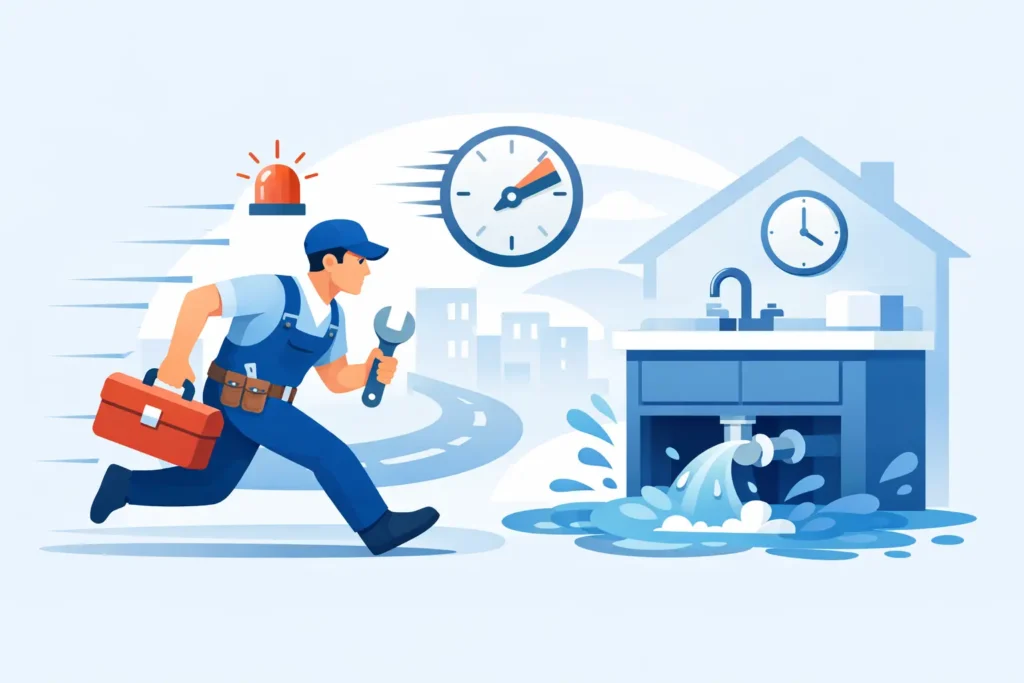
A pipe does not wait for a convenient hour to burst. When water is spreading across a floor, backing up into a tub, or dripping through a ceiling, emergency plumber response time becomes the only number that seems to matter. Homeowners want a clear answer fast, but the truth is that response time depends on the kind of plumbing emergency, road conditions, technician availability, and how much information you can give when you call.
What emergency plumber response time really means
Most people think response time means how long it takes a plumber to knock on the door. That is part of it, but there is a little more going on. A true emergency response starts when your call is answered, your situation is assessed, and the right technician is dispatched with the tools and parts most likely to solve the problem.
That matters because not every urgent plumbing issue needs the exact same level of speed. An active burst pipe that cannot be isolated is different from a toilet clog in a home with two other working bathrooms. Both are frustrating. One is much more likely to cause immediate property damage.
A dependable plumbing company will usually triage calls based on risk. That means the most dangerous situations move to the front. It is not a delay tactic. It is how serious emergencies get handled responsibly.
How fast should an emergency plumber arrive?
In many residential situations, a reasonable emergency plumber response time can range from about 30 minutes to a few hours. If the issue is severe, service is often prioritized as quickly as possible. If demand is high during a storm, freeze, or holiday weekend, the wait may be longer even with a 24/7 emergency service.
The honest answer is that there is no universal promise that fits every call. Traffic in Port Orchard, weather across Kitsap County, the number of active emergencies already in progress, and the complexity of your issue all affect arrival time. A plumber who gives you a realistic window and keeps you updated is often more dependable than one who throws out an unrealistically short estimate just to get the call.
The better question to ask is not only, “How soon can you get here?” It is also, “What should I do right now to reduce damage until you arrive?” Good emergency service includes both speed and guidance.
What affects emergency plumber response time?
Some delays are obvious, like traffic or a major weather event. Others are less visible from the homeowner side. Dispatchers are matching the urgency of your problem with technician location, skill set, and job load. If your water heater is leaking heavily, for example, they may need to send someone equipped for both emergency shutoff and likely repair options.
The information you provide can make a real difference. If you can clearly explain whether water is still flowing, whether the leak is clean or sewer-related, whether the whole house is affected, and whether you have already shut off the water, the dispatcher can prioritize your call more accurately.
Pictures are sometimes helpful if a company requests them, but a calm and clear description is often enough. Saying, “There is water under the kitchen sink,” is useful. Saying, “The hot water shutoff under the kitchen sink failed, water is spraying, and I have turned off the house water,” is much better.
Time of day also matters. Late-night calls can sometimes move quickly because fewer standard appointments are on the schedule. On the other hand, a region-wide freeze can create a surge in burst pipe calls all at once. In those moments, even very responsive companies have to work through a full emergency queue.
Which plumbing problems should get the fastest response?
Not every plumbing problem is a true emergency, but some clearly are. Active burst pipes, overflowing drains with contaminated water, sewer backups, major water heater leaks, and any plumbing issue creating electrical risk need immediate attention. So do situations where you cannot safely stop the water and damage is spreading.
A single slow drain may be urgent to you, especially if it is the only shower in the house, but it usually ranks differently than a main line backup affecting multiple fixtures. Likewise, a dripping faucet can wait a little longer than a failed water line behind a wall.
This is where experience matters. A good emergency plumber knows that homeowners are not expected to diagnose a plumbing system under stress. They ask simple questions, identify the level of risk, and move fast when the situation calls for it.
What you can do before the plumber arrives
The best way to protect your home while waiting is to stop the water if you safely can. For many emergencies, that means turning off the fixture valve first. If that does not work or you cannot reach it, shut off the main water supply to the house.
If the issue involves a water heater, turn off the power source if it is safe to do so. For an electric water heater, switch off the breaker. For a gas unit, follow the manufacturer instructions or wait for the plumber if you are unsure. Never take chances around gas or electricity.
Move rugs, boxes, and anything that can be damaged out of the wet area. Use towels or a mop to limit spreading water, but do not open walls or start major cleanup until the source is controlled. If sewage is involved, keep people and pets away from the area and avoid contact as much as possible.
These small steps can buy time. They also help the plumber get straight to the repair instead of losing valuable minutes managing preventable water spread.
Why faster is not always the whole story
Homeowners should absolutely care about emergency plumber response time, but speed alone does not equal a better result. The real goal is to stop the immediate problem and fix it in a way that does not leave you facing the same issue next week.
A rushed temporary patch might seem like a win at 1:00 a.m., but if the repair fails again or the actual cause is missed, the total cost goes up. In plumbing, fast service and solid workmanship should go together. That is especially true with repeat drain clogs, aging shutoff valves, water heater failures, and hidden leaks where the first visible symptom is not always the root problem.
Homeowners in older homes around Port Orchard often deal with this trade-off. Quick action matters, but so does knowing whether the failed part is a one-off issue or a sign of broader wear in the system. A trustworthy plumber will handle the emergency first, then explain what needs immediate repair, what can wait, and what may help prevent another urgent call later.
How to tell if a company takes response seriously
You can learn a lot from the first phone call. If the person answering listens carefully, asks practical questions, and gives you clear next steps, that is a strong sign. If they are vague, hard to reach, or unable to explain timing at all, that usually tells you something too.
Good emergency plumbing service is built on communication. That means confirming your address, explaining the arrival window, telling you if the technician is finishing another emergency first, and letting you know what to do in the meantime. People are far less stressed when they know what is happening.
It also helps when the company is local and familiar with the area. A nearby residential plumbing team can often respond more efficiently than a service trying to cover too wide a territory. Leakless Plumbing, for example, focuses on practical emergency help for local homeowners who need both a fast arrival and a repair that holds up.
When to call right away and when you can wait a bit
If water is actively damaging your home, if sewage is backing up, if a pipe has burst, if your water heater is leaking heavily, or if the issue creates a safety hazard, call immediately. Those are not problems to monitor overnight.
If the problem is isolated, contained, and not causing active damage, you may have a little more room to schedule same-day service instead of after-hours emergency dispatch. A faucet drip, a mildly slow sink drain, or a toilet that still works but runs constantly may not require the very next available technician.
That said, small problems do not always stay small. A minor leak under a sink can quietly swell cabinets, damage flooring, and lead to mold if it is ignored. If you are unsure, call and describe what is happening. A good plumber would rather help you make the right call early than see a preventable mess grow worse.
The most helpful thing to remember is simple. In a plumbing emergency, speed matters because damage moves fast. But the best service is not just about who shows up first. It is about who responds with urgency, communicates clearly, and leaves your home in better shape than they found it.