A drain usually does not go from fine to fully blocked overnight. It starts with slow water in the kitchen sink, a shower that leaves you standing in an inch of water, or a bathroom sink that gurgles after you brush your teeth. If you have been wondering what causes drains to clog, the short answer is buildup – but the real cause depends on which drain is acting up and what has been going down it for weeks, months, or even years.
Most clogs happen because everyday materials collect inside the pipe and narrow the opening little by little. Once that opening gets small enough, water slows down, debris catches more easily, and the problem snowballs. The good news is that many clogs are preventable. The less good news is that some warning signs get ignored until a simple cleaning turns into a bigger repair.
What causes drains to clog in different parts of the house?
Not all drains clog for the same reason. A kitchen sink has a very different job than a shower drain, and the materials that cause trouble reflect that.
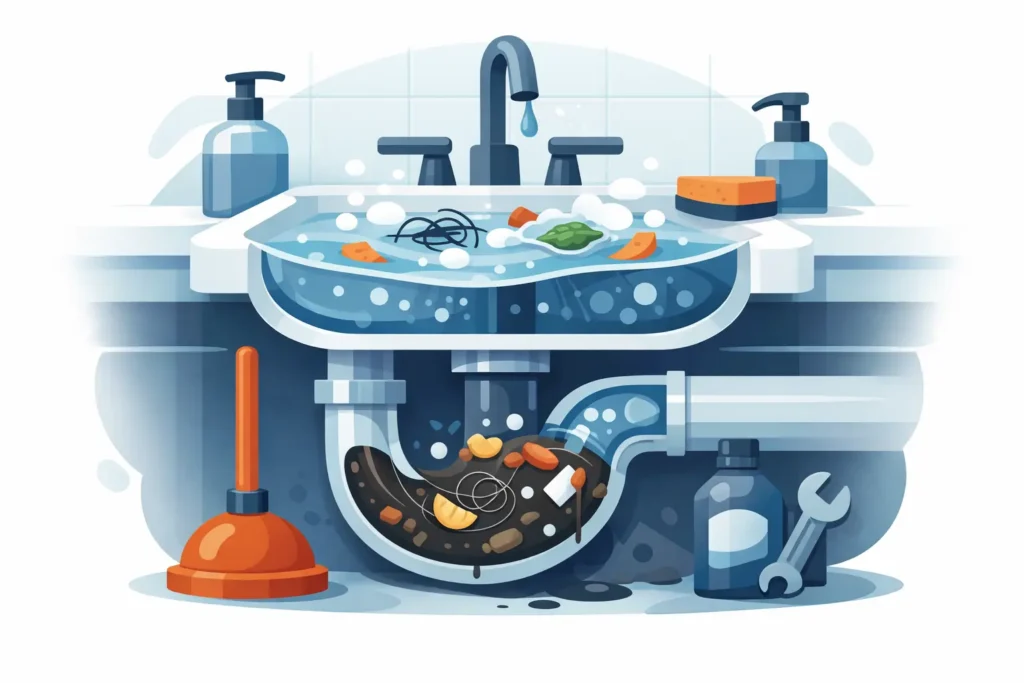
In the kitchen, grease is one of the biggest culprits. It may look harmless when it is warm and liquid, but once it cools inside the pipe, it sticks to the walls and traps food particles. Over time, even a small amount of cooking oil, bacon grease, butter, or sauce residue can create a thick layer inside the line. Add coffee grounds, rice, pasta, eggshells, or fibrous scraps, and that drain starts struggling fast.
Bathroom drains usually clog because of hair, soap scum, and grooming products. Hair wraps around itself and catches anything sticky passing by. Soap leaves behind residue that narrows the pipe, especially when combined with minerals from hard water. Toothpaste, shaving cream, and thick personal care products can add to the buildup.
Toilets are different because they are designed for human waste and toilet paper only. The trouble starts when wipes, paper towels, feminine hygiene products, cotton swabs, or too much toilet paper get flushed. Even products labeled flushable can hang up in the line and create a blockage. A toilet may seem to recover after one bad flush, but partial clogs often stay in place and get worse with time.
Laundry drains can clog from lint, detergent residue, and dirt washed out of clothes. If you have pets, pet hair can make things worse. In some homes, older washing machine lines also struggle because the pipe size or slope is not ideal for the amount of water modern machines discharge.
The most common materials behind a clog
Most residential drain problems come down to a short list of repeat offenders.
Grease is near the top because it does not just pass through. It coats the inside of the pipe. Once that sticky layer forms, food debris has something to cling to.
Hair is another major cause. By itself, a strand of hair may not seem like much, but inside a drain it acts more like a net. It catches soap residue, dirt, and other debris until water can barely get through.
Soap buildup is often overlooked. Many homeowners think of soap as something that cleans, so it feels counterintuitive that it can contribute to a blockage. But soap, especially bar soap, can leave behind residue that hardens and combines with minerals and hair.
Food waste causes plenty of kitchen sink problems, even in homes with garbage disposals. A disposal helps break down some scraps, but it does not make the drain invincible. Starchy foods swell, fibrous foods tangle, and grounds or shells do not dissolve the way many people assume.
Foreign objects are another common issue, especially in homes with kids. Small toys, hygiene products, floss, paper towels, and cleaning wipes all show up in clogged drains more often than you might think.
Why some homes get clogs more often than others
Sometimes the issue is not just what goes into the drain. It is also the condition of the plumbing system itself.
Older pipes are more likely to clog because the interior surface may be rough, corroded, or narrowed by years of buildup. Water and waste do not flow as smoothly through an aging line as they do through a newer, cleaner pipe. That means ordinary debris catches more easily.
Pipe design matters too. If a drain line has poor slope, water may move too slowly to carry debris away properly. If there are too many tight turns, buildup can collect at those spots. In some cases, a drain that clogs repeatedly is signaling an installation issue or a damaged section of pipe rather than simple household buildup.
Tree roots can also be part of the problem, especially in older underground sewer lines. Roots are drawn to moisture and can enter tiny cracks or joints in the pipe. Once inside, they trap waste and create stubborn blockages. Homeowners usually do not see this coming until multiple drains start backing up at once.
Seasonal habits can play a role as well. Holiday cooking, visiting guests, and heavier bathroom use can all put more stress on your drains. If a line is already partly restricted, that extra use may be enough to trigger a full clog.
Early signs your drain is heading for trouble
A complete backup rarely comes without warning. The challenge is that many people hope the problem will clear on its own.
Slow drainage is usually the first sign. If water lingers in the sink, shower, or tub longer than normal, something is restricting flow. Gurgling sounds can point to trapped air caused by a developing blockage. Bad smells are another clue, especially in the kitchen, where food residue inside the pipe can start to rot.
If one drain is slow, the problem may be local to that fixture. If several drains in the house are acting up at the same time, the issue could be deeper in the main line. That is when it makes sense to act quickly. Waiting too long can lead to backups, overflows, and water damage that are far more stressful than the original clog.
What causes drains to clog again after clearing?
If a drain clogs again soon after being cleared, there is usually an underlying reason. Sometimes a temporary fix removes just enough material to get water moving, but not enough to solve the real problem. That is common when store-bought drain cleaners or plunging only punch a small hole through the blockage.
Chemical cleaners can also create a false sense of success. They may soften part of the clog, but they often leave residue behind. In some cases, they can even be hard on older pipes. They are rarely the best answer for a recurring issue.
Repeat clogs can also point to deeper buildup, root intrusion, pipe damage, or a sag in the line where waste keeps collecting. If the same shower, sink, or toilet keeps giving you trouble, it is usually a sign that the drain needs a more thorough professional cleaning or inspection.
How to reduce the chances of a clog
The best prevention is simple and consistent. Keep grease, oil, and food scraps out of the kitchen sink as much as possible. Use drain strainers in showers and bathroom sinks to catch hair before it enters the pipe. Flush only toilet paper and human waste. Be cautious with products marketed as flushable, because many still cause trouble in real plumbing systems.
It also helps to pay attention to how your drains are behaving. A minor slowdown is easier to deal with than a complete blockage on a busy weekday morning. If a sink starts draining slower, or a tub backs up every few showers, that is the time to address it.
For some homes, occasional maintenance makes sense, especially if the plumbing is older or there is a history of recurring clogs. A proper cleaning can remove buildup before it turns into an emergency. In Port Orchard and nearby communities, that can be especially valuable for homeowners dealing with aging drain lines or heavy household use.
When it is time to call a plumber
There is a difference between an isolated nuisance and a plumbing problem that needs expert attention. If multiple drains are slow, water backs up into other fixtures, odors are getting stronger, or a clog keeps returning, it is time to have the line checked properly. The goal should not be a quick patch that gets you through the weekend. It should be finding the real cause and fixing it in a way that holds up.
That is the approach at Leakless Plumbing – practical service, clear answers, and repairs that do more than buy a little time. A clogged drain may seem small at first, but when water stops moving the way it should, the disruption spreads through the whole house fast.
The sooner you deal with the cause, the easier it usually is to protect your pipes, your routine, and your peace of mind.