That quiet hissing sound after every flush is easy to ignore for a day or two – until the water bill shows up or the toilet starts running nonstop at 2 a.m. If you need a toilet keeps running fix, the good news is that the cause is usually straightforward. The catch is that a quick adjustment does not always solve the real problem, especially when older parts are worn out or the toilet has been patched before.
A running toilet is not just an annoying noise. It can waste a surprising amount of water, put extra wear on the fill valve, and signal that one small issue inside the tank is turning into a bigger repair. For homeowners, the smartest move is to understand what is likely happening, what you can safely check, and when it makes more sense to stop guessing and get it repaired properly.
Why a toilet keeps running
Most of the time, a running toilet comes down to one of three things. Water is leaking from the tank into the bowl, the tank is filling too high, or the refill system is not shutting off the way it should.
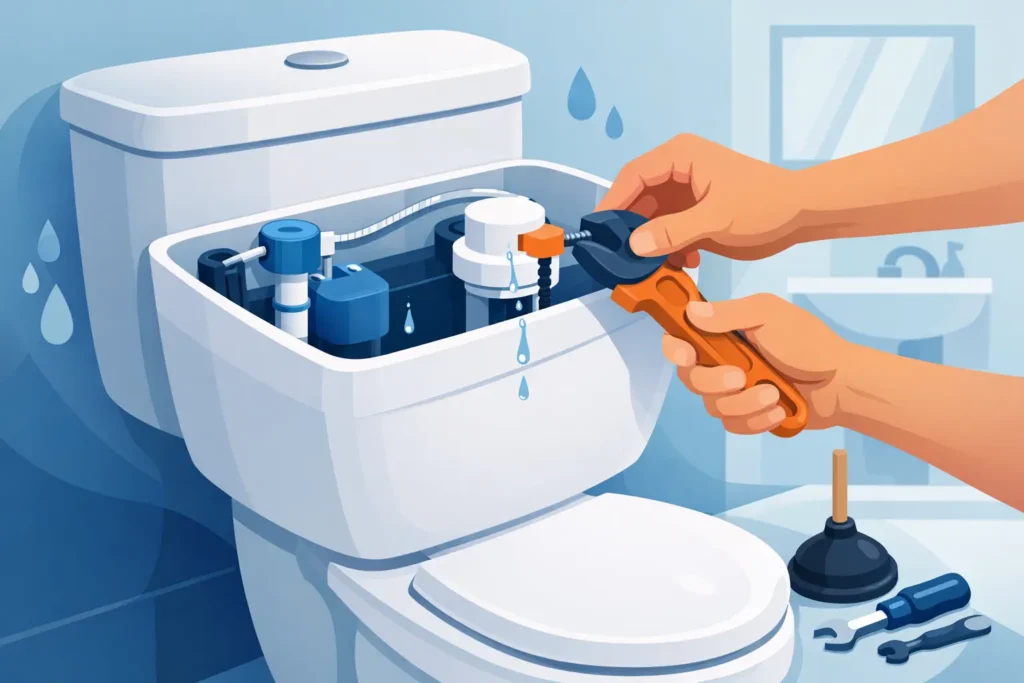
Inside the tank, every part has a simple job. The flapper seals the opening at the bottom of the tank. The fill valve refills the tank after a flush. The float tells the valve when enough water is in the tank. The chain connects the handle to the flapper. When one of those parts is out of position, worn down, or coated with mineral buildup, the toilet may keep trying to refill itself.
That is why two toilets can make the same running sound but need different repairs. One may only need a small adjustment. Another may need new internal parts because the rubber has aged, the valve is sticking, or the overflow tube setup is wrong.
Toilet keeps running fix: what to check first
Before doing anything else, take the tank lid off carefully and set it somewhere safe. Then flush the toilet and watch what happens as the tank refills.
If the flapper does not settle back down cleanly, that is often the first problem. A twisted chain, a chain that is too short, or a warped flapper can all keep the seal from closing fully. When that happens, water slowly leaks into the bowl and the fill valve keeps cycling on to replace it.
If the water level rises too high and spills into the overflow tube, the float may be set too high or the fill valve may not be shutting off correctly. In that case, the toilet is not really leaking at the bottom. It is simply overfilling.
You should also look at the small refill tube. If it is pushed too far down into the overflow pipe, it can create a siphon effect and cause the tank to keep refilling. That is a small detail, but it causes a lot of confusion because the toilet sounds like it has a major problem when the fix may be a simple correction.
The most common part failures
The flapper is the most common culprit because it is made of rubber and wears out over time. If it feels brittle, looks misshapen, or has visible buildup, it may not seal tightly anymore. Even a tiny leak can keep the tank low enough to trigger repeated refilling.
Fill valves are another frequent issue, especially in older toilets. They can start sticking, running continuously, or shutting off inconsistently. Sometimes they make a high-pitched squeal before they fail completely. If your toilet alternates between normal operation and constant running, the fill valve may be on its way out.
The float can also cause trouble. On some toilets it is a ball attached to an arm. On others it is a cup that slides up and down the fill valve. If the float is set too high, the tank fills beyond the proper level. If it sticks, the valve may not shut off when it should.
Then there is the chain. It is a small part, but if it has too much slack it can get caught under the flapper. If it is too tight, the flapper cannot close fully after a flush. That leaves the toilet in a constant refill cycle.
What you can safely try at home
A homeowner can usually do a few basic checks without risk. If the chain is tangled or obviously too tight, adjust it so the flapper can open and close freely. If the water level is above the marked fill line or too close to the top of the overflow tube, lower the float slightly and test the flush again.
If the refill tube is shoved into the overflow pipe, clip it above the opening so it drains properly without creating a siphon. And if the flapper is visibly damaged and you are comfortable replacing it, that is often a reasonable DIY repair.
Still, there is a difference between making a small correction and chasing the same problem over and over. If you replace one part but the toilet continues to run, there may be more than one issue inside the tank. That is common in older toilets where multiple components have aged at the same time.
When a quick fix stops being enough
A lot of homeowners try the same toilet keeps running fix more than once because the toilet improves for a week, then starts acting up again. Usually that means the visible symptom was not the whole problem.
For example, replacing a flapper will not help much if the flush valve seat is damaged or coated with enough mineral buildup to prevent a clean seal. Adjusting the float will not solve a fill valve that is failing internally. And if the toilet has older generic replacement parts that do not fit quite right, the tank may never operate consistently.
There is also the issue of hidden water waste. A toilet that runs intermittently can quietly waste gallons every day without looking dramatic. If you have one bathroom that seems to refill at random, especially overnight, it is worth addressing sooner rather than later.
Signs it is time to call a plumber
If the toilet keeps running after a basic adjustment, if you hear the tank refilling every few minutes, or if the toilet has become unreliable enough that your household has to jiggle the handle or shut off the water manually, it is time for a proper repair.
You should also call if the shutoff valve under the toilet does not work smoothly, if the toilet is old enough that the inside parts are heavily corroded, or if you are noticing water around the base. A running toilet and a leaking toilet are not always the same issue, but they can show up together.
For busy households, the real value of professional repair is not just replacing a part. It is knowing the toilet is adjusted correctly, the right components were used, and the problem is not going to restart the next morning. That matters even more when you only have one or two bathrooms in the house.
Repair versus replacement
Sometimes a repair is clearly the right move. If the toilet is in decent shape and the problem is limited to the flapper, fill valve, or float assembly, replacing the internal parts is usually cost-effective.
But if the toilet is older, frequently repaired, inefficient with water, or starting to have multiple issues at once, replacement may be the better long-term call. A toilet that runs often, clogs easily, and has worn internal parts is not saving money just because it has not been replaced yet.
That is where an honest assessment matters. Some toilets deserve a straightforward repair. Others are ready to be retired before they waste more water and more time.
Preventing the next running toilet problem
Toilets usually give small warnings before they fail completely. You may hear a hiss after flushing, notice that the handle feels loose, or see that the tank takes longer to settle down. Paying attention to those signs can help you fix a minor issue before it turns into constant running.
It also helps to avoid harsh tank cleaners that can wear down rubber parts faster. They may seem convenient, but over time they can shorten the life of flappers and seals. If your home has hard water, mineral buildup can also shorten the lifespan of internal tank components.
For homeowners in Port Orchard and nearby communities, older plumbing fixtures are common enough that a simple toilet issue is not always as simple as it first appears. When you want it fixed without repeat problems, a careful repair beats a rushed guess every time.
If your toilet will not stop running, do not let it turn into weeks of wasted water and frustration. A quiet bathroom should be the normal standard, and with the right fix, it can be again. Don’t stress the mess, call LeakLess.