A bathroom sink that takes forever to drain is easy to ignore – until you are brushing your teeth over a bowl of cloudy water every morning. If you are dealing with a sink draining slow bathroom issue, the problem is usually more than a minor annoyance. Slow drainage often means buildup is forming, parts are wearing out, or a larger blockage is starting to develop deeper in the line.
The good news is that a slow bathroom sink does not always mean a major repair. The bad news is that waiting too long can turn a simple fix into a full drain cleaning call, or worse, water damage inside the cabinet if leaks start around stressed connections. Knowing what causes it and when to act can save you time, stress, and money.
What causes a sink draining slow bathroom problem?
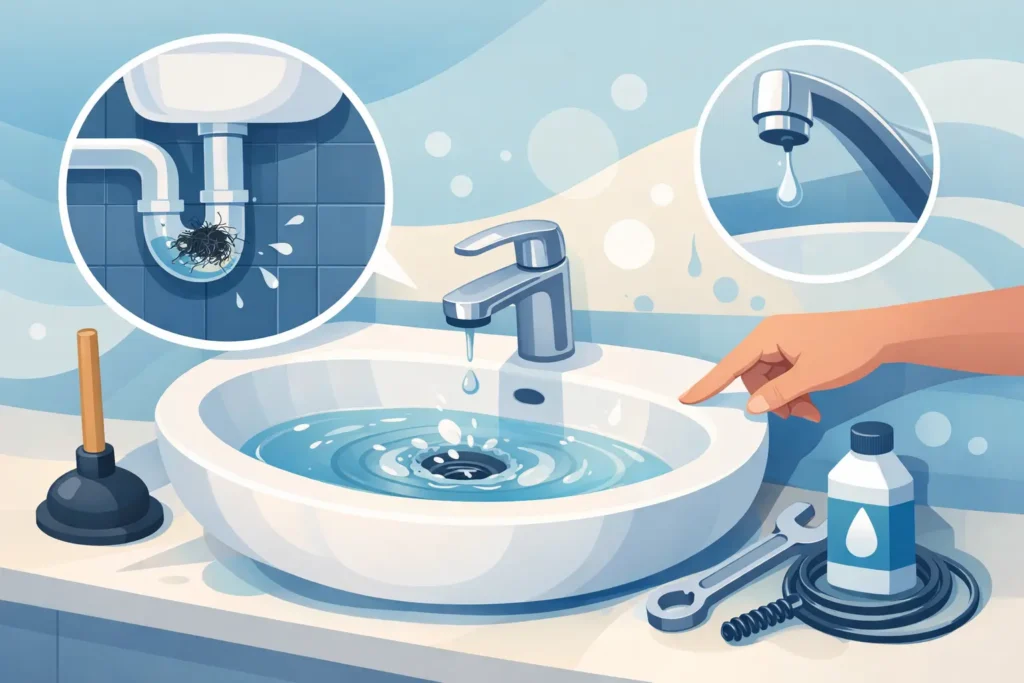
In most homes, the cause is pretty simple: everyday buildup. Bathroom sinks collect more than water. Toothpaste, soap residue, shaving cream, makeup, hair, and skin oils all wash down the drain. Over time, that material sticks to the inside of the pipe and narrows the opening. Water still gets through, just not as fast as it should.
Hair is one of the biggest troublemakers, especially when it combines with soap film. A few strands here and there do not seem like much, but once they catch around the stopper assembly, they start trapping everything else. That is why many slow bathroom sinks begin near the top of the drain rather than deep in the plumbing system.
There are other possibilities too. If the sink stopper is out of adjustment, it can partially block the opening even when it looks open. A clogged pop-up assembly can create the same effect. In older homes, corrosion or rough pipe interiors may hold onto debris more easily. And if more than one fixture is draining slowly, the issue may be farther down the drain line instead of at the sink itself.
Signs the clog is still small – and signs it is getting worse
A mild clog usually gives you some warning. Water drains, but it swirls longer than normal. You may hear a light gurgling sound after the basin empties. Sometimes there is a musty smell coming from the drain because trapped buildup is starting to break down.
When the problem is getting worse, the signs become harder to ignore. Water may back up quickly around the stopper. The sink may drain fine after a small amount of water but struggle when the faucet runs continuously. You might also notice bubbling in a nearby toilet or slow drainage in a tub or shower. That can mean the problem is no longer isolated to the sink.
This is the point where homeowners often try repeated chemical drain cleaners. That can feel like the fastest option, but it is rarely the best one.
Why store-bought drain cleaners are not always the answer
Chemical drain cleaners can sometimes punch through a small organic clog, but they come with trade-offs. They do not remove all the buildup coating the pipe walls, so the slow drainage often comes back. They can also sit in the trap if the blockage is stubborn, which increases the risk of damaging older pipes or creating a safety issue when someone opens the drain later.
They are especially risky if you are not sure what the pipe material is, or if you have already used one product and are thinking about trying another. Mixing chemicals or adding more when the first round did not clear the clog can make the situation worse.
A better first move is usually mechanical cleaning rather than chemical treatment. That means clearing hair and residue by hand or with a basic tool, then flushing the line thoroughly.
What you can try before calling a plumber
If your bathroom sink is draining slow, start with the simplest likely cause. Remove and clean the stopper if it can be lifted out. Many sink stoppers collect a surprising amount of hair and soap sludge underneath, even when the visible drain looks clean.
Next, try hot water – not boiling water if you have older plumbing or plastic components, but hot tap water can help loosen soap residue. Running it for a minute or two after cleaning the stopper may improve the flow.
A small zip-style drain tool can also help if the clog is near the top of the drain. These are often effective for pulling out hair caught just below the stopper. It is not the prettiest job, but it can solve the issue quickly.
You can also place a bucket under the trap and clean the P-trap if you are comfortable doing basic home maintenance. That curved section under the sink is designed to hold water and block sewer gas, but it is also a common place for debris to collect. If you take it apart, inspect the washers carefully and reassemble everything snugly to avoid leaks.
What you should not do is force metal tools deep into the drain or keep guessing with stronger chemicals. Bathroom sink lines are not built for aggressive DIY work, and a damaged fitting under the sink can create a bigger mess than the clog itself.
When a slow bathroom sink points to a deeper plumbing issue
Sometimes a sink draining slow bathroom complaint is not really about the sink. If the drain was cleaned and the stopper is clear, but water is still hanging up, the blockage may be farther down the branch line. This is more likely if the sink has been slow for a long time, if other fixtures are acting up, or if the drain starts improving and then slowing down again within days.
Vent problems can also affect drainage. Plumbing vents help air move through the system so wastewater can flow properly. When venting is restricted, drains may gurgle, drain inconsistently, or seem slow even without a heavy clog close by. That is not usually something a homeowner can diagnose from the sink alone.
There is also the age factor. In older homes, drain lines may have years of hardened buildup inside them. Even if you remove the immediate clog, the pipe walls can stay narrowed enough that new debris catches quickly. That is why some sinks seem to clog over and over no matter how often they are cleaned.
When it is time to call for professional drain cleaning
If the sink keeps backing up, the clog returns after a short time, or you are noticing slow drainage in more than one fixture, it is time to bring in a plumber. The goal is not just to get the water moving today. It is to figure out why the problem keeps happening and fix it in a way that lasts.
Professional drain cleaning gives a clearer picture of what is going on inside the line. In many cases, the issue can be cleared quickly with the right equipment and without the trial and error that wastes half a weekend. If there is a damaged part, poor drainage setup, or a larger line problem, it can be caught before it turns into a more disruptive repair.
For busy homeowners, that matters. A bathroom sink may not feel like an emergency at first, but plumbing problems tend to build on each other. One slow drain can lead to odors, cabinet moisture, recurring clogs, and daily frustration. Fast, dependable service matters because it gets the room back to normal and helps prevent repeat problems.
That is the approach at Leakless Plumbing – practical repairs, clear communication, and solutions that hold up instead of temporary patch jobs.
How to help prevent bathroom sink clogs from coming back
A little prevention goes a long way with bathroom drains. Cleaning the stopper regularly is one of the easiest habits to keep. It only takes a minute, and it stops hair from building up where most clogs begin.
It also helps to be mindful of what is going down the sink. Thick beauty products, excess shaving residue, and anything oily can stick to the pipe faster than plain soap and water. Flushing the drain with hot water from time to time can help reduce residue before it hardens.
If your sink tends to clog often, that is useful information, not just bad luck. Recurring slow drains usually mean there is an underlying issue worth addressing, whether that is buildup deeper in the line, an aging drain assembly, or a drain that was never flowing quite right to begin with.
A slow bathroom sink is one of those problems that rewards early action. Take care of it while it is still a nuisance, and you have a much better chance of avoiding the kind of plumbing mess that interrupts your whole day. Don’t stress the mess, call LeakLess.