A supply line can split in seconds. One minute you hear a drip under the sink, and the next you have water spreading across the floor, creeping into cabinets, and heading for the hallway. In that moment, knowing how to shut off water fast matters more than anything else.
The good news is that most homes give you more than one way to stop the flow. The key is knowing which valve to reach for first, and when a small fixture shutoff is enough versus when you need to stop water to the whole house. If you stay calm and move quickly, you can limit damage and buy yourself time to deal with the actual repair.
How to shut off water fast when a leak starts
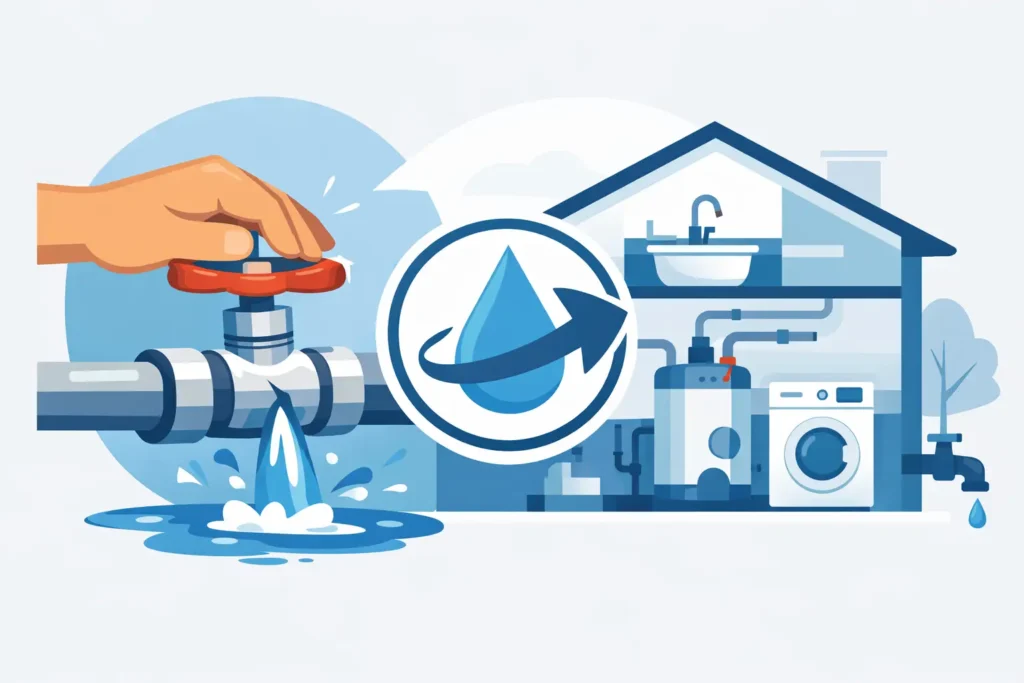
Start with the closest shutoff valve to the problem. If the leak is coming from a toilet, sink, or faucet, there is often a small valve on the wall or floor nearby. Turning that valve clockwise should stop water to that single fixture without affecting the rest of the house.
That is usually the fastest move for common indoor leaks. A toilet that will not stop running, a broken faucet supply line, or a sink leak under the cabinet can often be controlled this way in less than a minute. If the valve turns easily and the water stops, you have contained the immediate problem.
If the shutoff at the fixture is missing, stuck, leaking, or simply does not work, go straight to the main water shutoff for the house. Every homeowner should know where that valve is before there is an emergency. In many homes, it is located where the main water line enters the house, often in a garage, crawl space, utility room, basement, or along an exterior wall near the water meter.
Once you find it, turn the valve fully off. A wheel-style valve usually closes by turning clockwise until it stops. A lever-style valve is typically off when the handle is turned perpendicular to the pipe. Do not force it so hard that you risk breaking an older valve, but do make sure it is fully closed.
After that, open a cold-water faucet at the lowest point in the home, if you can do so safely. This helps relieve pressure and drains some of the remaining water from the lines. It will not fix the leak, but it can reduce continued dripping and make the area safer to assess.
Where the main shutoff is usually located
There is no single rule for every house, which is part of the problem when people are trying to move fast. In older homes, the main valve may be in a crawl space or near the water heater. In newer homes, it may be easier to access in a garage or utility area. Some properties also have a shutoff at the meter, but that is not always the best first choice in an emergency unless you already know how to use it.
If you have never located your shutoff valve, do it before you need it. Take ten minutes on a calm day and find both the main shutoff and the fixture valves under sinks and behind toilets. If someone else lives in the home, show them too. Emergencies rarely happen when the most prepared person is standing right there.
For homeowners in Port Orchard and other areas with a mix of older and newer homes, valve condition can vary a lot. Some shutoffs work smoothly. Others have not been touched in years and may be corroded, stiff, or partially frozen in place. That is one reason regular plumbing maintenance matters – not just for preventing leaks, but for making sure the home can be protected when one happens.
Which shutoff to use first
It depends on the leak.
If water is clearly coming from one fixture, use the local shutoff first. That keeps the rest of your household running while you contain the problem. It is the least disruptive option and usually the fastest if the valve is right in front of you.
If the source is unclear, the leak is inside a wall, water is coming through the ceiling, or a pipe has burst, skip the guesswork and shut off the main. The same goes for any leak that is spreading quickly or getting near electrical outlets, power strips, appliances, or your panel. In those cases, speed matters more than convenience.
There is a trade-off here. Shutting off only one fixture is more precise, but it does not help if the real problem is elsewhere on the line. Shutting off the whole house is more disruptive, but it gives you control immediately. When in doubt, choose the safer option.
What to do right after the water is off
Once the water stops, your next job is damage control. Move towels, buckets, or pans into place. If water is near anything electrical, avoid the area until power can be handled safely. Pull rugs, paper goods, and other absorbent materials away from the wet area. If cabinets or flooring are soaked, start drying them as soon as possible.
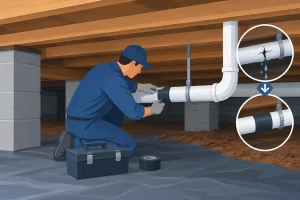
Then take a quick look at what failed. A loose supply line under a sink is very different from a cracked pipe in a wall or a failed water heater connection. You do not need to diagnose every detail, but it helps to know whether you are dealing with something visible and isolated or something that may need immediate professional repair.
If the leak involved a water heater, a burst pipe, or any hidden plumbing, calling a plumber right away is the smart move. Some repairs can wait a few hours. Others should not. The longer water sits or continues seeping where you cannot see it, the more likely you are to end up with swelling, staining, mold, or structural damage.
Common mistakes that slow people down
The biggest mistake is looking for the leak before shutting off the water. When water is actively flowing, your first goal is to stop it, not solve the mystery. Another common problem is assuming every fixture has a working shutoff valve. Many do, but not all, and older valves sometimes fail at the exact moment you need them.
People also lose time trying to force stuck valves with too much pressure. If a valve will not turn with reasonable effort, do not risk snapping it off. Move to the next shutoff point and get the water controlled another way.
And then there is the simple issue of access. Storage boxes, cleaning supplies, and garage clutter often block the very valve you need in an emergency. A main shutoff is only helpful if you can get to it fast.
How to shut off water fast without making the problem worse
Move quickly, but keep safety in the picture. If water is pooling near outlets, cords, or appliances, do not step into standing water to reach a valve unless you know the area is electrically safe. If the leak is severe and you cannot access the shutoff safely, get help immediately.
It also helps to know the limits of a temporary response. Turning off the water protects the house, but it does not mean the plumbing is safe to turn back on later. A supply line that has split, a failed valve, or a cracked pipe needs a proper repair before service is restored. Quick action is about minimizing damage first. Long-term reliability comes from fixing the real failure.
That is where experienced plumbing service matters. A fast response is important, but so is getting a repair that holds up. Leakless Plumbing is built around exactly that kind of call – urgent problems handled calmly, clearly, and with repairs meant to keep homeowners from facing the same mess again.
A simple habit that pays off later
If you do one thing after reading this, make it a five-minute walkthrough. Find the main shutoff. Check the valves under your sinks and behind your toilets. Make sure the path is clear. If you want to be extra prepared, label the main shutoff so anyone in the home can find it quickly.
Most homeowners never think about their water shutoff until there is a real reason to. By then, every second feels expensive. Knowing how to shut off water fast gives you a head start when something goes wrong, and that head start can make the difference between a repair call and a major cleanup.