
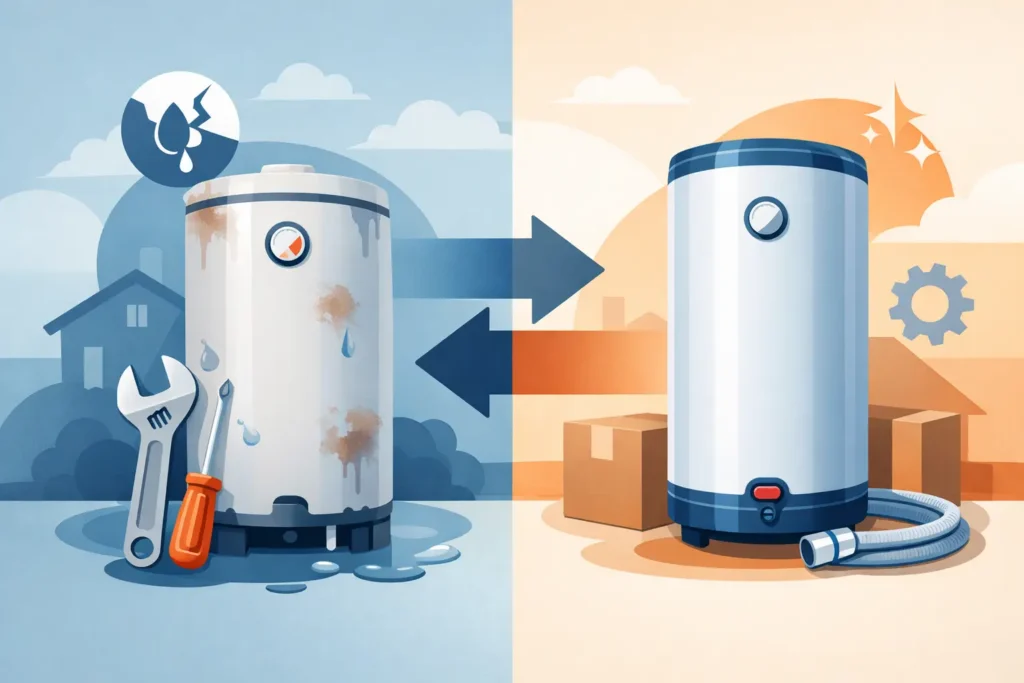
Nobody wants to find out their water heater is failing during a morning shower or right before guests arrive. When the hot water turns unreliable, starts smelling odd, or leaves a puddle in the garage or utility room, the big question comes fast: should you repair or replace water heater problems, or is a quick fix enough to get a few more good years out of it?
The honest answer is that it depends on the type of problem, the age of the unit, and how much risk you want to carry. Some water heater issues are straightforward repairs. Others are warning signs that the tank is near the end and putting money into it will only delay a larger failure.
When to repair or replace water heater issues
A water heater can often be repaired if the problem is limited to one replaceable part. Thermostats, heating elements, pilot assembly issues, pressure relief valves, and some minor connections can usually be fixed without replacing the entire unit. If the tank itself is still in good shape, a targeted repair often makes sense.
This is especially true when the unit is relatively young. If your water heater is only a few years old and has otherwise been dependable, repairing it is usually the more practical move. A single failed component does not automatically mean the whole system is done.
On the other hand, there are times when replacement is the smarter call even if the heater can technically still be repaired. If the unit is older, breaking down more than once, or showing signs of internal tank wear, paying for another repair can start to feel like putting fresh tires on a car with a failing transmission.
The biggest signs repair makes sense
If your water heater is under 8 years old and the issue is isolated, repair is often worth considering first. A lack of hot water could be something as simple as a failed heating element in an electric model or an ignition issue in a gas unit. These are real problems, but they are not necessarily end-of-life problems.
Inconsistent water temperature can also point to parts that are wearing out rather than a tank that has failed. If the heater runs hot one day and lukewarm the next, it may be a thermostat issue, sediment buildup, or a burner problem. Those repairs are usually more manageable than full replacement.
A small leak from a fitting or valve may also be repairable. The key word is small. Water around the base of the tank does not always mean the tank has cracked, but it does need a professional look quickly. Catching the source early can be the difference between a modest repair and emergency water cleanup.
When replacement is usually the better investment
Age matters more than many homeowners realize. Traditional tank water heaters often last around 8 to 12 years, though maintenance and water quality can move that number a bit in either direction. Once a unit gets into that later range, every repair should be weighed against the likelihood of another problem showing up soon.
If your water heater is more than 10 years old and needs a major repair, replacement often makes better financial sense. You are not just paying for the repair itself. You are also paying for a unit that is less efficient, more likely to fail again, and closer to a full breakdown.
Rust-colored hot water is another serious warning sign, especially if it only appears when you run hot water. That can mean the inside of the tank is corroding. Once the tank is rusting from the inside out, replacement is usually the safer move.
Strange noises matter too. Popping, rumbling, or banging sounds often come from hardened sediment sitting at the bottom of the tank. That buildup forces the heater to work harder and can shorten its life. In some cases, flushing helps. In older units, heavy sediment is often a sign the system has been under strain for a while.
And then there is the clearest sign of all: a leaking tank. If the tank body itself is leaking, replacement is the answer. That kind of failure is not something a lasting repair can solve.
Cost is important, but so is timing
A lot of homeowners focus only on the immediate bill, which is understandable. A repair usually costs less today than a full replacement. But the better question is what that money buys you.
If a repair gives you several more years of reliable service, that is money well spent. If it buys you two months before the next issue, it probably is not. This is why timing matters so much. A repair on a newer heater can be a smart save. The same repair on an aging heater can become expensive delay.
There is also the stress factor. Many water heaters do not fail at a convenient time. They fail before work, over a holiday weekend, or when the house is full. If your current unit is showing multiple warning signs, replacing it before it fails completely can save you from a much more disruptive situation.
Repair or replace water heater: questions worth asking
If you are trying to make the call, start with a few practical questions. How old is the unit? Has it needed repairs before? Is the problem a single part or something deeper? Is there visible rust, leaking, or evidence of ongoing wear?
It also helps to think about your household’s needs. If your family has grown, if hot water runs out faster than it used to, or if the unit has always struggled to keep up, replacement may solve more than the current repair issue. Sometimes the question is not just whether the old heater can be fixed. It is whether it still fits the home.
Energy efficiency can also tilt the decision. Newer models generally heat water more efficiently than older ones, especially if the old unit has sediment buildup or worn components. Over time, lower operating costs can help offset the price of replacement.
Why waiting too long can cost more
A failing water heater is not just a comfort issue. It can become a property damage issue fast. A slow leak can damage flooring, drywall, trim, and anything stored nearby. If the unit is in a closet or interior utility space, the damage can spread before it is noticed.
There is also the inconvenience of losing hot water completely. For busy households, that means disrupted mornings, delayed laundry, and a home that does not function the way it should. What starts as a repair decision can quickly turn into an emergency if the warning signs are ignored.
That is why prompt inspection matters. A good plumbing assessment should tell you not only what is wrong today, but whether the unit is likely to keep causing trouble. Homeowners deserve a straight answer, not a guess and not a temporary patch sold as a long-term fix.
What a professional looks at before recommending repair or replacement
An experienced plumber is not just checking whether the heater still turns on. They are looking at the overall condition of the tank, the age of the unit, the extent of any rust or corrosion, the source of leaks, the performance of the thermostat or heating elements, and whether sediment buildup has pushed the system past a practical point of repair.
They should also explain the trade-offs clearly. Sometimes the recommendation is repair because the issue is clean, limited, and worth fixing. Sometimes the recommendation is replacement because continuing to invest in the old unit would likely waste your money.
That kind of guidance matters, especially when you are dealing with no hot water and need an answer fast. Homeowners in Port Orchard and surrounding areas are usually not looking for a plumbing lecture. They want to know what failed, what it will take to fix it, and whether the fix is likely to last.
If your water heater is acting up, the best next step is not to wait for it to make the decision for you. Get it checked, ask honest questions, and choose the option that gives your home reliable hot water without setting you up for the same problem again. Don’t stress the mess, call LeakLess.

