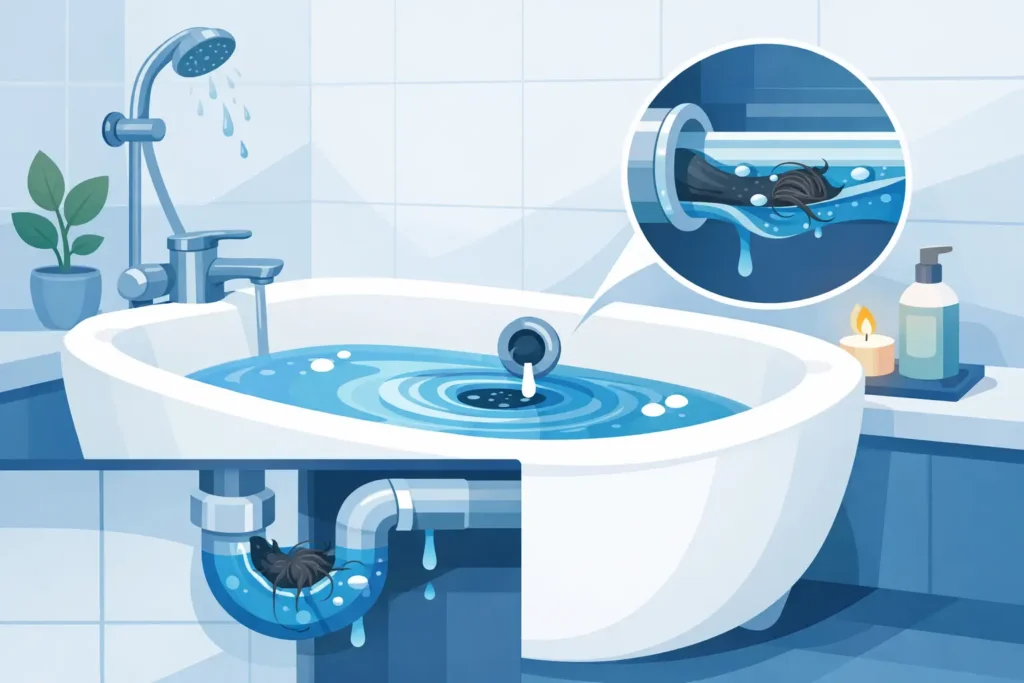
A bathtub that takes forever to empty can turn a quick shower into a frustrating cleanup. If you are asking, why is bathtub draining slowly, the answer is usually a buildup close to the drain. But a slow tub can also be an early warning that a larger drain problem is forming farther down the line.
The good news is that many bathtub clogs start small and can be handled safely before they become a complete blockage. The key is knowing what to try, what to avoid, and when the problem needs a professional repair rather than another temporary fix.
Why Is a Bathtub Draining Slowly?
Most bathtub drains slow down because hair, soap residue, body oils, and bath products collect around the stopper and inside the drain pipe. Hair acts like a net. Once it catches on part of the drain assembly, soap scum and other debris stick to it until water has only a narrow path to get through.
This is especially common in homes where several people use the same bathroom. Long hair is a frequent culprit, but short hair, pet hair, shaving debris, and thick products can all contribute. Bath bombs, bath salts, and oily bath products may leave residue behind as well.
A slow drain does not always mean the clog is directly under the tub. Older plumbing, pipe buildup, or an obstruction farther along the bathroom drain line can also restrict water flow. If the tub has always drained slowly, the issue may even involve the way the drain line was installed or vented.
The stopper may be holding the clog
The stopper is often the first place to look. Pop-up, toe-touch, and lever-operated stoppers all have small spaces where hair and grime can wrap around moving parts. You may not see the entire clog from above, especially if it has formed just below the drain opening.
Remove the stopper if its design allows it, pull away visible debris with gloves, and rinse the assembly thoroughly. Be gentle with older parts. If a corroded stopper or linkage feels fragile, forcing it can create a new repair issue.
Soap scum and mineral buildup can narrow the pipe
Soap residue does not always look dramatic, but it can create a sticky coating inside the pipe that traps more debris over time. In some homes, mineral deposits from the water supply add to the buildup. The result is a drain that works, just much more slowly than it should.
This kind of restriction often develops gradually. You may first notice a little water around your feet during a shower, then several inches of standing water by the end of a bath. Waiting too long allows the buildup to harden and become tougher to remove.
The clog may be farther down the line
If you clean the stopper and the tub still drains poorly, the blockage may be beyond the trap under the tub. A clog farther down the bathroom branch line can affect more than one fixture. Listen for gurgling in the sink, watch for water rising in the tub when the sink drains, and pay attention to slow drainage in nearby fixtures.
Those signs point to a larger drainage issue that generally needs professional drain cleaning. Pouring product after product into the tub may move a little debris, but it rarely removes the full obstruction.
Safe Things to Try Before Calling a Plumber
Start with the least aggressive option. For a mild clog close to the drain opening, removing hair and cleaning the stopper may restore normal flow immediately. A small plastic drain-cleaning tool can also pull out hair that is sitting just below the surface.
Next, try a plunger made for a flat tub drain. Add enough water to cover the plunger cup, block the overflow opening with a damp cloth, and use several firm, controlled plunges. Covering the overflow matters because it helps create suction at the drain instead of allowing air to escape.
A hand-operated drain snake can help with a clog that is just beyond reach. Feed it slowly, do not force it around bends, and pull it back carefully. The goal is to remove hair and residue, not to jam the obstruction deeper into the pipe.
For light soap buildup, warm water may help rinse away loose residue. Avoid using boiling water in a tub, particularly if you have older pipes or plastic drain components. Extremely hot water can damage some materials or loosen aging connections.
What Not to Put Down a Slow Tub Drain
Chemical drain cleaners are tempting because they promise a quick solution. The trade-off is that harsh chemicals can damage older pipes, weaken seals, and create a safety hazard for anyone who later opens the drain or works on it. They can also sit in standing water without reaching the clog effectively.
Avoid mixing cleaners, vinegar, bleach, or other household products. Mixing chemicals can produce dangerous fumes or reactions. If you have already used a drain cleaner, tell your plumber before service begins so they can work safely.
It is also best not to keep repeatedly plunging a tub that has water backing up elsewhere in the bathroom. When multiple fixtures are affected, the restriction may be deeper in the drain system, and forceful DIY attempts may not solve it.
Signs Your Slow Bathtub Drain Needs Professional Help
A bathtub drain that slows once in a while is usually manageable. A drain that repeatedly clogs after cleaning is telling you there is more going on. Professional service is the right next step when the problem returns quickly, water backs up into the tub, or you hear persistent gurgling from nearby drains.
Call for help promptly if you notice sewage-like odors, discolored water coming up through the tub drain, wet spots near the tub, or a leak from the ceiling below the bathroom. A clog combined with a leak can lead to water damage, mold concerns, and unnecessary repair costs if it is left alone.
A plumber can identify whether the issue is hair and soap buildup near the tub, a blockage farther down the line, a damaged pipe, or a drainage configuration problem. The right repair depends on the cause. Clearing the line may be enough in one home, while another may need a worn drain assembly repaired to prevent repeat clogs and leaks.
How to Keep Your Bathtub Draining Well
Prevention is simpler than dealing with standing water after the fact. Use a drain cover that catches hair before it enters the pipe, and clean it after showers or baths. A quick wipe around the stopper every week helps keep residue from turning into a larger mass below the drain.
Try to keep excess shaving cream, hair treatments, thick oils, and product residue out of the tub whenever possible. If family members bathe pets in the tub, use a hair catcher and remove pet hair from the basin before rinsing.
If your household has dealt with recurring slow drains, regular professional maintenance can be worthwhile. It is often less disruptive to address buildup while the drain still functions than to wait for a complete blockage during a busy morning or before guests arrive.
For homeowners in Port Orchard and throughout Kitsap County, a slow bathtub drain is one of those small problems that can become a bigger mess at the worst time. Leakless Plumbing can inspect the cause, clear the drain safely, and help make sure the fix lasts. Do not stress the mess, call LeakLess when the water is not moving the way it should.