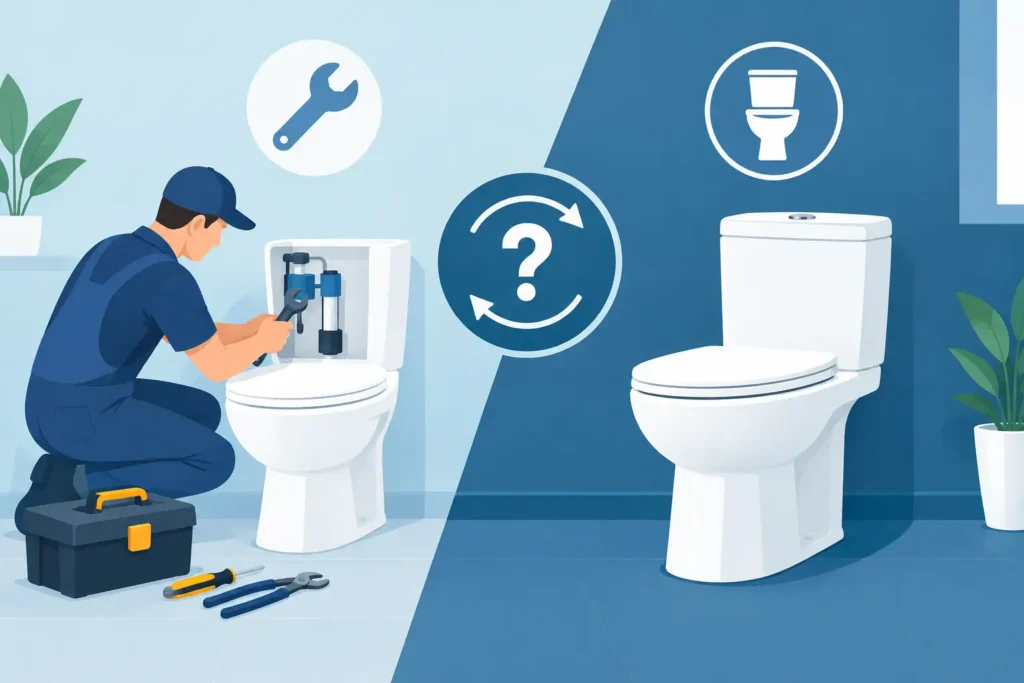
A toilet that runs all night, rocks when someone sits down, or leaves water around its base can turn from an annoyance into a costly problem fast. Toilet repair replacement is not always an either-or decision, but knowing which route fits the problem can protect your bathroom, your flooring, and your water bill.
For most homeowners, the goal is simple: get the toilet working reliably again without paying for a temporary fix that fails a few months later. Some issues need a small internal part and a careful adjustment. Others point to a failing seal, hidden water damage, or an aging fixture that has reached the end of its useful life.
When Toilet Repair Replacement Means a Simple Repair
Many toilet problems come from parts inside the tank. These components work hard every day, and they eventually wear out. The good news is that a professional repair can often restore normal operation without replacing the whole toilet.
A toilet that runs after flushing may have a worn flapper, an incorrect water level, or a fill valve that no longer shuts off properly. Besides the sound, a running toilet can waste a surprising amount of water. If the toilet is otherwise stable, free of cracks, and flushing well, replacing the affected tank component is usually the sensible choice.
A weak or incomplete flush can also be repairable. Mineral buildup, a partially blocked rim, a worn flush valve, or a problem with the handle and chain can interfere with performance. The right fix depends on what is causing the issue. Replacing a handle will not solve a clogged drain path, and plunging repeatedly will not correct a faulty flush valve.
Small leaks at the supply connection or beneath the tank may also be limited repairs. A plumber can identify whether the problem is a loose connection, aging supply line, worn tank bolts, or a damaged gasket. Catching these leaks early matters because even slow drips can stain ceilings below, soften flooring, and create conditions for mold.
Signs Your Toilet Should Be Replaced
Repair makes sense when the toilet itself is in good condition. Replacement becomes the better long-term value when the fixture is cracked, unstable, severely worn, or tied to recurring problems.
A visible crack in the bowl or tank deserves prompt attention. Hairline cracks can spread, and a cracked tank can release a large amount of water without much warning. Do not try to seal a cracked porcelain toilet with a patch and hope for the best. The material is under constant stress from water, cleaning, temperature changes, and daily use.
Water around the base is another issue that should not be ignored. Sometimes the toilet may simply have condensation or a small external leak. But if water appears after flushing, the seal beneath the toilet may be failing. That seal protects the connection between the toilet and drain line. When it fails, water can reach the subfloor and cause damage that is not visible from the bathroom.
A toilet that rocks or shifts is never something to overlook. It may be caused by loose mounting hardware, an uneven floor, a damaged flange, or deteriorated flooring beneath the fixture. Tightening bolts without checking the cause can crack the porcelain or hide a bigger problem. A stable toilet is a safety issue as well as a plumbing issue.
Replacement may also be the practical choice if repairs have become frequent. An older toilet with repeated clogs, poor flushing, internal leaks, and worn hardware can cost more in service calls and wasted water than a new, properly installed fixture. This is especially true for older high-water-use models that struggle to clear the bowl consistently.
Repair or Replace? Start With the Cause
The age of a toilet matters, but it should not be the only factor. A well-maintained older toilet may need only a basic repair, while a newer unit can need replacement after a crack, installation issue, or serious blockage-related damage.
A good decision starts with an inspection of the whole fixture, not just the symptom you can see. The tank parts, supply line, shutoff valve, bowl, base, mounting points, drain connection, and surrounding floor can all affect the recommendation. This approach helps avoid replacing a toilet when a targeted repair would do the job. It also prevents a small repair from being used to delay necessary replacement.
Consider how the problem affects your household. A guest bathroom with an occasional slow refill may be less urgent than the only toilet in a busy home. A leak near finished flooring or a second-story bathroom needs faster attention because water damage can spread beyond the bathroom. If the toilet is overflowing, leaking heavily, or causing water to rise at other drains, stop using it and arrange service right away.
What a Proper Toilet Replacement Includes
Replacing a toilet is more than setting a new fixture on the floor. The old toilet must be removed carefully, the connection below it inspected, and the new unit installed level and secure. The condition of the flange and surrounding floor is especially important. If those components are damaged, a new toilet alone will not solve the underlying problem.
A proper installation also includes a new seal, secure mounting, a reliable water connection, and testing for leaks and flushing performance. The toilet should sit firmly without rocking, fill correctly, and clear the bowl as expected. These details are what help prevent callbacks, damaged flooring, and frustrating repeat issues.
Homeowners also have choices when selecting a replacement. Comfort-height toilets can be easier for many adults to use. Elongated bowls offer more room but may not fit comfortably in every smaller bathroom. Water-efficient models can reduce water use, although the best choice still needs enough flushing power for your household. The right toilet is one that fits the space, works reliably, and can be serviced without unnecessary complications.
Avoiding Damage While You Wait for Service
If you notice a leak at the toilet, remove rugs and towels from the area so you can see where water is coming from. If the toilet will not stop running or water is leaking from the supply side, turn the small shutoff valve behind the toilet clockwise if it moves easily. Do not force a valve that is corroded or stuck.
For an overflow, take the tank lid off and lift the flapper into place if water is continuing to flow into the bowl. Then shut off the water supply. Avoid flushing again until the cause is clear. Repeated flushing can turn a manageable clog into a bathroom flood.
Do not rely on chemical drain cleaners in a toilet. They can damage components, create a hazardous situation for anyone working on the fixture, and often fail to remove the actual blockage. A professional diagnosis is safer when a plunger does not resolve the problem quickly.
Dependable Help for a Toilet Problem That Cannot Wait
A toilet problem is disruptive because it affects one of the most essential rooms in your home. Whether the answer is a new flapper, a repaired drain connection, or a complete fixture replacement, the work should address the cause and leave you with a toilet you can trust.
For homeowners in Port Orchard and across Kitsap County, Leakless Plumbing provides straightforward recommendations, same-day help when available, and repair work focused on lasting results. Don’t stress the mess, call LeakLess.
If your toilet is leaking, rocking, overflowing, or repeatedly failing to flush, acting early can save your flooring and spare your household a much bigger interruption later.