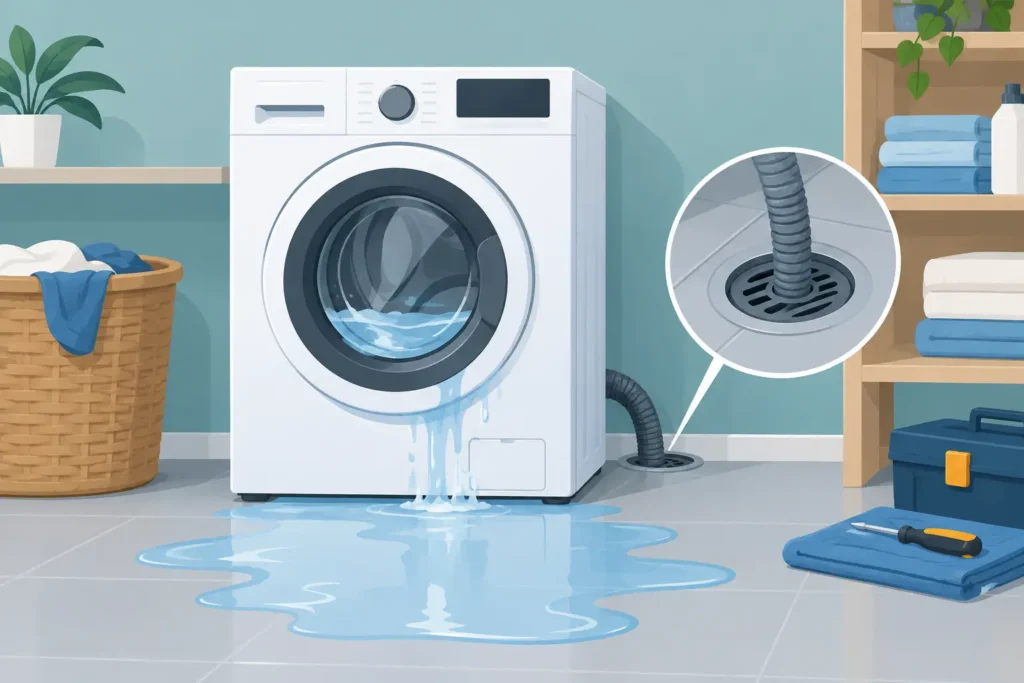
A washing machine drain overflow rarely starts as a small inconvenience. One minute, the load is spinning normally. The next, dirty water is pouring from the standpipe behind the washer, spreading across the laundry room floor and threatening baseboards, flooring, and nearby rooms. Acting quickly can limit the mess, but stopping the water is only the first step. The real goal is finding why the drain could not keep up.
What to Do When a Washing Machine Drain Overflows
Start by stopping the washer. Press pause or cancel, then turn off the machine if it will respond safely. If water continues entering the washer, close the hot and cold supply valves behind it. Avoid reaching through standing water to unplug the machine. If water is close to an outlet, electrical cord, or appliance connection, turn off power to that area at the breaker before touching anything.
Once the flow has stopped, move towels, baskets, and other items out of the wet area. Use towels, a mop, or a wet/dry vacuum to remove as much water as possible. Water that sits under vinyl, laminate, or baseboards can create damage that is not obvious until later.
Do not run another cycle to “see if it happens again.” A second overflow can be worse, especially if the pipe is already holding water. Take a quick look at the drain standpipe and the washer hose instead. If the hose has slipped out, is barely inserted, or is spraying from a loose connection, the correction may be straightforward. If water rose from the pipe itself, though, the issue is usually farther down the drain line.
Why the Drain Cannot Keep Up
A washing machine sends out a large volume of water quickly. Your home’s laundry drain is designed to carry that discharge away, but it needs an open pipe, proper venting, and a correctly installed standpipe to do its job. When any part of that system is restricted, water can rise faster than it can drain.
A partial clog is the most common cause
Lint, detergent residue, fabric fibers, pet hair, and everyday buildup can collect inside the laundry branch line. Even high-efficiency washers release enough water during draining to expose a partial blockage. The pipe may handle a bathroom sink or a small rinse cycle without trouble, then overflow during a full washer drain because the flow is stronger.
A clog can also be farther along in a shared drain. If a nearby sink, tub, or toilet gurgles, drains slowly, or backs up around the same time, the restriction may not be limited to the laundry line. That calls for a proper diagnosis rather than repeatedly clearing the standpipe opening.
The drain pipe may be undersized or poorly configured
Older homes sometimes have laundry plumbing that does not match the needs of a modern washer. A fast-draining machine paired with an undersized pipe may overflow even when there is no major clog. An improperly installed standpipe, a drain hose pushed too far down the pipe, or a missing air gap can also interfere with drainage.
This is where a temporary fix can be misleading. Removing a little buildup may reduce the symptom, but if the drain setup itself is wrong, the overflow can return with the next heavy wash day. A plumber can assess whether the problem is a blockage, an installation issue, or both.
A venting problem can slow drainage
Drain pipes need air movement to let water flow freely. When a vent is blocked or improperly configured, water may drain slowly, make gulping sounds, or pull water through nearby fixture traps. Venting problems are less common than clogs, but they are worth checking when the line appears clear and the overflow keeps happening.
The washer drain hose may be the problem
The drain hose should sit securely in the standpipe without being sealed tightly inside it. If it is too loose, it can jump out during a high-speed drain cycle. If it is inserted too deeply or taped into place, it may create a siphoning issue or prevent the pipe from getting the air it needs.
Check the washer manufacturer’s installation guidance for the recommended hose height and insertion depth. If the hose is cracked, kinked, or damaged, replace it before using the washer again.
What You Can Check Safely
Homeowners can make a few useful observations before scheduling service. First, notice when the overflow occurs. Does it happen only when the washer drains, or do other fixtures struggle as well? Next, look for visible soap scum or lint at the top of the standpipe. A small amount of buildup at the opening does not prove the location of the clog, but it can support the case for drain cleaning.
You can also inspect the hose placement and make sure the water supply valves are working. If a washer has been moved recently, a hose may have been knocked loose or installed incorrectly. Keep the area dry and avoid using chemical drain cleaners. Those products often fail to remove dense lint and sludge, can damage certain piping, and may leave hazardous chemicals in a line for the person who has to repair it.
A hand-held plunger is not usually the best answer for a washing machine standpipe. The pipe is open at the top and the clog is often too far down the line for plunging to create useful pressure. Forcing the issue can splash contaminated water and turn a manageable problem into a bigger cleanup.
When to Call a Plumber for an Overflowing Laundry Drain
Call for professional help promptly if the drain overflows more than once, if water is coming from more than one fixture, or if the laundry room has already taken on significant water. Those signs point to a drain obstruction that needs more than a surface-level fix.
A professional drain cleaning service can identify the affected line and clear buildup with the right equipment. Depending on what is found, the repair may involve cleaning the branch drain, addressing a deeper obstruction, correcting a standpipe or hose issue, or recommending changes to outdated piping. The best repair depends on the condition of the plumbing, the age of the home, and whether the laundry drain shares a line with other fixtures.
For homeowners in Port Orchard and throughout Kitsap County, fast attention matters because laundry room water can travel quietly into walls, flooring, and adjacent spaces. Leakless Plumbing focuses on identifying the source of the problem and making repairs that reduce the chance of another stressful overflow.
Preventing the Next Laundry Room Flood
You cannot prevent every drain problem, but a few habits make an overflow less likely. Use the amount of detergent recommended for your machine, especially with concentrated products. Excess detergent can leave residue in the washer and drain line over time. Clean the washer’s lint filter if your model has one, and avoid washing items that shed heavy amounts of pet hair or loose fibers without taking extra care.
Pay attention to early warning signs. Slow drainage, gurgling, a sewer-like odor near the standpipe, or water appearing around the washer during discharge all deserve attention before they become a full overflow. If your laundry plumbing is older or has had repeat issues, a proactive inspection can be less disruptive than an emergency cleanup.
A clean, properly sized, correctly installed laundry drain should handle wash day without drama. If yours cannot, stop using the machine until the cause is clear. Don’t stress the mess, call LeakLess and get the drain problem handled before the next load turns into water damage.