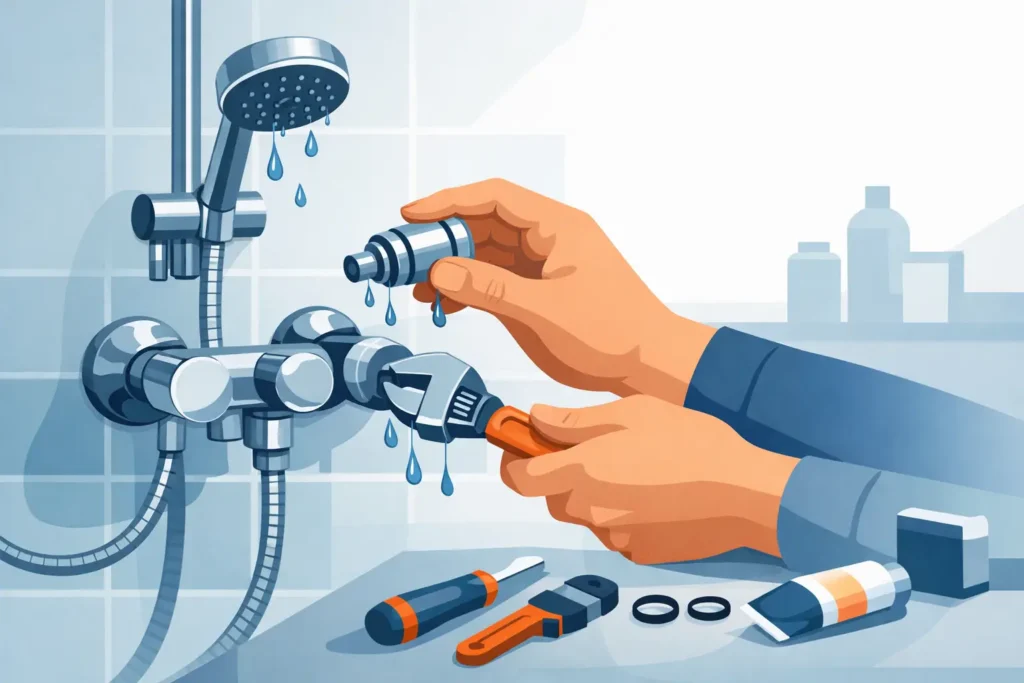
That steady drip from the shower is easy to put off until you hear it all night, see the water bill climb, or notice the wall starting to show signs of moisture. Shower faucet leaking repair matters because even a small leak can point to worn parts, hidden valve trouble, or water getting where it should not. The good news is that some fixes are simple. The better news is that catching the problem early usually means less damage, less stress, and a more reliable repair.
What a leaking shower faucet usually means
Most shower faucet leaks come down to wear inside the handle and valve assembly. Rubber washers flatten out, cartridges wear down, seals get brittle, and mineral buildup keeps parts from closing tightly. When that happens, water keeps slipping through even after the faucet is turned off.
Not every leak means the same thing, though. A drip from the showerhead often points to a bad cartridge or valve seat issue. Water leaking around the handle can mean an O-ring or seal has failed. If you see water staining on the wall behind the trim plate, the problem may be inside the wall, which is a different level of repair altogether.
That distinction matters. Replacing a cartridge is one thing. Opening a wall to stop an active plumbing leak is another.
Before you start shower faucet leaking repair
Start with the basics. Shut off the water supply before taking anything apart. In some homes, there are local shutoffs for the shower valve, but many setups require turning off water to the whole house. Once the water is off, open the faucet to relieve pressure and place a towel over the drain so small screws and clips do not disappear.
It also helps to know what kind of faucet you have. A single-handle shower valve usually uses a cartridge. Older two- or three-handle setups may use stems, seats, and washers. If the home is older and the trim has not been updated in years, expect some corrosion and stubborn parts.
This is where homeowners often lose time. The repair itself may not be complicated, but matching the correct replacement part can be. Taking the old cartridge or stem to compare sizes and style can save a lot of frustration.
How to tell where the leak is coming from
Dripping from the showerhead
If the showerhead keeps dripping when the faucet is off, the valve is not sealing fully. In many modern showers, that points to a worn cartridge. In older fixtures, it may be a washer, stem, or valve seat.
A slow occasional drip and a steady stream are not the same problem. A small drip may be early wear. A stronger flow usually means the internal parts are well past their useful life.
Leaking around the handle
If water appears behind or below the handle while the shower is running, the trim is usually not the main issue. More often, the seal behind it has failed. O-rings and packing nuts are common culprits here.
This type of leak can seem minor because the water only shows while the shower is on. But repeated moisture behind the trim plate can soak drywall or framing over time.
Water stains, soft walls, or damp flooring nearby
This is the category to take seriously right away. If the wall around the shower feels soft, paint is bubbling, or flooring outside the shower is damp, the leak may be inside the wall or escaping from plumbing connections. At that point, shower faucet leaking repair is less about replacing visible parts and more about stopping structural damage.
A practical repair path for common shower leaks
If the leak is limited to dripping from the showerhead and there are no signs of wall damage, a cartridge replacement is often the first repair to try.
Remove the handle, then the trim plate, and inspect the valve body area. If there is heavy mineral buildup, clean it carefully so you can access the retaining clip or nut. Pull the old cartridge straight out if possible. Some are easy. Others feel welded in place from age and hard water. Forcing it can damage the valve body, so patience matters.
Once the old cartridge is out, compare it carefully with the new one. The orientation has to match. Lubricate any approved seals lightly if the manufacturer recommends it, install the new cartridge, and reassemble the trim and handle. Turn the water back on slowly and test both hot and cold.
For older multi-handle faucets, the repair may involve replacing washers, seats, or the full stem assembly. If the metal surfaces inside are pitted or corroded, simply changing a washer may not stop the drip for long. That is one of those it-depends situations. A low-cost part can buy time, but sometimes the smarter repair is replacing more of the internal assembly so the fix actually lasts.
When a DIY fix makes sense and when it does not
A basic shower faucet leaking repair can be a reasonable DIY project if the leak is visible, the faucet type is straightforward, and the parts come apart without a fight. Homeowners who are comfortable shutting off water, removing trim, and matching replacement parts can often handle a simple cartridge or washer change.
Where things get risky is when the valve is old, stuck, or installed in a way that gives poor access. If a retaining clip snaps, a cartridge breaks inside the valve, or the valve body gets damaged, the repair gets more expensive fast. The same goes for leaks inside the wall. Once moisture is moving beyond the fixture itself, speed matters more than saving a service call.
If you are in an older home around Port Orchard or elsewhere in Kitsap County, age can complicate a simple-looking leak. Parts may be discontinued, shutoff valves may not hold, and corrosion can turn a half-hour repair into a bigger job.
Signs it is time to call a plumber
Some leaks need a professional from the start. If the shower is leaking into the wall, if the faucet body is loose, if water pressure changed suddenly, or if the handle is hard to turn, there may be more going on than one worn part. Repeated dripping after a cartridge replacement is another red flag. That can mean the valve body itself is damaged or mineral deposits are preventing a proper seal.
A plumber can also help when the real issue is deciding between repair and replacement. If the trim is outdated, the valve is worn, and replacement parts are hard to find, continuing to patch the faucet may cost more over time than updating the fixture properly.
That is where experienced service matters. A dependable plumber should not just stop the drip and leave. They should explain why it leaked, whether the repair is likely to hold, and what to watch for next.
Preventing the next shower leak
Not every faucet leak is preventable, but you can lower the odds of repeat problems. If your water has heavy mineral content, buildup inside cartridges and valves tends to happen faster. Gentle cleaning, avoiding excessive force on handles, and dealing with small drips early all help extend the life of the fixture.
It also pays to pay attention to subtle changes. A handle that feels stiff, a slight drip after shutoff, or moisture around the trim plate are early warnings. Waiting rarely makes a plumbing leak simpler.
For homeowners, the goal is not just getting through one repair. It is keeping the bathroom functional, protecting the walls and floors around it, and avoiding the kind of hidden damage that turns a minor leak into a much bigger disruption.
When a shower faucet starts leaking, the best move is usually the simplest one – act early. A quick repair today can spare you water damage, wasted money, and one more problem hanging over the house. Don’t stress the mess, call LeakLess.