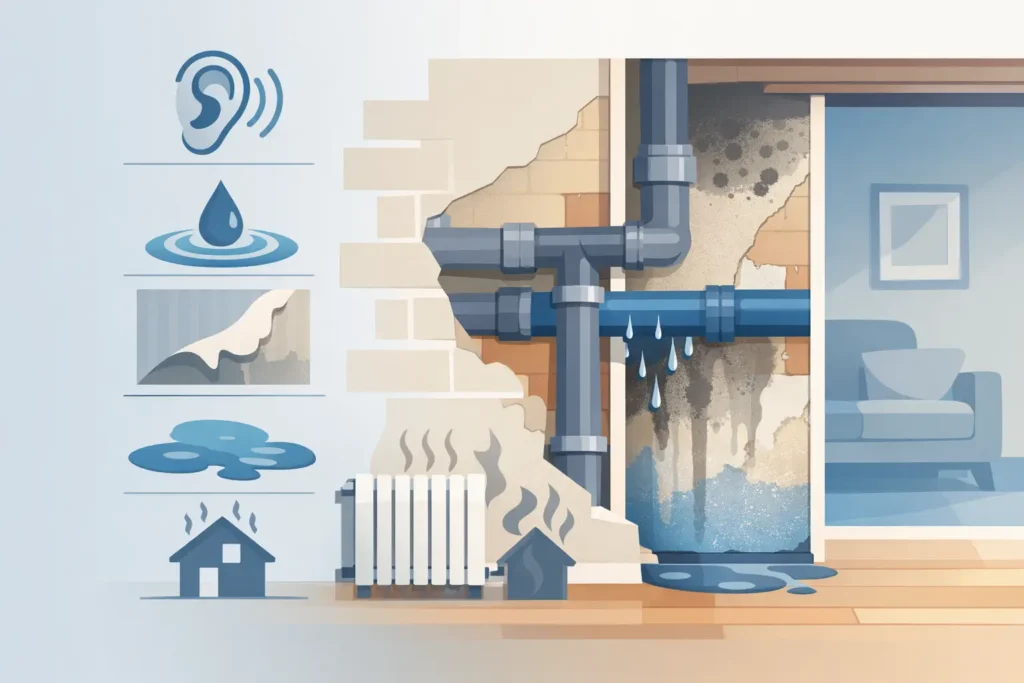
You usually do not see a hidden pipe leak all at once. You notice a paint bubble near the baseboard. A musty smell that was not there last week. A water bill that feels off for no clear reason. Those small changes are often the first signs of pipe leak in wall, and catching them early can save you from expensive drywall, flooring, and framing damage.
A leak behind a wall is one of those problems homeowners hope will go away on its own. It will not. Even a slow drip can soak insulation, weaken drywall, feed mold growth, and stain nearby finishes. The tricky part is that hidden leaks do not always look dramatic at first. They often start with subtle clues that are easy to brush off until the damage spreads.
Common signs of a pipe leak in wall
Some warning signs are obvious, and some are easy to mistake for humidity or normal wear. The key is looking at the full picture instead of one symptom by itself.
Water stains that keep getting bigger
Discoloration on a wall or ceiling is one of the most common red flags. You may see yellow, brown, or copper-colored marks, especially near bathrooms, kitchens, laundry rooms, or anywhere supply and drain lines run.
A single old stain does not always mean an active leak. Sometimes it is leftover damage from a past issue that was already repaired. But if the stain is growing, darkening, or feels damp to the touch, that usually points to a current problem inside the wall.
Bubbling paint or peeling wallpaper
When moisture gets trapped behind a finished wall, it breaks down paint and adhesive. That often shows up as paint that bubbles, cracks, or peels away from the surface. Wallpaper may lift at the seams or start curling for no clear reason.
This can also happen in high-humidity areas, so context matters. If the peeling is isolated to one section of wall and seems to be getting worse, a leak is much more likely than simple moisture in the air.
A musty smell that lingers
Hidden leaks create damp conditions, and damp conditions create odor. If one room has a musty smell that does not improve with cleaning or fresh air, moisture may be trapped behind the wall.
This is especially common when the leak is slow. Slow leaks can go unnoticed for weeks because they do not leave standing water on the floor. Instead, they quietly keep wall materials wet enough to create that stale, moldy smell homeowners notice before they see visible damage.
Warped walls, baseboards, or flooring nearby
Water does not always stay exactly where the pipe is leaking. It can travel downward and outward, affecting trim, subflooring, and nearby surfaces. Baseboards may swell. Flooring near the wall may cup, lift, or feel soft. Drywall may look slightly bowed or uneven.
That spread is part of what makes wall leaks expensive if they are ignored. The pipe itself may be a manageable repair, but the surrounding damage grows the longer water keeps moving through the structure.
Dripping or rushing sounds inside the wall
If you hear water moving when no fixture is running, pay attention. A quiet drip inside a wall cavity or a faint hissing sound can point to a pressurized supply line leak. In some homes, you may hear water movement after flushing or using a sink, but the sound should stop quickly.
Persistent noise is different. If the wall sounds active when everything is turned off, it is worth having it checked.
Mold spots or mildew that keep returning
Mold around a shower or window is one thing. Mold appearing on an interior wall with no obvious source is another. If mildew keeps coming back after you clean it, there may be ongoing moisture behind the surface.
This is not just a cosmetic problem. Mold can spread through drywall and insulation quickly when moisture is constant. It can also affect indoor air quality, which is a real concern for families with allergies, asthma, or respiratory sensitivities.
Higher water bills without a clear reason
A hidden supply line leak often shows up on your water bill before it shows up anywhere else. If your usage jumps and your household habits have not changed, lost water could be going into the wall instead of where it belongs.
Not every leak causes a huge spike right away. Small leaks can still waste a surprising amount of water over time. A gradual increase over two or three billing cycles is still worth investigating.
Low water pressure in one part of the house
If one bathroom sink, shower, or kitchen fixture suddenly has weaker pressure than usual, the issue could be more than a clogged aerator. In some cases, a damaged or leaking water line inside the wall reduces pressure before the problem becomes visible.
That said, low pressure can also come from corrosion, fixture issues, or valve problems. This is one of those symptoms where it depends on what else is happening nearby. If low pressure shows up along with stains, odor, or wall damage, a leak becomes much more likely.
Drywall that feels soft or damp
Sometimes the simplest check tells you the most. If a suspicious area feels cool, soft, or slightly damp compared with the rest of the wall, moisture may be collecting inside.
Do not press hard enough to damage the drywall, but trust what you notice. Walls should feel solid and dry. If they do not, there is usually a reason.
Why hidden wall leaks get worse fast
A pipe leak behind a wall is rarely just about the pipe. Water affects insulation, wood framing, trim, flooring, paint, and drywall. If the leak is near electrical wiring, it can also create a safety concern.
The speed of damage depends on the size and location of the leak. A burst pipe can soak materials in hours. A pinhole leak can take longer but still lead to serious repairs because it stays active for so long. Slow leaks are often the ones homeowners underestimate the most.
In the Pacific Northwest, moisture problems can already be a concern for homes, especially during wetter parts of the year. That makes fast action even more important. When extra indoor moisture gets trapped inside a wall, conditions can turn from a simple leak repair into drywall replacement and mold cleanup sooner than many people expect.
What to do if you notice signs of pipe leak in wall
Start by turning off any nearby fixture and checking whether the symptom changes. If you suspect an active leak and the damage seems to be spreading, shut off the home’s main water supply if you can do so safely.
Then avoid opening the wall yourself unless there is an urgent reason. It is understandable to want answers right away, but cutting into drywall without confirming the source can make cleanup harder and may miss the real problem area. Water often travels, so the visible damage is not always directly in front of the leak.
A proper inspection helps pinpoint whether the issue is a drain line, supply line, fixture connection, or something else entirely. That matters because the repair approach is different in each case. A dependable plumbing repair should solve the cause, not just patch the symptom.
When it is time to call a plumber
If you have more than one warning sign, it is time to act. A stain plus odor. Low pressure plus wall damage. A rising bill plus the sound of dripping. Those combinations usually mean the problem has moved beyond guesswork.
Same-day service can make a real difference with hidden leaks because the goal is not only stopping water loss. It is limiting the damage that follows. The sooner the leak is located and repaired, the better the odds of keeping the repair smaller, cleaner, and less disruptive.
For homeowners in Port Orchard and nearby communities, this is exactly the kind of issue that should not sit on a weekend to-do list. LeakLess Plumbing handles leak inspections and repairs with a practical focus on fixing the problem fully and helping you avoid repeat damage.
If a wall in your home suddenly looks, smells, or feels different, trust that instinct. Plumbing problems often start quietly, and the homeowners who catch them early are usually the ones who avoid the biggest mess.