Cold water in the middle of a shower usually gets your attention fast. So does rusty water, a tank that starts leaking, or a heater that suddenly can’t keep up with a normal morning routine. This water heater replacement guide is here to help you figure out when replacement makes more sense than another repair, what your options are, and how to avoid turning one plumbing problem into a bigger household mess.
When a water heater should be replaced
Most standard tank water heaters last around 8 to 12 years, though that range depends on water quality, maintenance, and how hard the system has been working. If your unit is getting up in age and showing multiple problems at once, replacement is usually the smarter move.
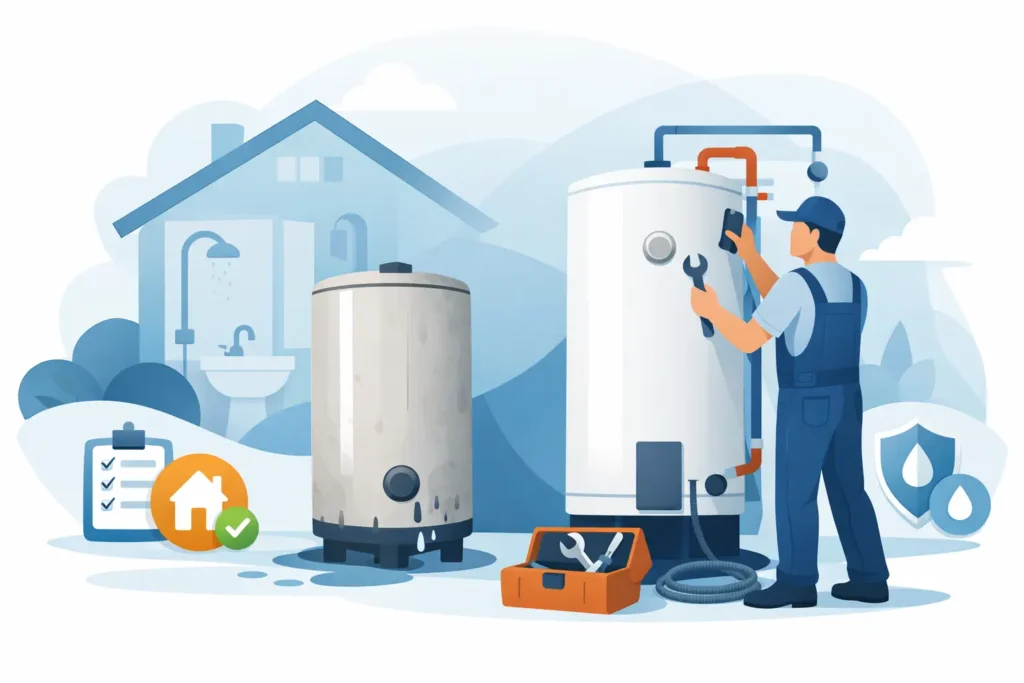
A leaking tank is the clearest sign. If water is coming from the tank itself rather than a valve or pipe connection, that usually means the inner tank has failed. Once that happens, repair is not a real long-term option. The leak may seem minor at first, but it can quickly damage flooring, drywall, and nearby belongings.
Age matters too. If your heater is 10 or 12 years old and needs a major repair, it is worth asking whether that money is better spent on a new unit with a fresh warranty. A repair can buy time, but it does not reset the life of the tank.
Other common warning signs include inconsistent hot water, rumbling noises, discolored water, and rising energy bills. Sediment buildup can reduce efficiency and strain the system. Sometimes flushing helps, but if the heater has been neglected for years, the damage may already be done.
Repair or replacement – how to decide
This is where a lot of homeowners get stuck. Nobody wants to replace a water heater early if a simple fix would do the job. At the same time, it does not make sense to keep paying for short-term repairs on a unit that is already near the end.
A good rule is to look at the full picture, not just the immediate symptom. A bad heating element, thermostat, or pressure relief valve can often be repaired if the rest of the system is in decent shape. But if the tank is old, corroded, noisy, and struggling to produce enough hot water, replacement usually saves money and stress over the next few years.
Think about reliability too. If you have a busy household, hot water is not optional. Waiting until the heater fully fails can mean a day or two of disruption, and in some cases, water damage cleanup on top of the replacement itself.
Your main replacement options
Traditional tank water heaters
For many homes, a standard tank water heater is still the most practical choice. It stores hot water and delivers it as needed. These systems are familiar, generally less expensive up front, and often easier to swap out when replacing an older unit.
The trade-off is that once the tank runs out of hot water, you have to wait for recovery. If your family uses a lot of hot water back-to-back, tank size matters. Going too small can leave people taking cold showers. Going too large can raise energy costs more than necessary.
Tankless water heaters
Tankless units heat water on demand instead of storing it. They can be a strong option if you want better energy efficiency and longer equipment life. They also save space, which can matter in smaller utility areas.
That said, tankless is not automatically the best fit for every home. The upfront cost is higher, and some homes need gas line, venting, or electrical upgrades to support the new system. If your goal is the lowest installation cost and simplest replacement, a standard tank may still be the better route.
Gas vs. electric
If you already have a gas water heater, staying with gas is often the easiest path. The same goes for electric. Switching fuel types can be done, but it usually adds complexity and cost.
The better question is whether your current setup still makes sense for your household. Gas units often recover faster. Electric models can be simpler and may work well depending on utility costs and the home’s existing setup. This is one of those areas where the best answer depends on your house, your usage, and your budget.
Water heater replacement guide for choosing the right size
A replacement should fit your actual hot water demand, not just copy the old unit without a second thought. If your family has grown, schedules have changed, or the old heater never kept up well, this is the time to correct that.
For tank models, size is usually based on how much hot water your household uses during peak times. A one- or two-person home may do well with a smaller tank, while larger households often need more capacity. If multiple showers, laundry, and dishes happen around the same time, undersizing will show up quickly.
For tankless models, the key issue is flow rate. The unit must be able to heat enough water for simultaneous use. A system that works great for one shower may struggle if someone starts the dishwasher and another person runs a sink at the same time.
This is why a proper recommendation matters. Bigger is not always better, but guessing is expensive.
What to expect during replacement
In most cases, replacing a water heater is straightforward, but that does not mean it should be rushed. The old unit has to be safely disconnected, drained, and removed. The new one needs to be installed correctly, with proper connections, venting where required, and testing before the job is done.
Sometimes the replacement is a simple like-for-like swap. Other times, the installer finds code updates, worn shutoff valves, aging supply lines, or venting issues that should be addressed at the same time. That can change the scope of the job, but it also helps prevent repeat problems.
A good plumber will explain what is needed in plain language before moving forward. Homeowners do not need a technical lecture. They need to know what failed, what the replacement involves, and what will keep the system safe and dependable.
What affects the cost
The unit itself is only part of the price. The final cost depends on the type of heater, the size, the fuel source, and whether any additional work is needed to bring the installation up to standard.
A basic tank replacement is usually the most budget-friendly option. Tankless systems tend to cost more upfront, especially if the home needs upgrades. Accessibility can affect labor too. A heater tucked into a tight crawl space or attic can take more time than one installed in an open garage utility area.
Emergency replacement can also change the timing and pressure of the decision. If the tank is actively leaking, speed matters. That is one reason many homeowners appreciate same-day service when available. It reduces the chance that a plumbing failure turns into a flooring or drywall project.
Mistakes homeowners should avoid
The biggest mistake is waiting too long after obvious warning signs appear. A water heater rarely gets better on its own. Strange noises, small leaks, and unreliable hot water usually point to wear that is moving in one direction.
Another common mistake is choosing based only on the lowest price. The cheapest option is not always the most affordable over time if it is undersized, inefficient, or poorly installed. Good workmanship matters because even a quality heater can cause trouble if the connections, venting, or safety components are not handled correctly.
It is also easy to overlook the value of prevention. Replacing a failing heater before it bursts can spare you water damage, scheduling stress, and the scramble of living without hot water.
When it makes sense to call a pro right away
If you see active leaking, smell gas near the unit, notice signs of corrosion, or have no hot water at all, it is time to get it checked promptly. The same goes for any water heater that is making loud popping or banging noises and has not been maintained.
For homeowners in Port Orchard and nearby communities, fast response matters because these problems rarely happen at a convenient time. A dependable plumber can tell you whether the issue is repairable or whether replacement is the safer long-term call. At Leakless Plumbing, that practical approach is simple: don’t stress the mess, call LeakLess.
A water heater replacement is never fun money to spend, but it is one of those home projects that pays you back in reliability, safety, and peace of mind. If your current unit is showing its age, the best next step is not to wait for a total failure – it is to make a clear, informed decision while you still have options.