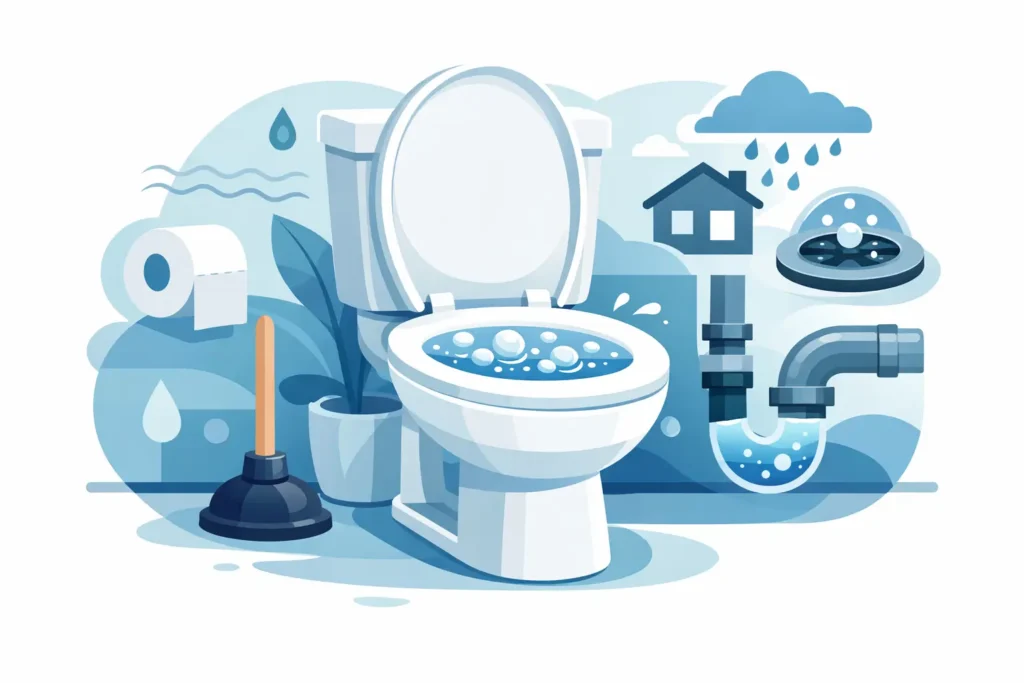
A bubbling toilet usually gets your attention fast, and it should. If you’re asking why is toilet bubbling, the short answer is that air is getting pushed or pulled through your plumbing system where it should not be. That often points to a clog, a venting problem, or a developing sewer line issue. Sometimes it starts as an odd gurgling sound and turns into slow drains, bad smells, or even backup in the tub or shower.
That bubbling is not just a weird toilet quirk. It is your plumbing system telling you that pressure is out of balance somewhere. In a healthy drain system, wastewater flows out and sewer gases vent safely away. When something blocks that flow or interrupts the venting, air looks for another way out. Your toilet bowl often becomes that escape route.
Why is toilet bubbling when nothing was flushed?
If the toilet bubbles when nobody is using it, that is usually a sign the problem is farther down the line. Water from another fixture, shifting air pressure in the drain, or a partial blockage in the main line can all trigger bubbling on their own. Homeowners often notice it after someone runs the sink, takes a shower, or starts the washing machine.
This matters because the toilet may not be the actual source of the problem. The bowl is often just where the symptom shows up first. That is why a toilet can seem to be the issue even when the real trouble is in a vent stack or the main drain line.
The most common causes of a bubbling toilet
A clog in the toilet trap or nearby drain
The simplest cause is a clog close to the toilet itself. Too much toilet paper, wipes, or an object that should never have been flushed can restrict water flow and create that bubbling or gurgling effect. If the toilet also flushes weakly or the water rises higher than normal before draining, a local blockage is very likely.
This kind of problem can sometimes be handled with a proper plunger. The key word there is proper. A few quick pushes with the wrong plunger usually do not solve much. A flange plunger made for toilets creates a better seal and does a much better job moving the clog.
A blockage in the drain line
If more than one fixture is acting up, the issue may be beyond the toilet. A partially blocked drain line can trap air and wastewater, causing the toilet to bubble whenever water moves through the system. You might see a slow bathtub drain, hear gurgling from the sink, or notice water backing up in a lower fixture.
This is where timing matters. A partial blockage has a habit of becoming a full blockage at the worst possible moment. If the toilet is bubbling and the tub starts filling when you flush, that is a strong sign you are dealing with a bigger drain problem.
A clogged or damaged plumbing vent
Your drain system needs air to work correctly. Plumbing vents help regulate pressure and allow sewer gases to leave the home safely. If a vent gets blocked by debris, leaves, nesting material, or damage, pressure can build in the drain system and cause the toilet to bubble.
Vent problems are easy to overlook because they are out of sight. Many homeowners assume a toilet issue must be inside the bathroom, but the problem could be on the roof or inside a wall. A blocked vent may also cause slow draining across several fixtures, along with occasional sewer odors.
A main sewer line problem
This is the cause nobody wants, but it is one of the most important to catch early. If your main sewer line is partially blocked or damaged, air and wastewater can move backward through the system. The toilet may bubble first, but the larger concern is the risk of sewage backup into the home.
Warning signs include multiple drains running slow, recurring clogs, water backing up in the shower or tub, or bubbling that gets worse when using other plumbing fixtures. In older neighborhoods, aging pipes, shifting ground, or root intrusion can all play a part. This is not a wait-and-see situation.
What the bubbling sound is actually telling you
Think of your plumbing like a sealed path that needs both water flow and proper airflow. When that balance is disrupted, trapped air gets forced through the toilet bowl water. That is the bubbling or gurgling you hear.
Sometimes the pressure change is mild and the toilet still works, at least for now. That does not mean the problem is minor. Plumbing issues often give a warning phase before turning into a mess that interrupts the whole house. Catching it early can mean the difference between clearing a blockage and dealing with water damage or cleanup.
What you can try first
If the toilet is bubbling but has not overflowed, there are a few safe first steps. Start with a standard toilet plunger and give it a steady, controlled effort rather than aggressive jabbing. If the flush improves and the bubbling stops, the clog may have been close to the fixture.
You can also pay attention to what else is happening in the house. Run the bathroom sink, shower, or washing machine and listen for more bubbling. If other drains are slow or if the toilet reacts when another fixture is used, that points away from a simple toilet clog and toward a larger drain or vent issue.
What you should not do is keep flushing to test it. Repeated flushing can turn a manageable problem into an overflow. It is also smart to skip chemical drain cleaners. They often do little for toilet or sewer line blockages, and they can create safety issues for anyone who has to work on the drain later.
When a bubbling toilet is an emergency
A bubbling toilet becomes urgent when it is part of a larger pattern. If you have sewage smells, backup in other drains, repeated overflowing, or water appearing in the tub when the toilet is flushed, get help right away. Those signs suggest the drainage system is struggling to move waste out of the home.
Families with one main bathroom feel this especially fast. What starts as an odd noise can become a house-wide plumbing disruption in a matter of hours. If you are in Port Orchard or nearby and you are seeing multiple fixtures involved, it is worth treating the issue like the early warning it is.
Why DIY works sometimes – and sometimes does not
There is nothing wrong with trying a plunger first when the signs point to a simple clog. That is practical, and sometimes it is all that is needed. But bubbling tied to vents, branch drains, or the main sewer line usually requires the right tools and a clear diagnosis.
That is the trade-off. A quick DIY attempt may save time when the issue is close to the toilet, but guessing wrong can delay the actual repair. If the bubbling keeps returning, or if more than one drain is acting up, it is time to stop experimenting and get the system checked properly.
A dependable plumber will not just clear the symptom and leave. The real value is finding out why the pressure imbalance started in the first place and fixing the cause so it does not come back next month.
How plumbers diagnose a bubbling toilet
A professional visit usually starts with the pattern of symptoms. Which fixtures are affected, when the bubbling happens, and whether there has been backup or odor all help narrow things down. From there, the plumber may test drainage, inspect venting, or identify whether the problem is isolated to one bathroom or tied to the home’s main line.
That matters because the right fix depends on the real source. A toilet auger may solve one problem, while another calls for drain cleaning or a deeper inspection of the sewer line. Good plumbing work is not about guessing. It is about solving the issue in a way that holds up.
Preventing future bubbling problems
The best prevention is simple and consistent. Flush only what the toilet is designed to handle. Be careful with so-called flushable wipes, paper towels, hygiene products, and anything that can snag in the line. If your home has older pipes or a history of recurring drain issues, pay attention to early signs instead of waiting for a full blockage.
It also helps to act on slow drains before they become backups. Toilets and drains rarely go from perfect to disaster with no warning at all. Most of the time, they give small signals first. Bubbling is one of them.
A bubbling toilet is your home’s way of asking for attention before a bigger mess starts. If something sounds off, trust that instinct and deal with it early – it is almost always the less stressful option.