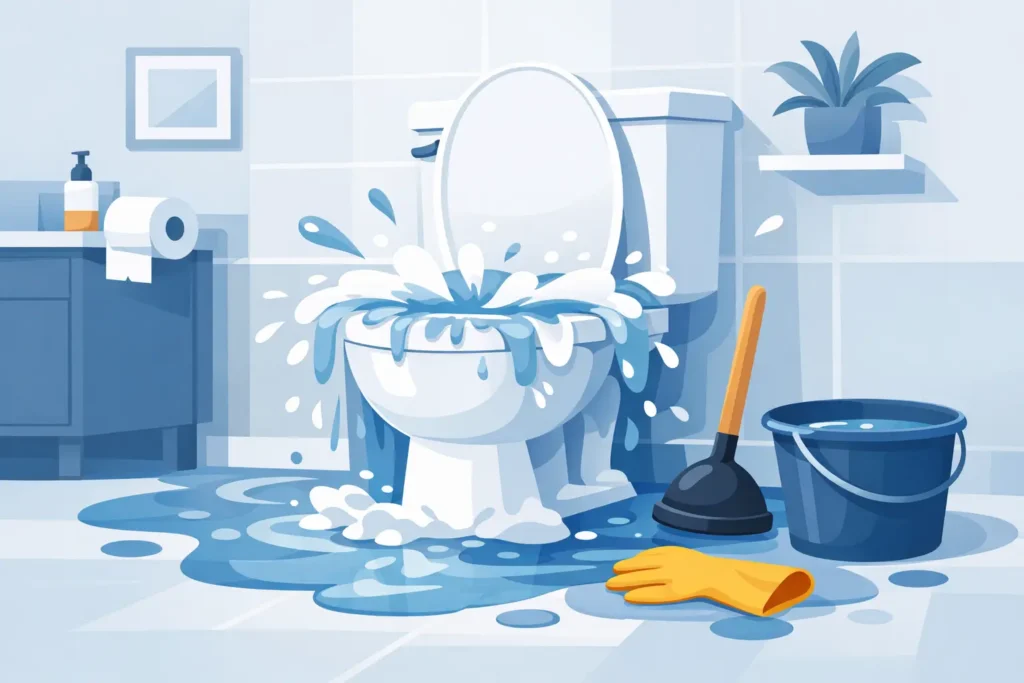
The water is rising, the floor is getting wet, and every second feels longer than it should. Knowing how to handle an overflowing toilet can keep a stressful mess from turning into damaged flooring, soaked drywall, or a much bigger plumbing repair. The goal is simple: stop the water first, protect your home second, and only then deal with the clog.
How to Handle an Overflowing Toilet Immediately
Do not flush again. A second flush is one of the fastest ways to send more water over the rim, especially when the drain line is blocked. If the toilet is actively overflowing, focus on shutting off the incoming water before trying to plunge or clean anything.
Stop water from entering the bowl
Look behind the toilet near the floor for a small shutoff valve on the wall or floor. Turn it clockwise until it stops. This shuts off the fresh-water supply to the toilet.
If you cannot reach the valve quickly, remove the tank lid carefully and set it on a towel or stable surface. Inside the tank, push the rubber flapper at the bottom down over the drain opening. That prevents tank water from flowing into the bowl. If the tank is still filling, lift the float to stop more water from entering the tank while you locate the shutoff valve.
Once the water is off, wait for the bowl level to settle. Do not force the handle or keep testing the flush. A toilet can appear to be draining normally for a moment, then surge again if the blockage is farther down the line.
Keep the water contained
Move bath mats, baskets, scales, and anything absorbent away from the toilet. Put old towels around the base of the toilet to catch water that is already spreading, but do not use your best linens. If water has reached nearby carpeting, a hallway, or a room below, the situation may need professional drying as well as plumbing repair.
Keep children and pets out of the bathroom until cleanup is complete. Toilet overflow water can contain bacteria, particularly if the bowl had already been used or if the problem involves a drain-line backup.
Wear gloves if you have them. Use paper towels, old towels, or a wet/dry vacuum rated for water pickup to remove standing water. Bag and discard paper towels immediately. Wash reusable towels separately using hot water, then disinfect the floor, the exterior of the toilet, and any surfaces the water touched.
Find Out What Caused the Overflow
An overflowing toilet usually comes down to one of two problems: a clog that prevents the bowl from draining or a mechanical issue that keeps water running into the bowl. The right next step depends on which one you have.
If the bowl filled immediately after a flush and drained slowly or not at all, a clog is likely. Common causes include too much toilet paper, wipes labeled as flushable, paper towels, hygiene products, cotton swabs, children’s toys, or a small object that fell into the bowl. Only toilet paper and human waste belong in a toilet.
If the bowl is not clogged but water keeps running from the tank into the bowl, the flapper, fill valve, or float may be malfunctioning. In that case, keep the supply valve shut off and avoid using the toilet until it is repaired. You may have a toilet repair issue rather than a drain clog.
A more serious possibility is a blockage in the main drain line. Warning signs include water backing up in the tub or shower when the toilet is flushed, gurgling drains, slow drainage in multiple fixtures, or another bathroom toilet acting up at the same time. A plunger will not reliably solve a main-line issue, and repeated flushing can send wastewater into the lowest fixture in the house.
Clear a Simple Clog Without Making It Worse
Only try to clear the toilet after the bowl water has dropped to a manageable level and you have confirmed that no other drains are backing up. If the water is still near the rim, give it time to recede or carefully remove some water with a small container before plunging.
Use the right plunger
A toilet needs a flange plunger, not a flat sink plunger. A flange plunger has an extended rubber sleeve that fits into the toilet drain opening and creates a better seal.
Place the plunger over the opening, make sure the rubber cup is covered by water, and begin with a gentle push to avoid splashing. Then use firm, controlled strokes for about 15 to 20 seconds. The goal is to move water back and forth through the trap, not to hammer the porcelain with the handle.
After plunging, wait a moment. If the water level drops, turn the supply valve back on slowly and do one cautious test flush. Stay by the toilet during that flush. If the bowl starts rising again, shut the water off immediately.
Consider a toilet auger for a stubborn blockage
A toilet auger, sometimes called a closet auger, is designed to reach through the toilet trap without damaging the porcelain. It can help when an object or compacted blockage is beyond the reach of a plunger.
Feed the protected end into the bowl opening, turn the handle slowly, and avoid forcing it. If you feel solid resistance, especially something that does not feel like a soft clog, stop. Trying to muscle an object through can crack the toilet, damage the internal trap, or push the obstruction deeper into the drain line.
Skip chemical drain cleaners. Harsh chemicals often do little for toilet clogs, can splash back during plunging, and may damage plumbing components. They also make the work more hazardous for anyone who later needs to service the toilet.
When an Overflowing Toilet Needs a Plumber
A homeowner can often handle a basic toilet-paper clog. It is time to call a plumber when the overflow returns, the toilet will not clear with a proper plunger, or you suspect the problem is beyond the toilet itself.
Call for help right away if you notice any of these signs:
- Water is backing up into a tub, shower, sink, or another toilet.
- Several drains are slow, gurgling, or producing unpleasant odors.
- You suspect a toy, toothbrush, or other solid object is lodged in the toilet.
- Water is leaking from the toilet base, through the floor, or into a room below.
- The toilet overflows repeatedly even after a clog seems to clear.
- You have shut off the water but the toilet tank or internal parts continue to malfunction.
These situations can point to a deeper drain blockage, a damaged toilet component, a failing seal at the base, or a problem with the home’s drain system. The longer wastewater sits on finished floors, the greater the risk of damage and cleanup costs.
For homeowners in Port Orchard and throughout Kitsap County, fast professional help can be especially valuable after hours or when there is only one working bathroom in the home. Leakless Plumbing can identify whether the issue is in the toilet, a branch drain, or the main line, then address the real cause instead of leaving you with a temporary fix. Don’t stress the mess, call LeakLess.
Protect Your Bathroom After the Water Stops
Even a small overflow deserves a careful cleanup. Dry the floor completely, including around the toilet base and behind it. If water seeped under vinyl flooring, into baseboards, or through grout gaps, watch for swelling, staining, soft spots, or a lingering odor over the next several days.
Do not assume the toilet is ready for normal use just because the bowl looks clear. Flush it once while watching closely. Then run water in the nearby sink and shower to check for slow drainage, bubbling, or water movement in the toilet bowl. Those clues can reveal a larger blockage before another overflow catches you off guard.
Reduce the Chances of Another Overflow
A few everyday habits prevent many toilet emergencies. Use reasonable amounts of toilet paper, flush in between if needed, and keep a covered trash can nearby for wipes and personal-care items. Even products marketed as flushable can collect in pipes and contribute to stubborn clogs over time.
If a particular toilet clogs often, do not treat repeated plunging as normal. Older low-flow toilets, partial drain obstructions, buildup in the line, or a venting issue can all create repeat trouble. A professional inspection can save you from the inconvenience of another late-night overflow and help protect the parts of your home that water reaches first.
When the bowl starts rising, calm action matters more than a perfect repair. Shut off the water, contain the mess, and trust the warning signs. Your floor will thank you for moving quickly.