A kitchen sink that backs up right before dinner or a shower that turns into a bathtub by morning usually leads to one question fast: what will actually clear this clog for good? When homeowners ask about drain snaking versus hydro jetting, they are usually not looking for a plumbing lecture. They want to know which option is faster, safer, and less likely to leave them dealing with the same mess again next month.
The short answer is that both methods have a place. The better choice depends on what is causing the blockage, how deep it is in the line, and what condition the pipe is in. A good plumber does not pick a method just because it is available. They pick the one that fits the problem.
Drain snaking versus hydro jetting: what is the difference?
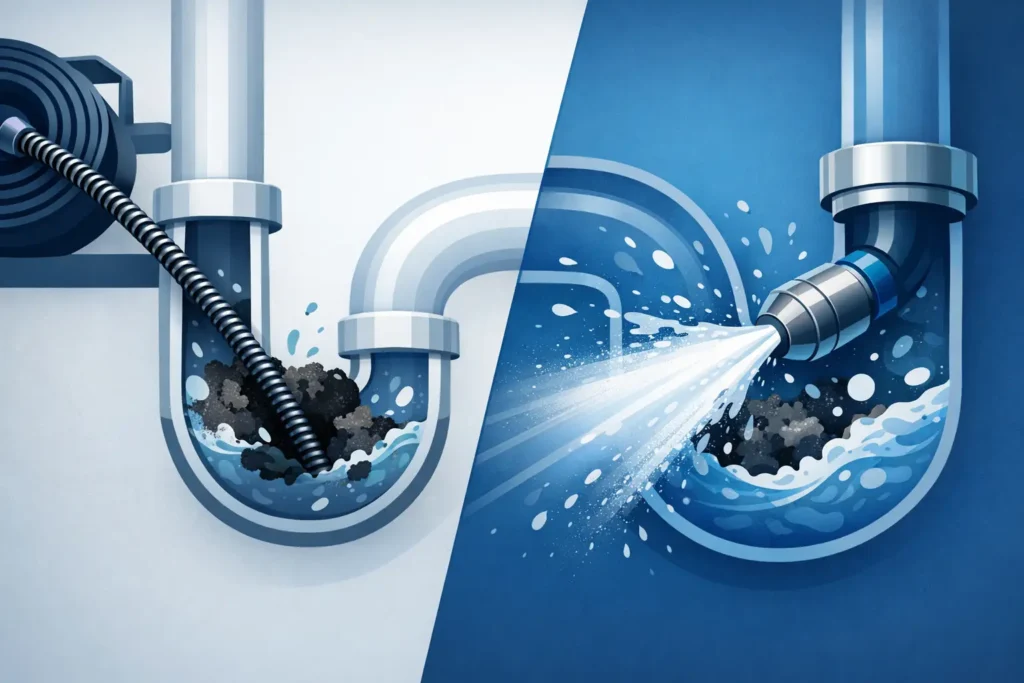
Drain snaking is a mechanical method. A plumber feeds a cable into the drain or sewer line and uses a cutting or boring head to break through a clog. Think of it as creating a path through the blockage so water can move again. It is often the right move for isolated clogs caused by hair, paper buildup, or a small obstruction lodged in the line.
Hydro jetting works differently. Instead of cutting a hole through the clog, it uses high-pressure water to scour the inside of the pipe. That pressure can wash away grease, sludge, soap buildup, and debris along the pipe walls, not just the main blockage. When it is used in the right situation, hydro jetting cleans far more thoroughly than a snake.
That difference matters. If a line is clogged by one solid item, snaking may solve it quickly. If a line keeps slowing down because buildup is coating the pipe from end to end, a snake may restore flow without really cleaning the system. That is where hydro jetting often earns its value.
When drain snaking makes the most sense
For many homes, snaking is the practical first step. It is usually faster for simple clogs and can be a very effective solution when the problem is limited to one fixture or one section of pipe. A bathroom sink slowed by hair and soap residue, for example, often responds well to snaking. So can a toilet clog caused by excess paper or an object that should not have been flushed.
Snaking is also often the better option when the goal is to reopen a drain quickly and confirm whether the problem is a basic obstruction or something larger. In urgent situations, that matters. If you have water backing up and need the line moving again as soon as possible, a snake can often restore function without the added setup of jetting equipment.
There are trade-offs, though. A drain snake usually punches through or pulls out part of the clog. It does not always remove the sticky residue left behind on the pipe walls. Grease, scale, and sludge can stay in place, which means the drain may work for now but clog again sooner than you hoped.
When hydro jetting is the better long-term fix
Hydro jetting is often the stronger choice when recurring clogs point to a line that is dirty all the way through, not just blocked in one spot. Kitchen drains are a common example. Grease, food particles, and soap can build up over time until the pipe narrows more and more. A snake may poke a hole through that mess. Hydro jetting can wash the buildup off the pipe interior.
This method is also useful when multiple drains are slow, when there is a history of repeated backups, or when a main line has heavy residue that keeps catching debris. In those cases, cleaning the full diameter of the pipe can make a real difference in how long the fix lasts.
That said, hydro jetting is not automatically the answer to every clog. High-pressure water is powerful, and older or damaged pipes may need to be inspected before jetting is recommended. If a sewer line is cracked, weakened, or poorly connected, the wrong pressure can make an existing problem worse. That is why experienced plumbers often pair drain cleaning with a camera inspection when the symptoms suggest something more serious.
Cost, speed, and disruption
Homeowners often compare drain snaking versus hydro jetting based on price, and that makes sense. In general, snaking is usually the less expensive option up front. It tends to take less time for a basic clog, and the equipment is simpler. If the issue is minor and isolated, paying for hydro jetting may not be necessary.
Hydro jetting usually costs more because it is a more involved service. But the higher upfront cost can make sense if repeated clogs are already costing you time, stress, and repeated service calls. A cheaper fix is not always the better value if it only lasts a few weeks.
There is also the question of disruption. Neither method should turn your home upside down when handled properly, but hydro jetting can take a bit more planning. The line may need to be inspected first, and access points matter. Snaking is often the quicker in-and-out solution for a straightforward blockage.
Which option is safer for your pipes?
This is where the answer really becomes it depends.
A professional drain snake is safe in the right hands, but it can scratch or catch on some pipe materials if used incorrectly. Hydro jetting is highly effective, but because it uses pressurized water, it should not be used blindly on fragile or compromised plumbing. Neither method is something to guess at based on an internet video and a rented tool.
For newer pipes in solid condition, hydro jetting can be an excellent cleaning method. For older homes, especially those with aging drain lines, a plumber may want to assess the pipe first. In some cases, snaking is the safer starting point. In others, jetting is perfectly appropriate after inspection.
The key is not choosing the method with the best-sounding name. It is choosing the method that matches the age, material, and condition of the line.
Signs you may need more than basic drain clearing
Sometimes the real issue is not whether to snake or jet. It is whether the clog is a symptom of a larger drain or sewer problem. If you notice frequent backups, foul odors, gurgling drains, or water showing up in the tub when the toilet flushes, the line may need more than a quick clearing.
Those symptoms can point to a blockage deeper in the system or a line that has damage, heavy buildup, or invasive roots. In those situations, the smartest move is not picking a method yourself. It is getting the line properly evaluated so the repair actually fits the problem.
For homeowners in places like Port Orchard, where many neighborhoods include a mix of older and newer plumbing systems, that distinction matters. What works well in one house may be the wrong call in the next.
How a plumber decides between snaking and jetting
A dependable plumber will usually start with the symptoms, the location of the clog, and the history of the issue. If this is the first time a bathroom sink has slowed down, snaking may be all that is needed. If the kitchen line has been cleared twice in the last year and still backs up, hydro jetting starts to make more sense.
They also consider the pipe itself. Material, age, past repairs, and overall condition all influence the recommendation. A trustworthy plumber should explain why one method fits better than the other, in plain language, without pushing a bigger service than you need.
That is especially important during stressful plumbing calls. When water is not draining and your day is already off track, clear advice matters just as much as quick service. At Leakless Plumbing, that practical approach is simple: solve the immediate issue, look for the reason it happened, and help prevent the repeat call nobody wants.
The right fix is the one that lasts
If your clog is minor and isolated, drain snaking may be the fastest, most sensible choice. If your drains keep slowing down because the pipe walls are coated with buildup, hydro jetting may give you the cleaner, longer-lasting result you were hoping for. Neither option is better in every case.
What matters most is getting the problem diagnosed correctly before spending money on the wrong fix. A drain that clears today but backs up again next week is not really fixed. When the choice is based on the actual condition of the line, you are far more likely to get your plumbing back to normal and keep it that way.