A drain that gurgles after you flush a toilet, empty a sink, or run the washing machine is not just making an odd noise. It is often your plumbing system telling you that air and wastewater are not moving the way they should. If you are asking what causes drain gurgling, the answer is usually a developing clog, a venting issue, or a restriction farther down the drain line.
The sound can start quietly and seem harmless, but it deserves attention. A small drainage problem can turn into a slow drain, a backup, unpleasant odors, or water where it does not belong. The good news is that early action can often prevent a much bigger mess.
What Causes Drain Gurgling in a House?
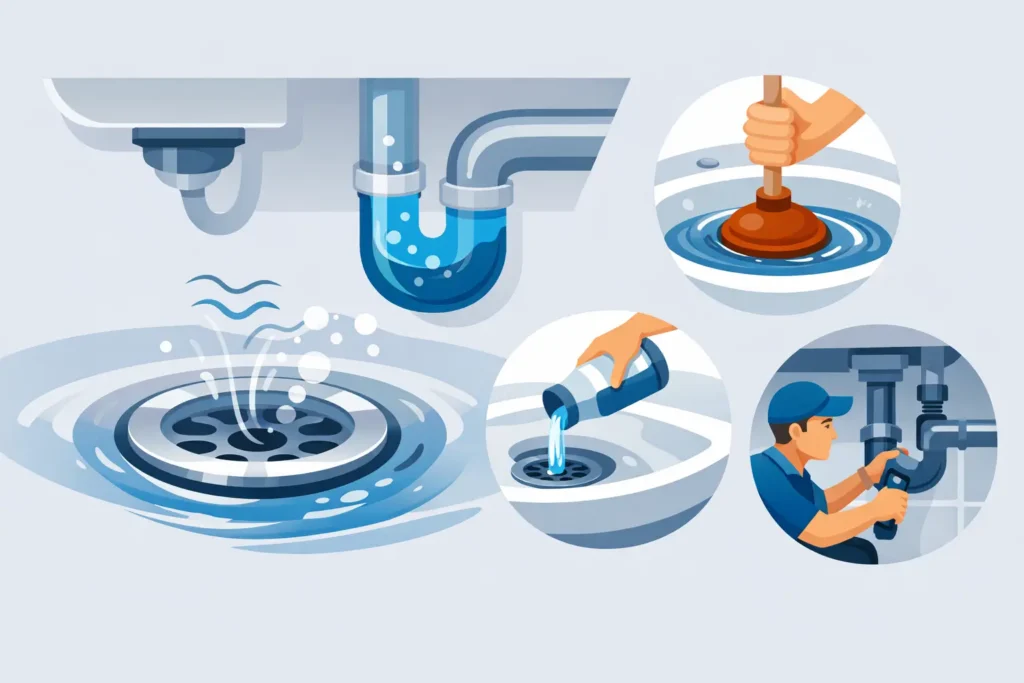
Your home’s drains need two things to work properly: a clear path for water to flow out and enough air pressure to keep that flow moving smoothly. Plumbing vents, which run through the roof, allow air into the system and direct sewer gases safely outside. When water, air, or both are blocked, air may get forced through the water sitting in a drain trap. That is the gurgling sound you hear.
The exact cause depends on which fixture makes the noise and when it happens. A single noisy bathroom sink may have a local problem. A toilet that makes the nearby tub gurgle points more strongly to a shared drain line or vent issue. Several fixtures gurgling at once is a reason to act quickly, because the obstruction may be farther along in the plumbing system.
A Partial Drain Clog
Partial clogs are one of the most common causes. Grease, soap residue, hair, food particles, and mineral buildup do not always stop a drain immediately. Instead, they narrow the pipe over time. Water has less room to pass, so it can pull or push air through nearby drains as it moves.
Kitchen drains commonly collect grease and food debris. Bathroom sinks and tubs often collect hair and soap buildup. Toilets may be affected by too much paper or objects that should never have been flushed. A partial clog can explain why the water still drains, just slowly, while the pipe makes bubbling or gulping sounds.
A Clog in a Shared Branch Line
Many fixtures connect to the same branch drain before the water reaches the main line. That means one fixture can reveal a problem caused farther away. For example, flushing an upstairs toilet might make a first-floor shower drain gurgle because both fixtures use part of the same drainage path.
This is why it helps to pay attention to the pattern. If only one fixture is affected, the clog may be close to that fixture. If using one appliance or fixture triggers noises elsewhere, the restriction may be in a shared line. Washing machine discharge is especially useful as a clue because it sends a large amount of water into the drain quickly.
A Blocked Plumbing Vent
A vent blockage can make a drain gurgle even when there is no major clog in the drainpipe itself. Leaves, moss, nesting material, or other debris can restrict a roof vent. In some homes, vent piping may also be undersized, improperly installed, or affected by age-related damage.
Without enough incoming air, moving water creates negative pressure inside the pipes. The system then tries to get air wherever it can, including through fixture traps. You may hear gurgling, see toilet bowl water move, or notice that a sink drains poorly after another fixture is used.
Roof work is not a safe DIY project for many homeowners, and vent problems can be difficult to confirm without the right tools. A plumbing inspection can determine whether the issue is a blocked vent, a drain obstruction, or a combination of both.
A Main Drain Line Restriction
When multiple drains are slow or noisy, the main drain line needs attention. This line carries wastewater from the home to the municipal sewer connection. Roots can enter older pipe joints, soil can shift around aging pipes, or buildup can collect in low spots and damaged sections.
A main line restriction may begin with occasional gurgling, then progress to toilets that bubble, tubs that drain slowly, or water backing up into the lowest drain in the home. In a two-story house, that can be a downstairs shower or tub. Do not keep running water to “test” the problem if you suspect a main line blockage. More water can create an indoor backup.
Signs the Gurgling Is Becoming Urgent
Not every noisy drain is an emergency, but certain combinations deserve a same-day plumbing call. Water backing up into a tub, shower, sink, or floor drain needs prompt attention. So do sewage odors, toilet water rising or falling unexpectedly, and several fixtures draining slowly at the same time.
If you hear gurgling followed by standing water, stop using nearby fixtures. Avoid running the dishwasher, washing machine, or additional showers until the drainage issue has been evaluated. These appliances and fixtures can send enough water into the system to turn a manageable clog into a cleanup problem.
A recurring issue also matters. If you clear a sink trap and the gurgling returns a few weeks later, there may be buildup or damage farther down the line. Temporary relief is not the same as a lasting repair.
What You Can Safely Try First
For a single slow sink or tub, start with the simple steps. Remove visible hair or debris from the stopper and drain opening, then clean the trap if you are comfortable doing so. Place a bucket underneath before loosening the fittings, and check the trap for buildup.
A plunger can help with a minor fixture-level clog. For a sink, cover the overflow opening with a wet cloth so you can create better suction. Use steady plunges rather than aggressive force. A toilet plunger should be used only for a toilet, while a flat-bottomed sink plunger is better for sinks and tubs.
Skip harsh chemical drain cleaners. They can damage some pipes and seals, create hazardous splashes, and make future repair work more difficult. They also rarely solve a vent problem, root intrusion, or a blockage deep in a shared line.
Do not attempt to access a roof vent unless you have the training and safe equipment to do it. It is easy to damage vent piping or get hurt on a wet, steep, or mossy roof. In the Port Orchard area, wet weather can make that risk even greater.
When a Professional Drain Inspection Makes Sense
A professional drain cleaning or camera inspection is the practical next step when the source is unclear, the problem affects more than one fixture, or the gurgling keeps coming back. A plumber can locate the restriction instead of guessing, then recommend the repair based on what is actually happening inside the line.
That matters because the right solution depends on the cause. A local hair clog may need a simple cleaning. Heavy buildup may call for more thorough drain service. A damaged or root-affected line may need repair to prevent the same backup from returning. Clear communication about those differences helps homeowners make a confident decision without paying for a temporary fix that does not hold up.
Pay attention to your drains before they force the issue. Gurgling is often an early warning, and addressing it while water is still moving normally is easier on your home, schedule, and budget. When the noise is spreading from one fixture to another or comes with slow drainage or backup, LeakLess Plumbing can help identify the cause and get your household running normally again. Don’t stress the mess, call LeakLess.