A pipe replacement is not the kind of home project most people plan for. It often starts with a leak behind a wall, low water pressure at the kitchen sink, rusty-colored water, or a burst line on a cold morning. When it is time to choose new plumbing, the PEX versus copper decision comes up quickly. Both materials can serve a home well, but they perform differently in cost, installation, freezing conditions, and long-term maintenance.
For homeowners, the best answer is rarely about picking the material with the best reputation. It is about choosing the pipe that fits the home, the existing plumbing, the repair scope, and the household’s plans for the future.
PEX versus copper at a glance
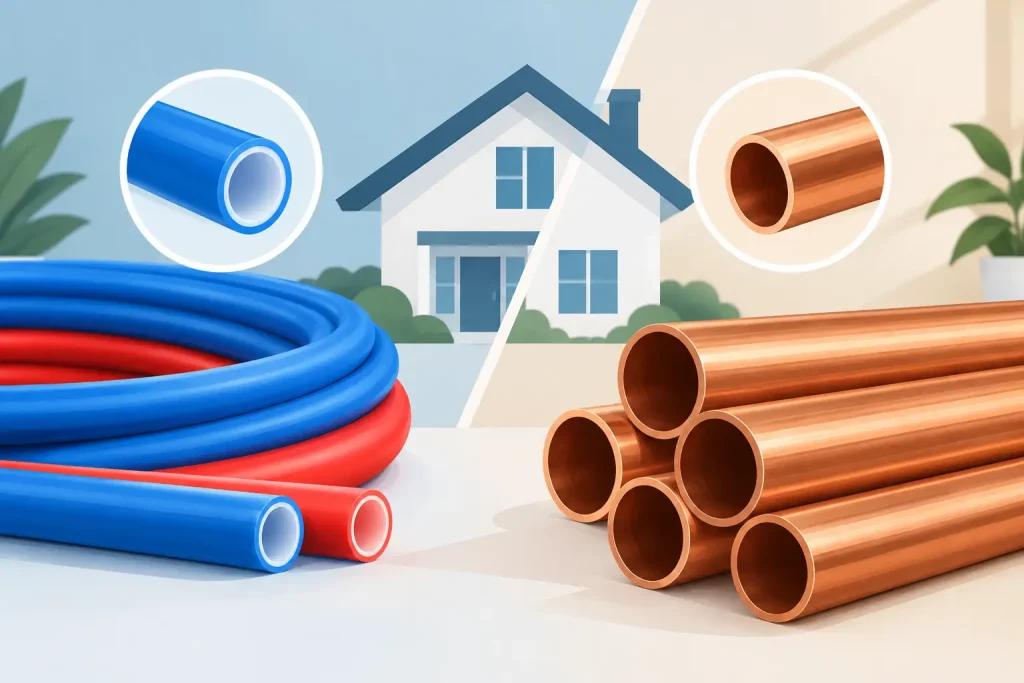
PEX is a flexible plastic tubing used for hot and cold water supply lines. It has become common in newer homes and repiping projects because it is fast to install, resistant to corrosion, and generally less expensive than copper. Its flexibility allows a plumber to route it around framing with fewer connections hidden inside walls.
Copper is a metal pipe with a long track record in residential plumbing. It is durable, familiar to many homeowners, and able to handle high temperatures. Copper piping is rigid, so it requires fittings at turns and changes in direction. It also takes more labor and skill to install correctly.
Neither choice is automatically better for every job. A small repair on an existing copper system may call for copper. A whole-home repipe with aging, corroded lines may be a strong candidate for PEX. The details matter.
Why many homeowners choose PEX
The biggest advantage of PEX is flexibility. Instead of cutting and joining multiple rigid pipe sections to get around framing, a plumber can often run one continuous length of PEX. Fewer fittings can mean fewer potential leak points, particularly in difficult-to-reach areas.
PEX also handles cold weather better than copper. It can expand somewhat if water freezes inside it, while copper is more likely to split or burst under the same pressure. That does not mean PEX is freeze-proof. Any water line can freeze when exposed to enough cold, and fittings, valves, and connected fixtures can still be damaged. Proper insulation and protection remain necessary in crawl spaces, exterior walls, garages, and other vulnerable areas.
Cost is another practical reason PEX is popular. The material typically costs less, and the installation may require less time and fewer fittings. For a family trying to control the cost of a major repipe, that difference can be meaningful without sacrificing day-to-day performance.
PEX does not corrode like metal pipe. In homes with water conditions that contribute to mineral buildup or pinhole leaks in older copper, that is a major benefit. It is also quieter than copper in many installations because the tubing is less likely to transmit water-flow noise through walls.
There are limits to consider. PEX should not be installed where it will be exposed to direct sunlight for extended periods, since ultraviolet light can damage it. It is also not used for every type of plumbing line. A qualified plumber will choose the right pipe and fittings for the specific application, not treat PEX as a one-size-fits-all answer.
When copper still makes sense
Copper remains an excellent material in the right setting. It has a proven service history, stands up well to heat, and is not affected by sunlight exposure in the way PEX is. For visible piping in a utility room or other exposed area, copper can be a durable, clean-looking choice.
Copper may also be the practical option when repairing or extending an existing copper system. Matching the material can simplify the work and preserve the layout of the plumbing already in place. If only one accessible section has failed because of physical damage, replacing that section with copper may make more sense than changing a larger area to another material.
Some homeowners simply prefer copper because it is a traditional, non-plastic material. That preference is valid, especially when budget is less of a concern and the installation conditions support it.
The trade-off is that copper is more vulnerable to freezing, costs more, and can develop corrosion-related problems over time. Water chemistry, improper installation, electrical grounding issues, and age can all contribute to pinhole leaks. Copper is durable, but it is not permanent.
Pinhole leaks are a warning sign
One isolated leak does not always mean the entire plumbing system needs replacement. But repeated pinhole leaks in different areas deserve attention. Patching one weak section after another can become expensive and disruptive, especially when pipes are hidden behind drywall or under flooring.
A plumber can inspect the condition of the existing lines, identify whether corrosion is widespread, and explain whether a targeted repair or a larger repiping plan offers better long-term value. The goal should be to stop repeat damage, not just get through the next leak.
Installation differences affect the final price
Material cost is only part of the PEX versus copper calculation. Labor often changes the final price more than homeowners expect.
Copper installation requires cutting, cleaning, fitting, and joining each section carefully. It is a dependable process when done properly, but it takes time. Tight spaces, complicated routes, and many direction changes add fittings and labor.
PEX installation can be faster because the pipe bends around obstacles and uses longer continuous runs. In many whole-home repipes, that can reduce wall openings and shorten the time the water needs to be shut off. Every home is different, though. An older home with difficult access, previous remodels, or damaged framing may still require substantial labor regardless of the piping material.
The type of PEX connection also matters. Crimp, clamp, expansion, and push-fit connections are not interchangeable choices made on a whim. A professional considers the system, local requirements, access, pipe size, and service conditions before selecting a method.
Water quality and household health concerns
Homeowners sometimes worry that PEX will affect the taste or quality of their water. Modern plumbing products intended for drinking water are manufactured to meet applicable standards, but water taste can be influenced by many things: the home’s plumbing, water heater condition, municipal supply changes, filtration equipment, and how long water sits in the pipe.
Copper can also affect water characteristics, particularly in homes with aggressive water chemistry or deteriorating pipes. A metallic taste, blue-green staining around fixtures, or recurring pinhole leaks may point to a copper system that deserves professional evaluation.
If water quality is a concern, do not assume changing pipe material alone will solve it. Start with an inspection and, when needed, appropriate water testing. That helps separate a piping issue from a water-source, fixture, or water-heater issue.
How to decide what is right for your home
The best choice usually becomes clearer after looking at the condition of the existing plumbing and the scope of the work. Consider whether the repair is small and accessible or whether multiple lines are aging, leaking, or difficult to reach. Also think about how long you expect to stay in the home and whether avoiding future wall repairs is worth investing in a larger project now.
A few situations call for a closer look from a plumber:
- You have had more than one leak in older copper piping.
- Water pressure has dropped in several fixtures.
- You see staining, corrosion, or moisture around exposed pipes.
- A freeze damaged a pipe, valve, or connection.
- You are remodeling and opening walls anyway.
For a focused repair, preserving the existing system may be the sensible choice. For widespread pipe failure, a PEX repipe may offer better value, faster installation, and fewer corrosion concerns going forward. In some homes, a combination of materials is the right solution.
Do not wait for a small leak to become a larger repair
A slow drip behind a wall can damage insulation, drywall, flooring, and framing long before it becomes obvious. If you notice a higher water bill, a musty smell, a warm spot on the floor, or water marks that keep returning, it is worth having the plumbing checked promptly.
For homeowners in Port Orchard and nearby Kitsap County communities, Leakless Plumbing can assess the condition of your pipes, explain the practical repair options, and help you choose a solution built to last. A clear answer now can save you from a much bigger mess later.