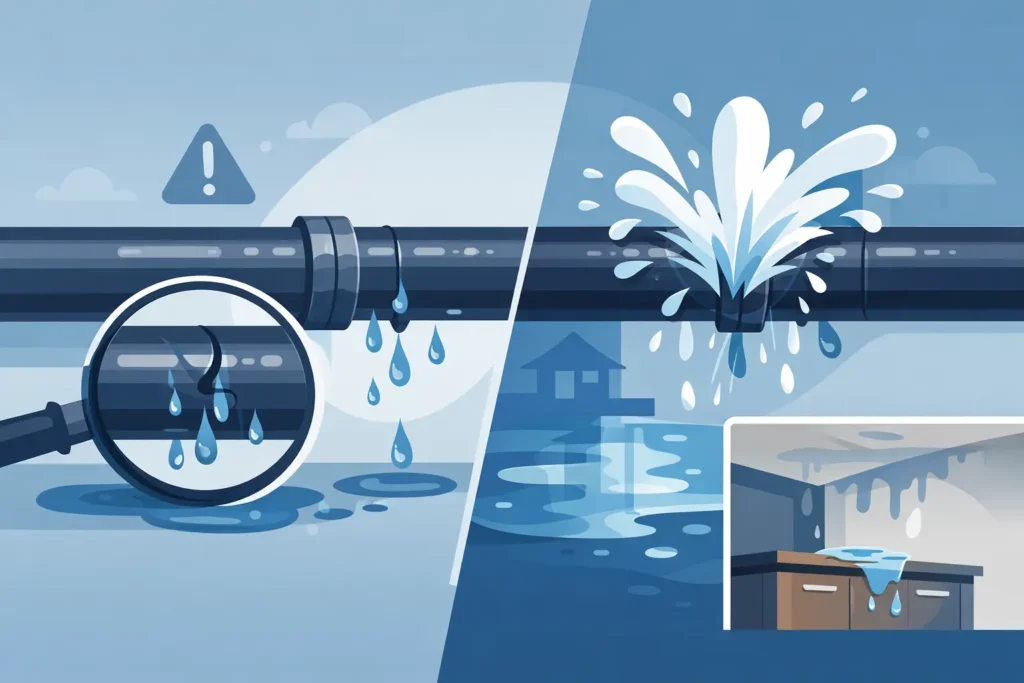
A drip under the kitchen sink may seem like a small problem, but it can be the first visible sign of a pipe that is under stress. So, can a leaking pipe burst? Yes. Not every leak will turn into a sudden break, but a damaged, corroded, frozen, or pressurized pipe can fail completely if the underlying cause is not repaired.
That is why a leak deserves attention before it becomes a soaked wall, damaged flooring, or an emergency call in the middle of the night. The sooner you find out why water is escaping, the more options you have to prevent a larger repair.
Can a Leaking Pipe Burst? Yes, and Here Is Why
A pipe leaks when water finds a path through a weak spot. That weak spot may be a loose fitting, a pinhole caused by corrosion, a cracked section of pipe, or a joint that has started to fail. Sometimes the opening stays small for a while. Other times, pressure and changing conditions cause it to spread quickly.
Water pressure is a major factor. Your home’s plumbing system is designed to handle normal pressure, but an already weakened pipe has less ability to withstand it. A small crack can widen, a fitting can separate, or a corroded section can give way without much warning.
Cold weather raises the stakes. When water freezes inside a pipe, it expands. The pipe may not split at the exact point where the ice forms. Instead, pressure can build behind the blockage and rupture a weaker section nearby. In Port Orchard and throughout Kitsap County, exposed pipes in crawl spaces, garages, exterior walls, and unheated areas deserve extra attention during freezing conditions.
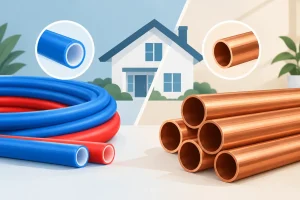
Age also matters. Older galvanized pipes can corrode from the inside, where the damage is easy to miss. Copper can develop pinhole leaks. Plastic piping can become brittle after years of wear or may be vulnerable at poorly installed connections. A leak is not always proof that the entire system needs replacement, but it is a reason to have the condition of the pipe evaluated.
Signs a Small Leak May Be Becoming Urgent
Some plumbing problems announce themselves with a spray of water. Others stay quiet until the damage is well underway. Watch for changes that suggest a leak is worsening or a pipe may be close to failing.
A steady increase in dripping, a damp area that keeps returning after you dry it, or a stain that grows on the ceiling or wall all point to active water movement. You may also hear hissing, ticking, or water running when every fixture is off. If your water bill suddenly climbs without an obvious reason, hidden leakage is a real possibility.
Pay attention to the area around the leak as well. Swollen baseboards, soft drywall, peeling paint, warped cabinets, musty smells, or damp carpet can mean water has been escaping longer than you realized. A pipe does not need to burst dramatically to cause expensive damage. A slow leak behind a wall can feed mold growth and weaken building materials over time.
A few warning signs call for faster action: water that is hot or warm near the leak, a bulging ceiling, a crack in a visibly corroded pipe, water spraying from a fitting, or a leak near electrical outlets or appliances. If you see any of these, treat the situation as urgent.
What to Do When You Find a Leaking Pipe
First, do not assume a bucket solves the problem. It may catch water temporarily, but it does not stop pressure from acting on the damaged pipe.
If the leak is at a sink, toilet, washing machine, or water heater connection, look for the nearby fixture shutoff valve. Turning off that local valve can limit the water while you arrange a repair. Avoid forcing a valve that is badly corroded or stuck, since that can create another leak.
For a leak you cannot isolate, or one that is actively spraying, shut off your home’s main water supply. Every household should know where this valve is before an emergency happens. It is often located near the water meter, in a utility area, crawl space, basement, or along an exterior wall, depending on the home.
Then relieve pressure by opening a cold-water faucet. Keep people away from standing water near electrical cords, outlets, or panels. If a ceiling is sagging or bulging, move furniture and people out of the area. Do not puncture the ceiling unless a qualified professional tells you it is safe to do so.
Take a few clear photos if you can do it safely. They may help document the damage for insurance purposes and give your plumber useful context. After that, arrange professional service. A lasting repair starts with identifying why the pipe leaked, not simply covering the visible opening.
Why Temporary Patches Can Create Bigger Problems
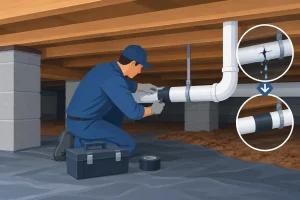
Pipe repair tape, clamps, epoxy, and other store-bought fixes can sometimes slow a minor leak long enough to get through the day. They can be useful in a true short-term emergency when the water has been shut off or controlled. They are not a dependable answer for a pipe that is cracked, frozen, heavily corroded, or leaking inside a wall.
The trade-off is simple: a temporary patch may save a little time now, but it can hide a growing problem. Water can continue traveling behind cabinets, beneath flooring, or into framing even when the visible drip appears better. If the surrounding pipe is thin from corrosion, sealing one pinhole does not strengthen the rest of it.
A professional repair may involve replacing a fitting, cutting out a damaged section, repairing a supply line, correcting excessive pressure, or recommending replacement when repeated leaks show that a pipe has reached the end of its service life. The right approach depends on the pipe material, the leak location, access, and the condition of nearby plumbing.
How to Lower the Risk of a Burst Pipe
Preventing a burst is often less complicated than repairing the damage afterward. Start by addressing even small leaks promptly, especially in hidden areas such as under sinks, behind appliances, and in crawl spaces. Check those spaces periodically for moisture, discoloration, or unusual odors.
Before cold weather, protect pipes exposed to outdoor air. Insulation can help in crawl spaces, garages, and exterior wall areas, though it is not a substitute for correcting a damaged pipe. Disconnect and drain outdoor hoses when freezing temperatures are expected, and keep garage doors closed if water lines run through that space.
During a hard freeze, allowing a small amount of water to move through vulnerable faucets may help in certain homes. It is not necessary for every fixture, and it will not fix poor insulation or a failing pipe. If you have had frozen pipes before, it is worth having the vulnerable areas inspected before the next cold snap.
Keep an eye on water pressure, too. Very high pressure puts added strain on supply lines, fixtures, valves, and appliances. Repeated leaks at different locations can be a clue that pressure or aging pipe material needs attention rather than another isolated patch.
When to Call for Emergency Plumbing Help
Call for immediate help when a pipe bursts, water is flowing into walls or ceilings, you cannot stop the leak with a local shutoff, or the leak involves hot water. The same applies when water is near electrical equipment or you suspect a frozen pipe is beginning to split.
For a slow, contained drip, you may have a little more time, but waiting for it to become an emergency is rarely worth the risk. Leakless Plumbing helps homeowners in Port Orchard respond quickly, understand what failed, and make repairs aimed at preventing the same issue from returning.
A leaking pipe is your home’s early warning system. Shut off the water when needed, protect the area, and get the cause repaired while the problem is still manageable. Don’t stress the mess, call LeakLess.