A sump pump is easy to forget until the first hard rain leaves water pressing against your foundation. When it works, you may never notice it. When it fails, a few inches of water can damage flooring, drywall, storage, and the peace of mind you have in your own home. Knowing how to maintain sump pumps gives you a practical way to catch small problems before they become a stressful emergency.
For homeowners in Port Orchard and across Kitsap County, a dependable sump pump matters most during wet-weather months and periods of rapid snowmelt. The good news is that routine care is straightforward. A few regular checks can help keep the pump ready to move water when your home needs it most.
How to Maintain Sump Pumps Month by Month
A monthly visual check is usually enough to spot obvious issues early. Start by looking inside the sump pit. The area should be reasonably clean, and the pump should sit upright on the bottom of the basin. If you see mud, gravel, leaves, or other debris, remove what you can safely reach. Buildup can interfere with the float switch, which tells the pump when to turn on.
Next, check the power connection. The pump should be plugged directly into a working, properly grounded outlet. Avoid extension cords, power strips, or sharing the outlet with other high-demand equipment. If your sump pump has a ground-fault circuit interrupter outlet that has tripped, reset it, then investigate why it tripped if the issue happens again. Repeated electrical problems deserve a professional inspection rather than a quick workaround.
Look over the discharge pipe as well. This is the pipe that carries water away from the home. It should be connected securely and directed well away from the foundation. If the outlet is clogged, frozen, crushed, or dumping water right beside the house, the pump may run without actually solving the water problem.
A quick monthly routine takes only a few minutes, but it gives you a chance to notice unusual sounds, standing water, loose connections, and signs of wear before a storm puts the system under pressure.
Test the Pump Before It Has to Work Hard
Testing is the most useful part of sump pump maintenance. Unplugging and plugging the unit back in only confirms that it has power. It does not confirm that the float moves correctly, the pump activates, or water is leaving the pit.
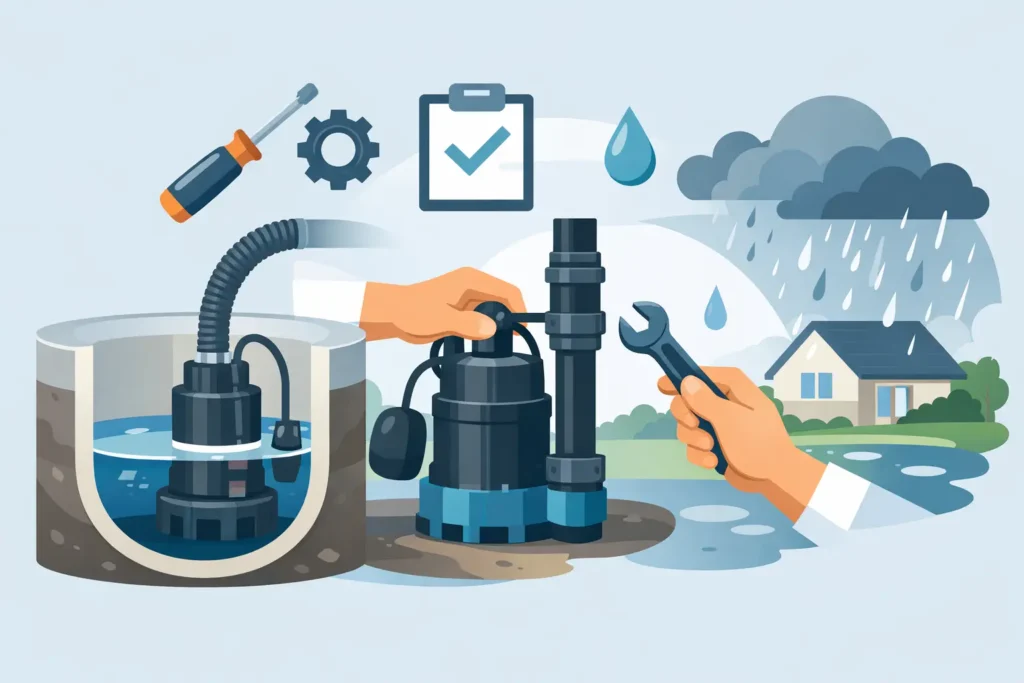
To test most standard sump pumps, slowly pour a bucket of water into the pit until the float rises. The pump should turn on, move the water out, and shut off once the water level drops. Stay nearby during the test. You want to see that the water leaves the basin promptly and that it is discharged outside where it belongs.
If the pump does not start, starts but does not remove water, keeps running after the pit is empty, or makes a grinding or rattling sound, stop using it until the cause is clear. A stuck float, worn motor, blocked discharge line, failed check valve, or electrical issue can all cause trouble. Continuing to run a malfunctioning pump may make the repair more complicated.
Test the pump at least every three months. Increase that schedule before the rainy season, after a long dry stretch, and whenever you notice water collecting around the foundation. A pump that has not run for months can still develop problems from sediment, corrosion, or a jammed switch.
Keep the Pit, Float, and Check Valve Clear
The sump pit is not meant to be a storage spot or a catch-all drain for household debris. Keep the lid in place if your system has one, especially if children or pets have access to the area. A lid also helps keep debris out of the pit and can reduce moisture in the basement or crawl space.
The float switch needs room to move freely. Depending on the model, it may be a ball-shaped float on a cord, a vertical float, or an integrated switch. Make sure it is not tangled in the power cord, pressed against the pit wall, or blocked by dirt. This small part is one of the most common reasons a sump pump fails to turn on when water rises.
Your system may also have a check valve on the discharge pipe. This valve keeps pumped water from flowing backward into the pit after the motor shuts off. If you hear a loud thump after each cycle, see frequent short cycling, or notice water returning to the pit, the check valve may be worn, installed incorrectly, or blocked. It is a relatively small component, but it makes a big difference in how efficiently the system operates.
Once or twice a year, remove loose debris from the pit and wipe away sediment around the pump intake. Do not pull apart plumbing or electrical connections unless you are comfortable doing so. For a deeper cleaning, professional service can ensure the pit, pump, switch, and discharge setup are all working together correctly.
Check Where the Water Goes Outside
A sump pump protects the home only if the discharged water stays away from it. Walk outside while the pump is running during a test, or check the outlet after a rainfall. Water should flow freely and drain away from the foundation without washing out soil or pooling near the house.
In our area, leaves, pine needles, mud, and storm debris can clog an outdoor discharge point. Freezing temperatures can create another problem if water is trapped in a section of pipe. A blocked discharge line can cause the pump to run continuously, overheat, or leave water with nowhere to go.
Make sure downspouts and surface drainage are not directing extra water toward the sump pit. A sump pump is designed to manage groundwater and drainage around the foundation. It should not have to compensate for every yard drainage issue. If the pump seems to run constantly, the answer may be more than replacing the pump. The discharge route, grading, drainage system, or incoming water source may need attention.
Do Not Forget the Backup Plan
Power outages often happen during the same storms that create the greatest need for a sump pump. If your home depends on a sump pump to prevent flooding, a backup system is worth considering. Battery backup pumps can keep moving water for a limited time when utility power is out. Water-powered backup systems may work in some homes, but they depend on adequate water pressure and local conditions.
The right choice depends on how often your primary pump runs, how much water your home typically handles, and how long outages tend to last in your neighborhood. A backup is not a replacement for maintenance. It needs testing too, along with regular battery checks or other manufacturer-recommended care.
A high-water alarm is another helpful layer of protection. It alerts you when water rises above a safe level in the pit, giving you a chance to respond before water reaches the floor. For homeowners who travel often or have a finished basement, that early warning can be especially valuable.
Know When a Repair Is the Safer Choice
Sump pumps do not last forever. Many standard units last around seven to 10 years, although run time, water conditions, installation quality, and maintenance all affect the lifespan. A pump that cycles constantly may wear out sooner than one that runs only during heavy rain.
Call for help if you notice repeated tripped breakers, a burning smell, loud motor noise, visible rust, frequent cycling, or water that remains in the pit after a test. You should also have the system checked if water has reached the basement floor, even if the pump starts working again afterward. The underlying issue may still be waiting for the next storm.
A qualified plumber can determine whether the problem is the pump itself, the switch, the check valve, the discharge line, or the way water is reaching the foundation. That distinction matters. Replacing a pump without correcting a blocked line or drainage problem can lead to the same failure all over again.
A Simple Seasonal Routine That Pays Off
Before the wet season, test the pump, clear the pit, inspect the discharge route, and confirm the outlet is working. During rainy months, take a quick look after major storms and listen for changes in how the pump runs. If you have a backup, test it on its recommended schedule rather than assuming it will work when the power goes out.
Sump pump care is one of those small home tasks that can prevent a much bigger mess. If something does not look right, do not wait for the next downpour to find out whether the system is dependable. Leakless Plumbing can help homeowners identify the cause, make lasting repairs, and keep water where it belongs: outside your home.