A clogged garbage disposal fix can feel urgent when the sink fills with cloudy water right before dinner or cleanup. The good news is that many disposal clogs come from a simple jam or a blocked drain connection. The key is to work safely, avoid damaging the unit, and recognize when the problem is farther down the line than the disposal itself.
A garbage disposal is built to handle small food scraps, not every item left on a plate. When it stops draining, hums without turning, or shuts off during use, forcing it can turn a small kitchen inconvenience into a damaged motor, a leaking pipe, or an overflow under the sink.
Start Your Clogged Garbage Disposal Fix Safely
Before touching the disposal, turn it off at the wall switch. Then disconnect power at the circuit breaker. Do not rely on the wall switch alone, especially if you will be working near the grinding chamber.
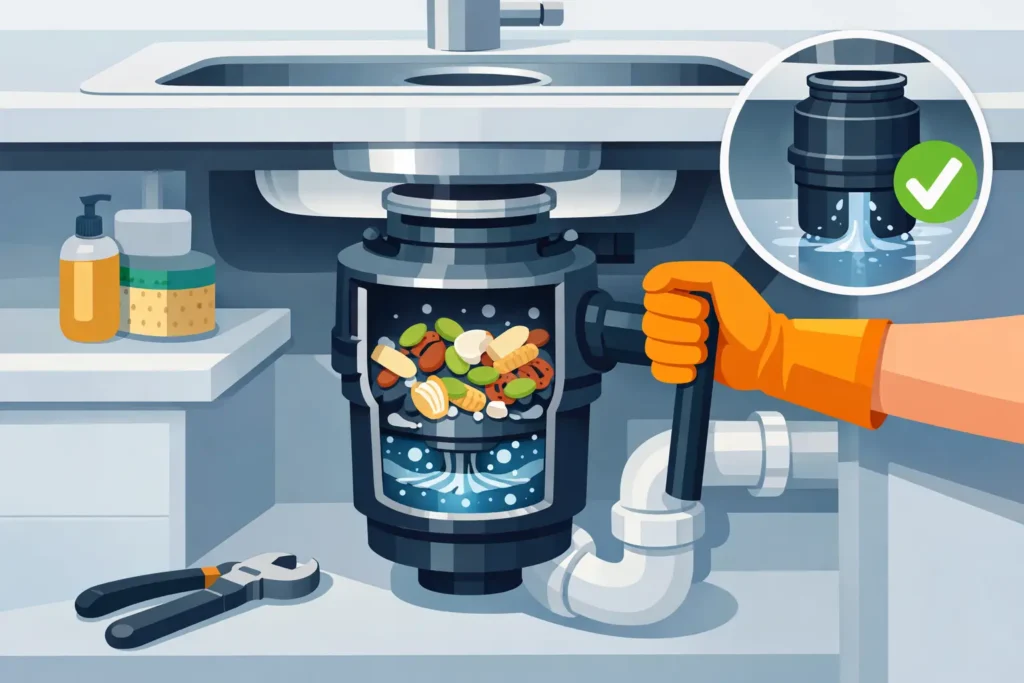
Never put your hand inside a garbage disposal, even when it appears to be off. A utensil, a small piece of glass, or a food fragment can be lodged near the blades. Use a flashlight to look inside, then remove visible items with tongs or needle-nose pliers. Keep your fingers clear of the opening.
If the disposal has been running recently, give it a few minutes to cool down. A unit that has overheated may have automatically shut itself off to protect the motor. That does not always mean it is broken, but it does mean there is likely a jam or heavy load that needs attention.
Is It a Disposal Jam or a Drain Clog?
The right repair depends on what the unit is doing. A disposal that makes a low humming sound but does not spin is often jammed. Something hard may be preventing the grinding plate from moving. If it spins normally but the sink water will not drain, the blockage is more likely in the disposal outlet, the trap beneath the sink, or the kitchen drain line.
If water backs up into both sides of a double-basin sink, the issue may be beyond the disposal. The same is true when water rises in the dishwasher or when the kitchen drain has been slow for days. In those cases, running the disposal longer will not solve the problem. It may only send more debris into an already restricted pipe.
Clear a Jam With the Disposal Wrench
Most disposals have a hex-shaped socket centered on the underside of the unit. The manufacturer often supplies a small disposal wrench for this purpose. If you have it, insert it into the socket and move it back and forth until the grinding plate turns freely.
Do not use excessive force. If the wrench will not move, stop and inspect the chamber again with a flashlight. A hard object may be tightly wedged inside. Forcing the mechanism can damage internal components or loosen the mounting assembly.
Once the plate moves freely, press the small red reset button on the bottom of the disposal. Restore power at the breaker, turn on cold water, and run the disposal briefly. Start with water flowing before switching the unit on, then let the water run for 15 to 20 seconds after it stops.
If your unit does not have a bottom wrench socket, some models can be loosened from above with a wooden broom handle. With the power still disconnected, place the handle into the opening and gently use it to shift the grinding plate. This should be a controlled movement, not a hard push.
Check the Sink Drain Connection
When the disposal runs but water remains in the sink, the clog may be in the drain piping. Place a bucket and towels under the P-trap, the curved pipe below the sink, before loosening any connections. Old food debris, grease, and soap residue often collect there.
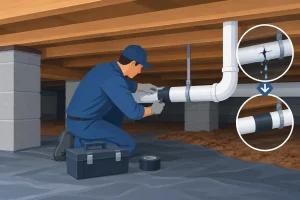
This is also a good time to look for loose fittings, corrosion, or signs that water has been dripping under the sink. A drain connection can appear fine until a clog creates enough pressure for a weak joint to leak. If you find cracked piping or repeated leaks, a professional repair is usually more reliable than tightening parts over and over.
Avoid using harsh chemical drain cleaners in a garbage disposal. These products can damage seals, corrode metal parts, and create a safety hazard if you later need to open the drain or remove the disposal. They also rarely remove the solid food buildup causing the problem.
What Not to Put Down a Garbage Disposal
The best clogged garbage disposal fix is often preventing the next one. Disposals work best with small amounts of soft food scraps and plenty of cold water. They are not a substitute for scraping plates into the trash or compost bin.
Keep grease, cooking oil, and fat out of the disposal. They may go down as liquid, but they cool and cling to pipe walls, collecting other debris over time. Coffee grounds are another common troublemaker because they can settle into a dense, muddy layer in the trap or drain line.
Fibrous foods such as celery, corn husks, onion skins, and artichoke leaves can wrap around internal parts. Starchy foods including rice, pasta, and potato peels expand with water and may form a thick paste. Bones, fruit pits, shells, and non-food items can jam the grinding plate or damage the unit outright.
For normal use, run cold water first, add food scraps gradually, and keep the water on after the disposal stops. Cold water helps carry material through the drain while keeping grease from becoming a soft, sticky coating.
When the Reset Button Is Not Enough
A reset button is useful after an overload, but it is not a repair for a repeated failure. If the unit trips frequently, hums after you clear it, leaks from the bottom, or will not turn on at all, there may be an electrical or mechanical problem inside the disposal.
A disposal leaking from the bottom housing often has an internal seal failure. That type of leak is generally not repairable from the outside, and replacement may be the practical option. Leaks at the top mounting ring or drain connections may be repairable, but they should still be addressed quickly before cabinet materials swell or mold develops.
Call for plumbing help when the sink continues backing up after you clear the disposal, especially if other nearby fixtures are draining slowly. That points to a drain line blockage that needs proper clearing. It is also time to call if you smell burning, see damaged wiring, cannot safely remove an obstruction, or have standing water that is threatening to overflow.
For homeowners in Port Orchard and nearby Kitsap County communities, Leakless Plumbing can identify whether the trouble is the disposal itself, the sink drain, or a larger blockage in the line. That distinction matters because a repair that only gets water moving for one evening is not the same as fixing the cause of the clog.
A quiet, free-spinning disposal and a fast-draining sink are easy to take for granted. If yours is sending water back up or making a sound that does not feel right, shut it off, protect your kitchen from a bigger mess, and get the right repair before the next meal puts it to the test.