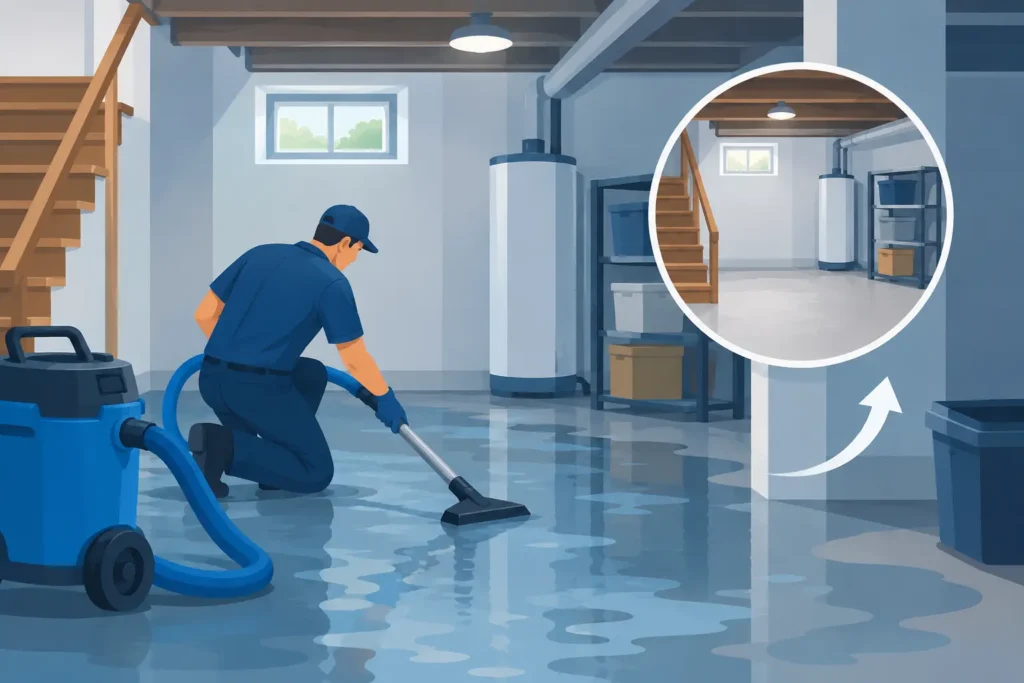
A basement can go from useful storage space to a household emergency in a single night. This basement flood repair case study follows a representative Kitsap County-style scenario: a homeowner woke up to standing water near the utility area after a heavy rain, with boxes soaked, flooring damp, and no clear answer about where the water had started.
The lesson was not simply that water needs to be removed quickly. It was that a lasting repair depends on finding the right source before replacing a single damaged part. A flooded basement may involve a failed sump pump, a broken water line, a drain backup, or more than one issue happening at once. Treating the visible water without identifying the cause can leave a homeowner facing the same mess again.
The Call: Water on the Basement Floor
The homeowner first noticed a shallow pool of water spreading across the concrete floor. The sump pump pit was full, the pump was silent, and the basement had a damp, musty smell. Since the water was close to electrical cords and stored belongings, the first priority was safety. Power to the affected area was left alone until it could be assessed safely, and no one stepped into standing water near electrical equipment.
The homeowner had assumed the heavy rain was the whole story. Rain was certainly part of the timing, but the inspection showed a more specific problem: the sump pump had stopped operating, allowing groundwater to rise in the pit until it overflowed. At the same time, the discharge line outside had a partial blockage that would have made the pump work harder even if it had turned on.
That distinction mattered. Replacing only the pump could have restored operation temporarily, but it would not have addressed the restricted discharge line. During the next major rain, the new pump could have faced the same strain.
Why the Source Was Not Obvious
Basement flooding often creates misleading clues. Water naturally runs toward the lowest point, so the deepest puddle is not always where the problem began. A wet wall can suggest an exterior leak, while the real issue may be a nearby pipe. A full sump pit may mean the pump failed, or it may mean the pump is working but cannot move water out through the discharge line.
In this case, the inspection focused on the plumbing system and the water path rather than guessing from the puddle alone. The technician checked the sump pump power supply, float operation, pit condition, discharge connection, and the line leading away from the home. The pump had reached the end of its service life, and debris in the discharge route added another point of failure.
This is why fast response should still include careful diagnosis. Homeowners understandably want the water gone right away, but a rushed repair that skips the cause can cost more in damaged flooring, repeated cleanup, and another emergency call later.
The Basement Flood Repair Plan
Once the source was confirmed, the repair plan had two parts: stop the immediate flooding risk and reduce the chances of a repeat event. The failed sump pump was removed and replaced with a properly sized unit for the pit and the home’s expected water volume. The float was tested through several cycles to make sure it switched on and off correctly.
The discharge line was then cleared and inspected for restrictions. A sump pump is only as effective as its ability to move water away from the foundation. If the line is clogged, disconnected, frozen, crushed, or routed poorly, water can remain near the home or return to the pit. In this situation, clearing the line and securing the connection restored a clear route for discharged water.
The homeowner also chose to add a battery backup system. That was not the only reasonable option, and it is not necessary in every home. For a basement that regularly handles groundwater during storms, however, backup power provides extra protection when an outage and heavy rain happen at the same time. The right choice depends on the home, the age of the primary pump, the amount of groundwater, and the homeowner’s comfort level with risk.
Drying the Space Was Part of the Repair
Stopping the source was the plumbing repair. Protecting the basement from ongoing moisture damage was the next job.
Standing water was removed as quickly as possible, followed by wet materials that could hold moisture against the floor or walls. Cardboard boxes, rugs, and fabric storage items were moved out of the area. Fans and dehumidification helped dry the remaining surfaces. The homeowner was advised to document damaged belongings and affected areas before discarding anything, especially when insurance questions might be involved.
Not every basement flood requires replacing finished materials, but timing makes a difference. Concrete can look dry on the surface while moisture remains in nearby framing, insulation, or flooring. If water reached drywall, carpeting, laminate, or finished walls, those materials may need a closer evaluation. The goal is to avoid sealing moisture into the space and creating a mold problem after the visible puddle is gone.
For homeowners, this is one of the hardest parts of a flood: the pressure to put everything back to normal immediately. It is better to dry the area thoroughly and make informed decisions than to rush replacement materials into a damp basement.
What Prevented the Next Flood
The long-term value of this repair came from addressing the weak points together. The homeowner did not just receive a new pump. They received a working system with a clear discharge route, tested operation, and practical guidance on what to watch for.
A few habits made the system easier to maintain. The homeowner was encouraged to test the sump pump periodically by carefully adding water to the pit and confirming that the float activates, the pump runs, and water discharges outside. The pit should remain reasonably clear of loose debris, and the outside discharge point should be checked after storms for blockage or pooling near the foundation.
A sump pump can work without making much noise or demanding attention for years. That quiet reliability is useful, but it also makes it easy to forget about until the day it fails. A brief check before the rainy season is far easier than a midnight cleanup after water reaches stored belongings.
When a Basement Flood Needs an Emergency Plumber
A flooded basement is not always caused by plumbing, but several signs point to a plumbing professional as the right first call. Water that appears near a sump pit, water heater, exposed pipes, floor drain, washing machine connection, or utility room deserves prompt investigation. So does water that keeps returning after it has been removed.
If the water is coming from an active pipe leak, a failed appliance connection, or a drain backup, shutting off the appropriate water supply can limit damage while help is on the way. If you are unsure which valve to use, avoid forcing anything. Keep people and pets away from the affected area, especially where electrical equipment is present.
For Port Orchard homeowners and nearby communities, Leakless Plumbing approaches these calls with the same practical goal: identify the real cause, explain the repair in plain language, and fix the problem in a way that holds up. Emergency service matters, but so does leaving the homeowner with a system they can trust after the floor is dry.
The Takeaway From This Basement Flood Repair Case Study
The most expensive part of a basement flood is often not the water itself. It is the repeat damage that happens when the original cause is missed. A quiet sump pump, a slow drain, or a small amount of moisture around a utility area can be an early warning, not something to put off until the next storm.
If your basement shows signs of water where it should be dry, act before the problem grows. A prompt inspection can turn a stressful mess into a straightforward repair – and help keep your basement ready for the next rainy day.