That faint brown ring beneath a pipe or sudden drop in water pressure may look minor, but it can be an early warning that a larger leak is forming. Pipe corrosion signs often develop slowly behind walls, under sinks, or in crawl spaces, where they can cause expensive water damage before anyone realizes there is a problem.
For homeowners, the goal is not to diagnose every pipe yourself. It is to recognize when your plumbing is asking for attention, take sensible steps to limit damage, and get a lasting repair before a small weak spot turns into an emergency.
What Pipe Corrosion Looks Like in a Home
Corrosion is the gradual breakdown of a metal pipe. It can happen as pipes age, when minerals in the water react with plumbing materials, or when moisture repeatedly collects around fittings and joints. Older galvanized steel pipes are especially prone to internal rust, but copper pipes can also corrode and develop tiny pinhole leaks.
Some corrosion is visible on the outside of a pipe. Other times, it occurs inside the line and first shows up through changes in water flow, water color, or recurring leaks. The location, pipe material, and condition of the surrounding plumbing all matter. A little surface discoloration may only need monitoring, while active moisture or deteriorating metal calls for prompt service.
7 Pipe Corrosion Signs to Watch For
1. Rust, green buildup, or flaking on exposed pipes
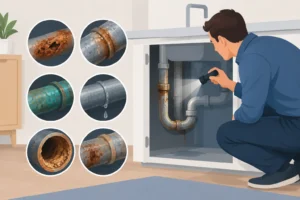
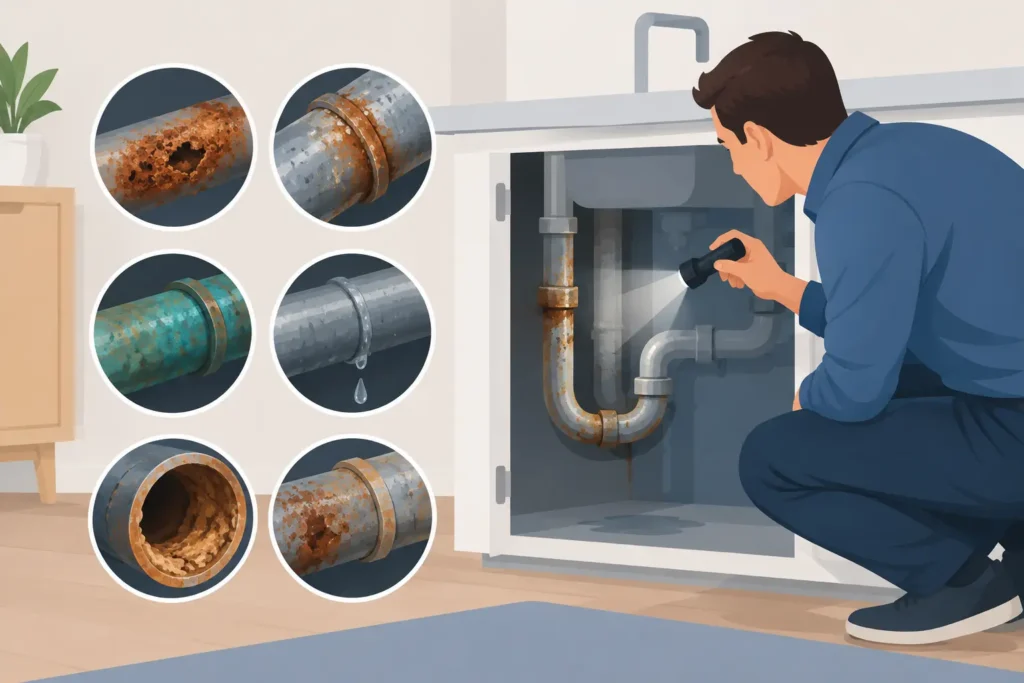
Look under kitchen and bathroom sinks, near your water heater, around laundry connections, and in accessible basement or crawl-space plumbing. Rust-colored buildup on steel pipes, or greenish-blue staining around copper fittings, can point to corrosion or a slow leak.
Not every discolored fitting is an emergency. Old pipe compound, mineral residue, or light surface oxidation can be harmless if the area stays dry. But if the buildup is crusty, spreading, or paired with dampness, it deserves a closer look. Corrosion weakens the pipe wall over time, especially at joints where leaks often begin.
2. Brown, yellow, or metallic-tasting water
Water that comes out brown, yellow, or rusty after sitting in the pipes can be a sign of interior corrosion. It is particularly common with aging galvanized pipes, where rust accumulates inside and breaks loose as water moves through the line.
First, check whether the discoloration appears at one faucet or throughout the home. If only hot water is discolored, the issue may be connected to the water heater rather than the home’s supply pipes. If multiple cold-water fixtures are affected, the plumbing system should be inspected. Avoid assuming the problem will clear up permanently just because the water looks normal after a few minutes of running.
3. Lower water pressure at one or more fixtures
A gradual loss of water pressure can be frustrating, especially during busy mornings. Mineral deposits and rust inside corroded pipes reduce the open space water has to travel through. The result can be a weak shower, slow-filling washing machine, or a faucet that never seems to run as strongly as it once did.
Low pressure has other possible causes, including a clogged faucet aerator, a partly closed shutoff valve, or a fixture-specific problem. If cleaning the aerator does not help, or several fixtures have weak flow, internal pipe deterioration becomes more likely.
4. Recurring pinhole leaks or wet spots
A single leak can sometimes be isolated to a worn washer, loose connection, or accidental damage. Repeated tiny leaks in copper piping are different. Pinhole leaks often indicate that the metal is thinning from the inside or outside.
Watch for damp cabinet bottoms, a musty smell, water marks on a ceiling, or a mysterious wet area near a wall. These leaks can be small enough to evaporate before they drip visibly, yet still damage drywall, insulation, flooring, and framing. If you have repaired one pinhole leak and another appears nearby, ask about the condition of the surrounding pipe rather than treating each leak as a separate event.
5. Stains, peeling paint, or warped surfaces
Pipes hidden behind finished surfaces do not announce corrosion directly. Instead, the home shows the evidence. Yellow-brown ceiling stains, bubbling paint, warped baseboards, loose flooring, or a cabinet that feels damp may all signal a slow plumbing leak.
These symptoms do not always mean corrosion. A roof leak, shower leak, or condensation issue can look similar. Still, water damage near bathrooms, kitchens, laundry areas, or pipe runs should be checked quickly. The longer water remains trapped behind a wall or beneath flooring, the wider the repair can become.
6. Unusual smells near sinks, walls, or cabinets
A persistent musty odor near an otherwise clean sink cabinet can mean moisture has been present for a while. Corroded pipes and fittings sometimes leak only when water is running, which makes the problem easy to miss during a quick glance.
Open the cabinet and inspect for dampness, stains, soft wood, or corrosion around shutoff valves and supply lines. Do not rely on smell alone, but do treat it as a useful reason to investigate. Finding a slow leak early is far easier than repairing mold-damaged materials later.
7. Pipes that are visibly pitted, thin, or misshapen
Deep pits, rough spots, bulges, or flaking metal are stronger warning signs than ordinary aging. A pipe with visible deterioration may be close to leaking, particularly if it is under pressure or located near a fitting.
Do not scrape aggressively at a damaged pipe to see how bad it is. Disturbing weak material can create a leak. If the pipe is wet, actively dripping, or has a noticeable bulge, shut off the nearby fixture valve if possible and call for professional help.
What to Do When You Notice Corrosion
Start by documenting what you see. Note the fixture, location, time of day, water color, and whether the issue affects hot water, cold water, or both. Photos of visible staining or corrosion can also help a plumber understand the pattern.
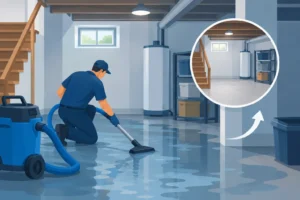
If water is actively leaking, protect the area first. Move belongings out of the way, place a container under a manageable drip, and shut off the fixture valve or the home’s main water supply if the leak cannot be controlled. Never ignore water near electrical outlets, appliances, or a breaker panel. In that situation, keep clear of the area and seek immediate help.
A professional inspection can determine whether the right answer is a targeted repair, replacement of a short damaged section, or a plan to update aging pipe runs. There is a trade-off: replacing one small area costs less upfront, but widespread corrosion may make repeated spot repairs a poor long-term value. The right recommendation depends on the pipe material, age, access, and how often leaks have occurred.
Why Early Repairs Protect More Than Your Pipes
Corrosion rarely improves on its own. Once pipe material starts thinning or rust begins building inside a line, water pressure and daily use continue to stress the weak area. What begins as staining under a sink can become a burst pipe during a busy workday, a weekend away, or a cold-weather stretch.
For homes in Port Orchard and throughout Kitsap County, prompt attention also helps preserve cabinets, floors, drywall, and personal belongings. Leakless Plumbing approaches these problems with clear communication and practical repairs designed to prevent repeat trouble, not simply cover up the immediate symptom.
If something looks off, trust the change you are seeing. A dry pipe, clear water, and steady pressure are worth protecting, and a timely inspection can keep a small warning sign from becoming the mess that interrupts your whole home.