Low water pressure usually shows up at the worst time – in the middle of a shower, while the washer is filling, or when you are trying to rinse dishes before heading out the door. If you are wondering how to fix low water pressure, the right first step is figuring out whether the problem is isolated to one fixture or affecting the whole house. That one detail can save you time, money, and a lot of frustration.
Some low pressure problems have a quick fix. Others point to hidden leaks, failing valves, pipe buildup, or issues with the municipal supply. The trick is knowing which is which so you do not waste a weekend replacing the wrong part.
Start here before you try to fix anything
Begin with a simple check around the house. Turn on the kitchen faucet, a bathroom sink, and the shower. Flush a toilet. If only one fixture has weak flow, the issue is usually local to that fixture. If the entire home is affected, the cause is more likely tied to your main water line, pressure regulator, shutoff valve, or plumbing system.
It also helps to ask a basic question: did this happen suddenly, or has it been getting worse over time? A sudden drop in pressure often points to a leak, a partially closed valve, or a water supplier issue. A slow decline usually suggests mineral buildup, corrosion, or aging plumbing components.
If your neighbors are dealing with the same thing, your home’s plumbing may not be the problem at all. Utility work, water main repairs, and peak demand can all affect pressure for a short time.
How to fix low water pressure at a single fixture
When pressure is poor at just one sink, shower, or tub, start small. In many homes, the issue is a clogged aerator or showerhead. Mineral deposits and debris collect over time, especially if your water has a higher mineral content.
Unscrew the faucet aerator and check for grit, scale, or small bits of sediment. Rinse it out and soak it in vinegar if there is visible buildup. Showerheads can usually be removed and cleaned the same way. If cleaning does not help, replacing the fixture part is often inexpensive and worth trying.
If a faucet still has weak flow after cleaning, the cartridge inside may be worn or blocked. That is common in older faucets and can cause uneven flow between hot and cold water. Sometimes only the hot side has low pressure, which can point toward an issue closer to the water heater or the shutoff valve serving that fixture.
Toilets are a little different. If the tank fills slowly, check the supply valve near the base of the toilet to make sure it is fully open. If it is open and the refill is still weak, the fill valve may be failing or clogged.
Check the main shutoff and water meter valve
This is one of the most overlooked causes of low pressure. If your home’s main shutoff valve is not fully open, water flow can drop throughout the house. The same goes for the valve near the water meter.
Sometimes a valve gets partially closed after a repair, a water heater replacement, or other plumbing work. You may not notice the problem until the next day when someone takes a shower and wonders what happened.
There are two common valve types. A gate valve has a round handle and should be turned counterclockwise until fully open. A ball valve has a lever handle and should be parallel with the pipe when open. If a valve is stuck, corroded, or leaking, do not force it. That can turn a pressure problem into an emergency repair.
Look for signs of a hidden leak
If low pressure affects the whole house and started suddenly, a hidden leak should be high on your list. Water escaping from a damaged pipe reduces the amount of pressure reaching your fixtures. In some cases, the leak is obvious. In others, it is behind a wall, under the house, or outside along the service line.
Watch for a higher-than-normal water bill, damp spots, moldy smells, warm areas on the floor, or the sound of running water when no fixtures are on. Another good check is your water meter. Turn off all water inside and outside the home, then see if the meter is still moving. If it is, there is a strong chance water is going somewhere it should not.
This is one of those situations where quick action matters. Hidden leaks do not just reduce pressure. They can also lead to water damage, wood rot, and mold growth.
Pressure regulator problems can affect the whole house
Not every home has a pressure regulator, but many do. This device controls the water pressure coming into your house from the main supply. When it starts to fail, you might notice low pressure throughout the home or pressure that changes from one day to the next.
A bad regulator can be tricky because the symptoms are not always consistent. You may have decent pressure in the morning and poor pressure later in the day. Some homeowners also notice banging pipes or pressure that seems too high before it suddenly drops.
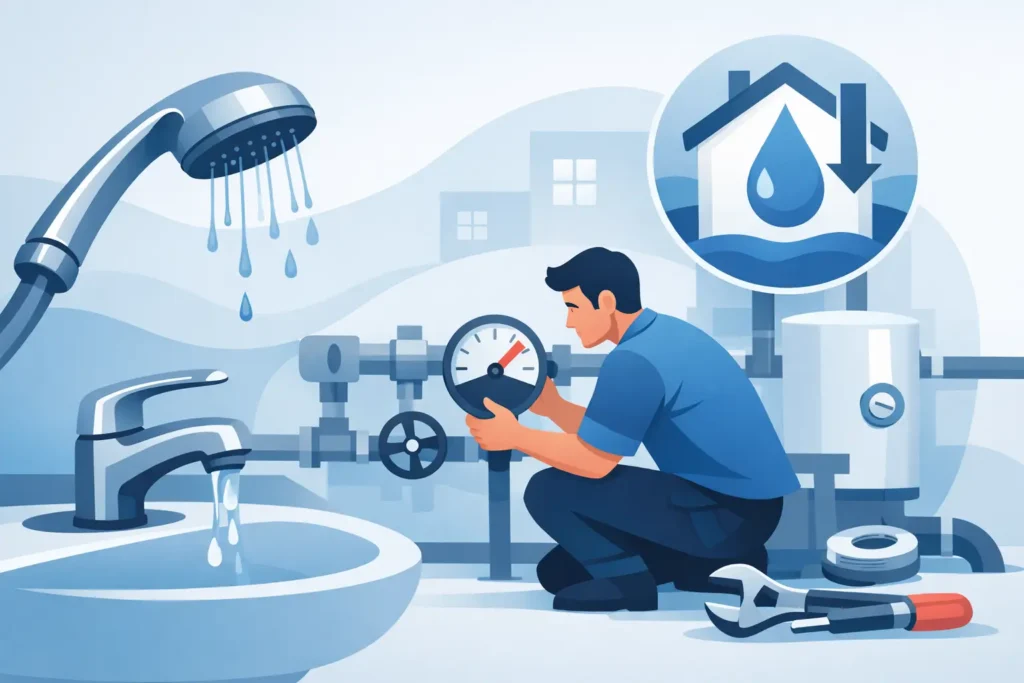
Testing household water pressure with a gauge can help confirm the issue. Normal residential pressure is often around 40 to 60 psi, though homes can vary. If your reading is well below that and your valves are open, the regulator may need adjustment or replacement. This is usually not the best DIY job unless you are comfortable working on your main water supply.
Old pipes can choke down water flow
In older homes, especially those with galvanized steel piping, low pressure can be caused by corrosion inside the pipes. Over time, the inside diameter narrows as mineral scale and rust build up. The result is weaker flow at sinks, tubs, and showers, even though the municipal supply is fine.
This kind of problem does not show up overnight. It develops slowly, which is why many homeowners adapt to it until one day they realize the shower barely rinses shampoo out of their hair.
Pipe corrosion is rarely solved with a shortcut. Cleaning one fixture might help a little, but if the piping itself is restricted, the long-term answer may be partial or full pipe replacement. It is a bigger repair, but it is also the kind that improves daily life and helps prevent future leaks.
Water heater issues can mimic low pressure
If weak pressure only affects the hot water side, your water heater or hot water piping may be part of the problem. Sediment buildup inside the tank can affect performance, and valves on the hot water outlet may not be fully open. In some cases, older flex lines or shutoff valves become restricted and reduce flow before water even reaches the faucet.
If this is happening at multiple fixtures, it is worth having the water heater and related connections checked. The fix may be simple, or it may point to a larger issue that should be handled before the heater fails completely.
How to fix low water pressure without making it worse
It is tempting to keep tightening, forcing, or swapping parts until something changes. That is where small plumbing problems turn into expensive ones. If you are trying to figure out how to fix low water pressure, stick to safe first steps like cleaning aerators, confirming valves are open, and comparing fixtures throughout the house.
Be careful with older shutoff valves, corroded fittings, and anything near the main supply line. A part that has not moved in years may not cooperate just because you have a wrench and a free afternoon.
There is also a difference between low pressure and low volume. Homeowners often use the terms interchangeably, but the fix depends on the actual issue. If pressure drops only when more than one fixture is running, your plumbing system may be undersized, partially restricted, or dealing with a supply limitation rather than a simple blockage.
When it is time to call a plumber
If you have checked the obvious causes and pressure is still low across the house, professional diagnosis is usually the fastest path forward. The same goes for pressure that dropped suddenly, signs of a leak, repeated fixture problems, or homes with older piping.
A good plumber will not just patch the symptom and leave. They should identify why the pressure dropped in the first place and recommend a repair that holds up. That matters, because recurring low pressure often signals a deeper issue in the system.
For homeowners in Port Orchard and nearby areas, fast plumbing help can make the difference between a frustrating inconvenience and a bigger repair bill. Leakless Plumbing takes that practical approach – find the cause, explain it clearly, and fix it in a way that lasts.
If your water pressure has been getting weaker, do not wait until the problem turns into a leak behind the wall or a pipe failure under the house. A clear answer and the right repair can bring your home back to normal faster than you think. Don’t stress the mess, call LeakLess.