A pipe can leak under your home for days or weeks before it makes itself known upstairs. By then, the first clues may be a musty smell, a higher water bill, soft flooring, or water collecting near the foundation. Crawl space pipe repair stops that hidden damage at the source before a small plumbing issue turns into mold, wood rot, or a major water loss.
For homeowners in Port Orchard and throughout Kitsap County, crawl space plumbing deserves prompt attention. Our wet climate can make an already damp crawl space harder to dry, so waiting for a leak to “show itself” inside the house is rarely the better option.
Signs You May Need Crawl Space Pipe Repair
Not every crawl space leak creates a dramatic puddle. A slow pinhole leak or a loose fitting can drip quietly into insulation and soil, causing damage that builds over time. Pay attention when something in the house changes without an obvious explanation.
Common warning signs include:
- A water bill that rises even though your household routine has not changed
- Musty, damp, or earthy odors near floors, cabinets, or vents
- Reduced water pressure, especially when more than one fixture is running
- Warm spots on the floor, which can point to a leak in a hot-water line
- Damp insulation, standing water, or unusually humid air in the crawl space
You may also hear water moving when every faucet and appliance is off. If your water meter continues to register use with no known water running, there may be a leak somewhere in the system. That does not automatically mean the problem is below the house, but it is a good reason to have the plumbing checked.
Why Pipes Fail Beneath the House
Crawl spaces are hard on plumbing because they are exposed to cold air, moisture, shifting soil, pests, and limited airflow. The exact cause matters because a repair that addresses only the visible break may not prevent the next failure.
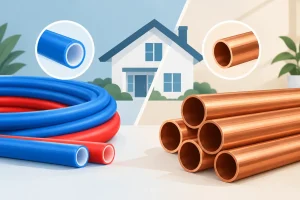
Older galvanized steel pipes can corrode from the inside out. Copper may develop pinhole leaks as it ages or reacts with certain water conditions. Plastic piping can crack if it freezes, was installed under strain, or lacks proper support. Even newer pipes can leak at fittings when a line moves, sags, or experiences repeated temperature changes.
A pipe that freezes during a cold snap is a particular concern. Water expands as it freezes, placing tremendous pressure on the pipe wall. Sometimes the pipe splits immediately. Other times, a weak spot leaks only after the line thaws and water pressure returns. If you have had a recent freeze and notice dampness or pressure changes afterward, do not assume the plumbing escaped damage.
What to Do When You Find Water in the Crawl Space
Start by protecting the home and limiting the water. If water is actively flowing or you suspect a burst pipe, turn off the main water supply if you can safely reach it. The shutoff is often near the water heater, utility area, garage, or where the main line enters the home.
Avoid walking through standing water if there are electrical cords, outlets, appliances, or damaged wiring nearby. Do not crawl into a confined, wet area simply to get a closer look. Crawl spaces can have low clearance, poor lighting, unstable footing, and wet insulation that hides hazards.
If the leak is isolated to a fixture supply line, closing the local shutoff may keep water available to the rest of the house. But when the leak location is unknown, shutting off the main is the safest way to prevent more damage while help is on the way. Take a few photos from a safe location if possible. They can help document the issue, but do not delay the repair to investigate it yourself.
How a Lasting Crawl Space Pipe Repair Works
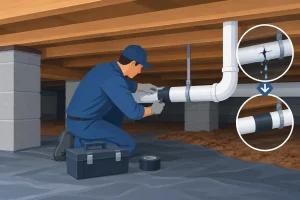
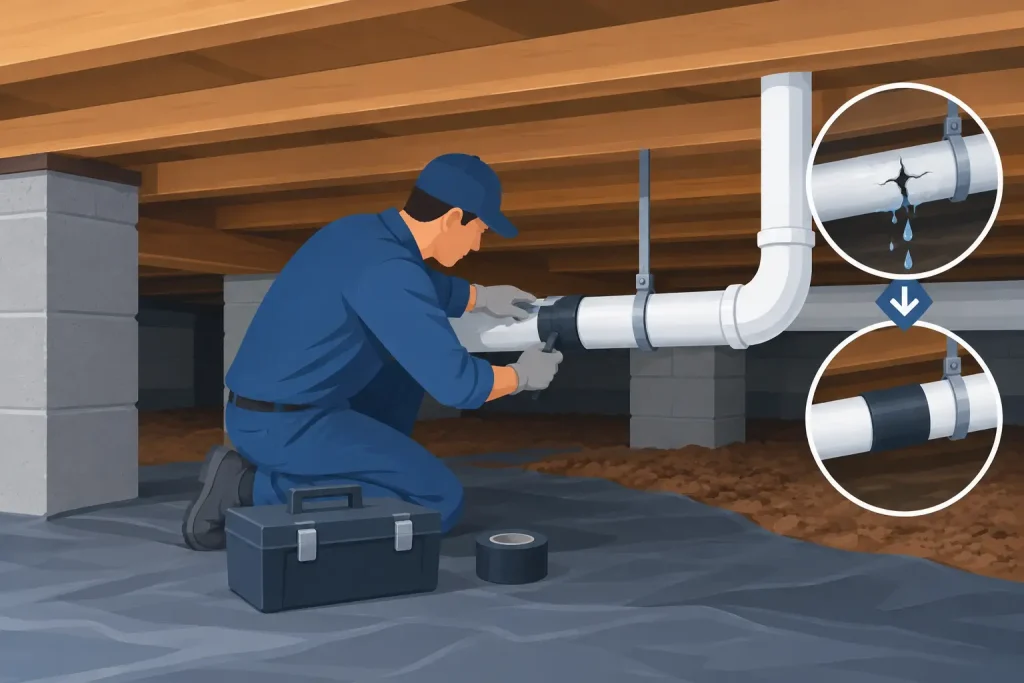
A dependable repair begins with locating the true source of the leak. Water travels along pipes, insulation, vapor barriers, and framing, so the wettest spot is not always where the pipe failed. A plumber should inspect the affected lines, fittings, supports, and surrounding materials before deciding on the repair.
For a small, accessible section of damaged pipe, the right fix may be to remove the compromised section and install new, properly sized material. If corrosion appears in several places, replacing one short section can be a temporary answer rather than a long-term solution. In that case, replacing a longer run or repiping the affected area may cost more initially but can reduce the chance of repeat leaks and additional crawl space access later.
Support matters, too. Pipes should be secured so they are not sagging, rubbing against sharp framing, or carrying unnecessary stress at a connection. Where cold exposure is the concern, appropriate insulation can help protect vulnerable lines. Insulation is useful, but it cannot correct a pipe that is already cracked, corroded, or improperly installed.
Once the plumbing repair is complete, the work should include checking for proper water pressure and confirming that the repaired line holds without dripping. If insulation is soaked or damaged, it may need attention as well. Leaving wet materials in place can preserve odors and create ongoing moisture problems even after the pipe itself is fixed.
Repair or Replace: How to Make the Right Call
There is no one answer for every crawl space pipe problem. The best choice depends on the pipe material, its age, the number of previous repairs, access, and the condition of the rest of the system.
A focused repair makes sense when the damage is clearly isolated, the pipe is otherwise in good condition, and the repaired area can be accessed without unnecessary disruption. This is often the fastest path back to normal for a single damaged fitting or a recent accidental puncture.
Replacement deserves serious consideration when leaks keep appearing, visible corrosion is widespread, or the existing piping is near the end of its service life. Repeated spot repairs can feel less expensive in the moment, but they may become more disruptive and costly if another weak section fails a few months later. A plumber can explain what is visible, what is likely hidden, and whether repair or replacement gives your home the better value.
Preventing the Next Crawl Space Leak
Prevention is not about making your crawl space perfect. It is about catching conditions that put stress on pipes before they cause an emergency. Check under the home periodically if it is safe to do so, especially after freezing weather, major storms, or a sudden increase in your water bill.
Keep plumbing lines protected from prolonged cold, and make sure access panels or crawl space openings close properly. Address standing water and persistent moisture instead of treating them as normal. Moisture does not always come from plumbing, but it can speed up corrosion and make leak damage harder to detect.
It also helps to know where your main water shutoff is before you need it. Make sure other adults in the home know as well. In an active leak, those few minutes can make a real difference in how much water reaches insulation, framing, and flooring.
When to Call for Help Right Away
An active leak, a burst pipe, standing water, sewage odor, or a sudden loss of water pressure should be treated as an urgent plumbing issue. The same goes for water near electrical equipment or water that is reaching the foundation, subfloor, or stored belongings.
For less urgent symptoms, such as a musty odor or a slowly climbing water bill, scheduling an inspection sooner is still wise. Hidden leaks tend to get worse, not better. Leakless Plumbing provides straightforward residential plumbing service with the goal of fixing the cause, not just covering up the symptom.
Your crawl space may be out of sight, but it should not be out of mind. When something seems off, acting early can protect the parts of your home that are hardest and most expensive to restore.