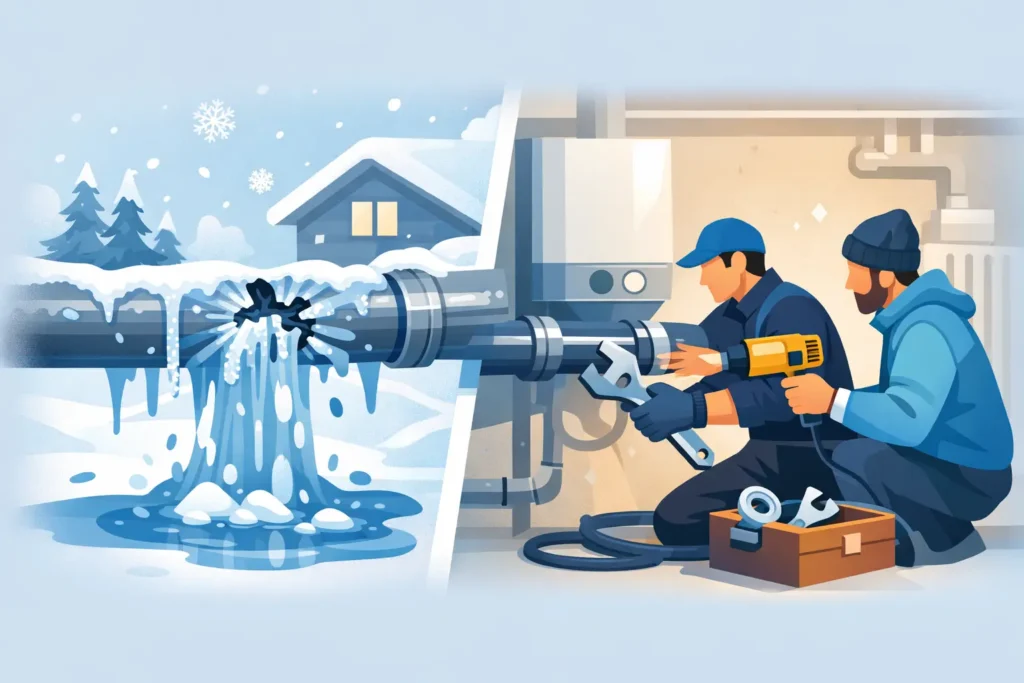
A frozen pipe can go from a small inconvenience to a soaked ceiling or damaged wall in minutes. Frozen pipe restoration starts with protecting your home, finding out whether the pipe has cracked, and making repairs that address the reason it froze in the first place.
For homeowners in Port Orchard and across Kitsap County, cold snaps can catch exposed plumbing off guard. A pipe may freeze in a crawl space, garage, exterior wall, attic, or beneath a sink on an outside-facing wall. The sooner you respond, the better your chances of limiting water damage and avoiding a larger repair.
What Frozen Pipe Restoration Really Includes
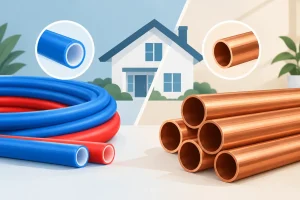
Restoration is more than warming a pipe until water flows again. A frozen line expands as the water inside turns to ice. That pressure can split copper, plastic, or older galvanized piping, sometimes in a spot that is not immediately visible. The pipe may appear fine while it is frozen, then begin leaking once the ice melts and water pressure returns.
A proper repair process begins by checking the affected area and nearby plumbing for cracks, loose fittings, bulging pipe, and moisture. If a break is found, the water supply needs to stay off until the damaged section can be repaired or replaced. If there is no visible break, the line still needs to be thawed safely and tested under normal water pressure.
When water has reached drywall, insulation, flooring, cabinets, or framing, the restoration work may also include drying the area and assessing whether materials need repair. Catching that moisture early helps prevent mold growth, warped surfaces, and hidden damage that becomes more expensive later.
What to Do When You Suspect a Pipe Is Frozen
A sudden loss of water at one faucet is a common warning sign, especially if other fixtures still work. Frost on exposed pipe, strange dripping sounds, or a slow trickle can also point to a freeze. Do not assume the issue will resolve on its own when temperatures rise.
First, open the affected faucet. If the pipe is frozen but intact, opening the faucet gives melting ice and pressure a place to move. Next, locate your main water shutoff valve. If you see water, hear water running where it should not be, or suspect a pipe has already broken, shut off the main supply right away.
Then take a careful look around accessible plumbing. Check under sinks, near the water heater, in the garage, and around crawl space access points. If you find standing water near electrical outlets, appliances, or a breaker panel, keep clear of the area and call for professional help.
Do not use an open flame, propane torch, or high-heat device to thaw a pipe. Those methods can scorch building materials, damage the pipe, and create a serious fire risk. A hair dryer on a low setting may be appropriate for a clearly accessible, intact pipe, but only if the area is dry and you can safely stand away from any water. When the frozen section is inside a wall, under a floor, or in a crawl space, it is best to stop and call a plumber.
Why Pipes Freeze in the First Place
The obvious answer is cold weather, but temperature alone is rarely the whole story. Pipes freeze because cold air reaches them faster than the plumbing can retain heat. A poorly sealed crawl space vent, missing insulation, an open garage door, or a gap around an exterior wall penetration can turn one vulnerable section of pipe into a repeat problem.
Homes with older plumbing may have pipe runs close to exterior walls or in areas that were never designed for severe cold. Vacant homes are also at greater risk because there is no regular water use and the indoor heat may be turned down too far. Even a newer home can have trouble when a pipe runs through an unheated cabinet, attic, or addition.
This is why a quick patch is not always enough. Replacing a split section restores water service, but preventing the next freeze may require insulating pipe, securing loose connections, sealing drafts, improving access to heat, or rerouting a vulnerable line. The right solution depends on where the pipe froze and how the home is built.
Repairing a Burst Pipe Without Creating a Bigger Problem
Once a pipe has burst, speed matters. Shut off the water, turn off power to any affected area if it can be done safely, and move rugs, furniture, and valuables away from the leak. Use towels or a wet vacuum for small amounts of water, but do not delay professional service while trying to manage a major leak alone.
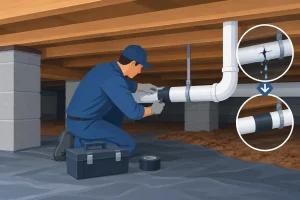
A plumber can isolate the damaged line, remove the broken material, and install a durable repair that matches the existing plumbing system. They can also inspect nearby sections, because one frozen spot sometimes points to another weak area in the same pipe run.
The repair itself should be tested after water pressure is restored. This step matters because a pipe can have more than one split, particularly after a long freeze. The goal is not simply to stop the visible drip. It is to confirm that the system is holding pressure and that no hidden leak is feeding moisture into your home.
If drywall or insulation is wet, drying should begin as quickly as possible. Wet materials can trap moisture behind walls, where the damage is harder to spot. In some cases, a small access opening is necessary to inspect the pipe and allow the area to dry properly. That may feel disruptive at first, but it is often less disruptive than repairing a larger section of damaged wall later.
Preventing Another Frozen Pipe
After frozen pipe restoration, take a few practical steps before the next cold night. Keep your thermostat at a consistent temperature, including when you are away. Open cabinet doors under kitchen and bathroom sinks when temperatures drop so warmer room air can reach supply lines along exterior walls.
Disconnect and drain outdoor hoses before freezing weather. If you have a garage, keep its door closed as much as possible. In a crawl space or other unheated area, make sure pipe insulation is secure and dry. Insulation helps, but it cannot overcome a major draft, so sealing air gaps around plumbing penetrations is often just as valuable.
During an unusually cold stretch, allow a small, steady drip from faucets served by vulnerable lines. Moving water is less likely to freeze than still water. This is not necessary for every faucet in every home, but it can be worthwhile when you know a particular pipe has frozen before.
For homes that sit vacant, arrange regular check-ins during freezing conditions. Keeping the heat on and knowing where the main shutoff is can make the difference between a manageable repair and extensive water damage.
When to Call a Plumber Right Away
Call for help immediately if you cannot find the frozen section, water is leaking from a wall or ceiling, more than one fixture has lost water, or the pipe is located near electrical equipment. A professional should also handle any frozen pipe in a crawl space, attic, or concealed wall where safe access is limited.
Leakless Plumbing helps homeowners respond to urgent plumbing problems with clear communication and repair work designed to last. The focus is on getting your water under control, identifying what failed, and helping you avoid the same stressful surprise during the next freeze.
Can a frozen pipe thaw without bursting?
Yes, an intact frozen pipe can thaw and work normally again. The concern is that you may not know it is intact until the ice melts and water pressure returns. Keep the faucet open, watch closely for leaks, and inspect accessible pipe after thawing.
How long does it take a frozen pipe to thaw?
It depends on the pipe location, outdoor temperature, insulation, and how much ice is inside. An exposed pipe may thaw in a few hours with safe warming, while a pipe inside a cold wall or crawl space can take much longer. Never force the process with an open flame.
Will pipe insulation alone stop freezing?
Not always. Insulation slows heat loss, but it does not create heat. If cold air is blowing directly onto the pipe or the area remains below freezing for a long period, you may also need draft sealing, better heat access, or a change to the pipe location.
A frozen pipe is stressful, but you do not have to guess your way through it. Acting quickly, shutting off water when needed, and fixing the conditions behind the freeze can protect your home long after the temperatures rise.