A higher water bill with no clear reason is usually the first sign that something is wrong. By the time you notice a damp wall, warped flooring, or a musty smell, the leak may have been active for days or even weeks. A professional leak detection service helps catch the source early, confirm what is actually happening, and keep a stressful plumbing problem from turning into major home damage.
For most homeowners, the hard part is not knowing whether they are dealing with a small fixture issue or a hidden pipe problem behind a wall, under a floor, or out in the yard. That uncertainty is what makes leaks so frustrating. You do not just want someone to guess. You want a plumber who can find the problem, explain it clearly, and fix it in a way that holds up.
What a leak detection service actually does
Leak detection is not just looking for visible drips. In many homes, the most expensive leaks are the ones you cannot see. Water lines can leak under sinks, behind showers, inside walls, below slabs, or along aging supply lines where the damage stays hidden until it spreads.
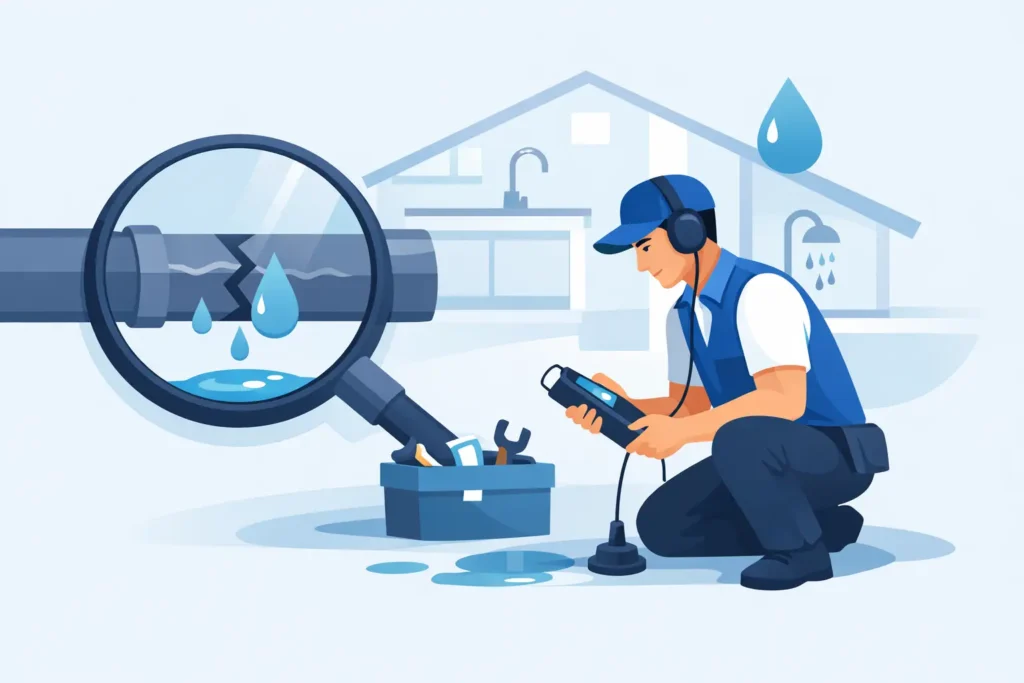
A leak detection service is designed to narrow down the source without unnecessary damage to your home. Instead of cutting into multiple walls or digging in the wrong place, an experienced plumber uses inspection methods to trace where water is escaping and how serious the issue is. That may involve pressure testing, checking fixtures and shutoff points, inspecting exposed plumbing, and using specialized equipment when needed to locate hidden moisture or sound from a leak.
The goal is simple. Find the leak accurately, confirm the best repair approach, and avoid wasting time and money on trial and error.
Signs you may need leak detection service
Some leaks announce themselves with an obvious puddle. Others are quiet and gradual. Homeowners often call after noticing one or two odd changes that do not seem connected at first.
A sudden jump in your water bill is a common clue, especially if your daily water use has not changed. The sound of running water when everything is turned off can point to a hidden supply leak. Soft drywall, bubbling paint, staining on ceilings, warped baseboards, and damp carpet are all warning signs that water is moving where it should not be.
You may also notice low water pressure, mildew smells, or warm spots on the floor if a hot water line is leaking below the surface. Outside, patches of greener grass, soggy soil, or standing water can suggest a buried line issue.
It depends on the type of plumbing in the home, how old the system is, and where the leak is happening. A small drip under a sink can be easy to spot. A pipe leak inside a wall or under a foundation usually is not.
Why hidden leaks get expensive fast
Water has a way of traveling beyond the original problem area. A pinhole leak in a pipe may start small, but the damage rarely stays small for long. Drywall absorbs moisture. Wood framing swells and weakens. Flooring can cup or separate. Insulation loses effectiveness. If moisture lingers, mold and mildew become a real concern.
There is also the plumbing side of the issue. If the leak is caused by pipe corrosion, high water pressure, poor connections, or aging materials, repairing only the visible symptom may not solve the full problem. That is why proper detection matters. The right diagnosis helps you avoid paying for one repair now and another one a month later.
For busy households, there is also the disruption factor. A hidden leak can affect bathrooms, kitchens, laundry areas, and daily routines. The sooner the source is found, the sooner the home gets back to normal.
How plumbers find hidden leaks without unnecessary guesswork
Modern leak detection is more precise than many homeowners expect. The exact method depends on the home and the symptoms, but the process usually starts with the basics. A good plumber listens to what you have noticed, checks where the issue shows up, and tests the system to separate plumbing leaks from drainage, fixture, or appliance problems.
From there, the inspection may focus on pressure loss, fixture isolation, visible pipe runs, and areas where water damage is showing up. For hidden leaks, plumbers may use listening equipment, moisture detection tools, or other noninvasive methods to narrow the search.
That matters because a rushed diagnosis often leads to extra damage. If someone starts opening walls before confirming the source, repair costs can rise quickly. A careful leak detection service saves time not just by finding the problem, but by limiting what has to be disturbed to reach it.
When same-day help makes the biggest difference
Some leaks can wait a day for a scheduled visit. Others should not. If water is actively dripping, pooling, soaking into walls, affecting electrical areas, or causing a sudden loss of pressure, fast service matters. The same is true if a leak is tied to a burst pipe, a failed water line, or damage that is getting worse by the hour.
Homeowners in Port Orchard and nearby communities often call when they are not sure whether the problem is urgent enough for immediate service. That is understandable. Plumbing issues are stressful, and most people do not want to overreact. But if you are shutting off water to control the issue, seeing damage spread, or hearing water where there should be none, it is smart to get it checked right away.
Early response can mean the difference between a targeted repair and a larger restoration project.
Leak detection service is only as good as the repair plan
Finding the leak is only half the job. What comes next matters just as much. Once the source is confirmed, the plumber should explain what failed, what repair is needed, and whether there is any sign of a larger system problem.
Sometimes the fix is straightforward, like replacing a bad connection, valve, or section of pipe. In other cases, the leak points to wear in older plumbing that deserves a broader conversation. If a single repair will solve it, you should hear that clearly. If there is a good reason to look at pressure regulation, pipe condition, or repeat leak risk, that should be explained in plain language too.
Homeowners deserve practical guidance, not scare tactics. The best service call leaves you with answers, a clear repair path, and confidence that the issue was handled correctly.
What to expect from a good service experience
When you call for plumbing help, you are not just paying for tools. You are paying for peace of mind. That means showing up on time, treating your home with respect, communicating clearly, and focusing on a repair that lasts.
A dependable plumber should make the situation feel more manageable, not more confusing. You should know what they found, what they recommend, and what the next step will cost before work moves forward. If there are options, they should be explained without pressure.
That kind of service matters even more during urgent situations. When a leak is threatening your home, the last thing you need is vague answers or temporary patchwork.
How to reduce the chance of future leaks
Not every leak can be prevented, but many can be caught earlier with a little attention. Keep an eye on your water bill, notice changes in water pressure, and do not ignore small stains, musty odors, or recurring damp spots. Check under sinks and around toilets, tubs, and water-using appliances now and then.
If your home has older pipes or a history of repairs, periodic inspections can make sense. The right timing depends on the age of the system and whether you have seen warning signs before. A newer home may need less attention. An older home with past leak issues may benefit from a more proactive approach.
The main thing is not to wait for obvious damage. Water rarely improves on its own.
A good leak detection service gives you more than a location on a pipe. It gives you clarity during a stressful moment and a path to fix the problem before your home pays the price. If something feels off, trust that instinct and get it checked. Small signs are often the first chance to stop a much bigger mess.