A sump pump can keep a crawl space or basement dry for years, then face its hardest job during the same storm that knocks out the power. That is why the best sump pump backups are not simply the biggest units on the shelf. They are systems matched to your home’s water risk, power situation, and the amount of time you need protection when the primary pump cannot run.
For homeowners around Port Orchard and Kitsap County, that decision matters. Heavy rain, high groundwater, aging drainage systems, and occasional outages can turn a quiet sump pit into a real water-damage concern. A good backup buys time and peace of mind. The wrong setup may leave you with a false sense of security when you need it most.
What a Sump Pump Backup Actually Does
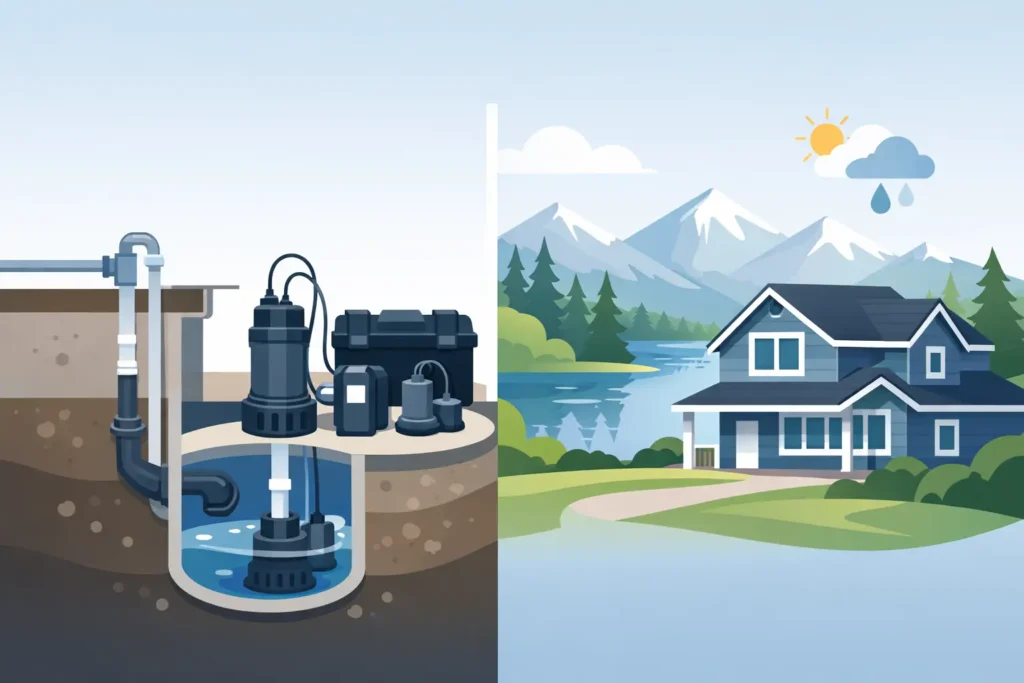
Your main sump pump is usually an electric pump that runs on household power. When water rises in the pit, a float activates the pump and sends water outside through the discharge line. A backup system takes over if the primary pump fails, loses power, or cannot keep up with incoming water.
That last point is worth understanding. A backup is not always designed to replace a full-size primary pump for days of severe flooding. Its job is often to handle a power outage, a failed float switch, or a sudden rise in water until normal power returns or a plumber can address the problem. Homes with a history of heavy water flow may need both a stronger primary system and a backup.
The best choice depends on whether your biggest concern is a short outage, frequent outages, a long absence from home, or a sump pit that fills quickly.
Best Sump Pump Backups: Three Main Options
Battery backup systems
For most homeowners, a battery backup sump pump is the practical first choice. It includes a separate DC pump, a battery, a charger, and a controller that switches on when the main system stops working or power goes out.
A quality battery backup can run during an outage without relying on a generator or water supply. Many models also sound an alarm when they activate, when the battery is low, or when the water level is unusually high. Some offer remote alerts, which can be especially helpful for a second home or when you travel frequently.
The trade-off is runtime. A battery backup does not run forever, and actual run time depends on battery capacity, how often the pump cycles, how high it must lift water, and how much water is entering the pit. A light rain event may require very little pumping. A saturated yard after a windstorm can drain a battery much faster.
For a typical home, choose a system with a deep-cycle battery designed for sump pump use, not a standard vehicle battery. The charger should maintain the battery safely, and the pump should have enough capacity for your pit and expected water volume. Bigger is not automatically better if the system is poorly installed or the discharge line is restricted.
Water-powered backup pumps
A water-powered backup uses your home’s municipal water pressure to create suction and move sump water out of the pit. Since it does not need electricity or a battery, it can operate as long as the municipal water supply and pressure remain available.
This can be a strong option for homes that experience long outages and have reliable city water. It also avoids battery replacement and charging concerns. However, water-powered systems use a significant amount of fresh water while pumping, and their performance depends on available water pressure. They are not suitable for homes supplied by a private well during an outage because the well pump also needs electricity.
Before choosing this route, consider local water costs, the size of the water line, and whether your plumbing layout can support a proper installation. This is not a system to improvise. A qualified plumber should verify that it is installed correctly and performs as expected.
Generator-powered protection
A portable or standby generator can keep your existing primary sump pump running during an outage. For homeowners who also want to power refrigerators, lights, heating equipment, or medical devices, a generator may be part of a broader emergency plan.
The downside is that a portable generator needs fuel, safe outdoor placement, and someone available to start it and connect it properly. It also does not automatically protect the home if nobody is there. A standby generator can start automatically, but it is a larger investment and still does not solve a failed primary pump unless there is a second pump or another backup plan.
For many homes, the most dependable arrangement is a capable primary sump pump, a battery backup pump, and a generator plan for extended outages. That approach covers more than one point of failure.
How to Choose the Right Size and Runtime
Start with your home, not a product label. A sump pump that handles a little seepage in a shallow pit has different needs than one protecting a finished basement or a crawl space that takes on water after every major rain.
Pay attention to how often your current pump runs during wet weather. If it cycles every few minutes, the backup must be able to handle real volume, not just occasional emergency use. A pump that runs constantly may also point to a problem with the drainage system, check valve, discharge line, or pump sizing. Adding a backup without correcting the underlying issue can leave both pumps overworked.
Pump capacity is commonly described in gallons per hour at a certain lift height. The lift is the vertical distance the pump must push water before it reaches the discharge route. As lift increases, pumping capacity decreases. Your installer should account for the height of the discharge pipe, its length, bends, and any restrictions.
Battery capacity is just as important. A larger deep-cycle battery generally provides more runtime, but no battery can make up for an undersized pump or unusually heavy groundwater. If water enters quickly, consider a backup system with a high-water alarm and a plan for fast service if the alarm sounds.
Features Worth Paying For
The best sump pump backups share a few practical features that make problems easier to catch before water reaches the floor. Look for a controller with clear audible alarms, low-battery warnings, and a high-water alert. A separate float switch is useful because it provides another layer of protection if the primary float sticks or fails.
A display that shows charging status and system condition is helpful, but it should be simple enough to understand at a glance. Remote notifications can add value for homeowners who are away often, but they are not a substitute for regular inspections.
Do not overlook the check valve. This small fitting prevents water in the discharge pipe from flowing backward into the sump pit after the pump stops. A failed or missing check valve can cause extra cycling, noise, and reduced performance. The discharge line also needs to carry water far enough away from the foundation without freezing, clogging, or sending water back toward the home.
Installation Mistakes That Can Defeat a Backup
A backup pump needs its own clear place in the pit and a float that can move freely. If the float catches on a pipe, wall, or primary pump, the system may never activate. The pit also needs to be large enough for both pumps to operate without crowding each other.
The battery should sit in a protected battery box, above any possible standing water, with secure connections and room for service. It should not be tucked into a damp corner where corrosion can build unnoticed. The charger requires a reliable outlet, ideally one that is not easily shut off by a wall switch.
Discharge piping deserves the same attention as the pump itself. If the outlet is blocked by debris, ice, or a buried pipe problem, neither the primary nor backup system can move water where it needs to go. A professional installation looks at the whole path, not just the equipment in the pit.
Test Your System Before the Next Storm
A backup that has never been tested is only a hope. Check the system monthly during the wet season and before periods when storms are expected. Pour water into the pit to confirm that the primary pump activates, then test the backup according to the manufacturer’s instructions. Many systems have a test button, but a real water test can reveal float or discharge issues that a button will not.
Inspect the battery terminals for corrosion, confirm the charger shows normal operation, and listen for alarms. Replace batteries on the schedule recommended for your specific system, even if they appear to be working. Battery performance declines with age, and a weak battery often reveals itself only during a long outage.
If your sump pump runs more often than it used to, sounds strained, leaves water behind, or triggers alarms, schedule an inspection before the next hard rain. Leakless Plumbing can help homeowners identify whether the issue is the pump, the backup, the float switch, or the drainage path.
A dry crawl space or basement is easier and far less expensive to protect than to restore. Choose a backup that fits your actual risk, test it regularly, and address small warning signs before the weather gives them a chance to become a mess.