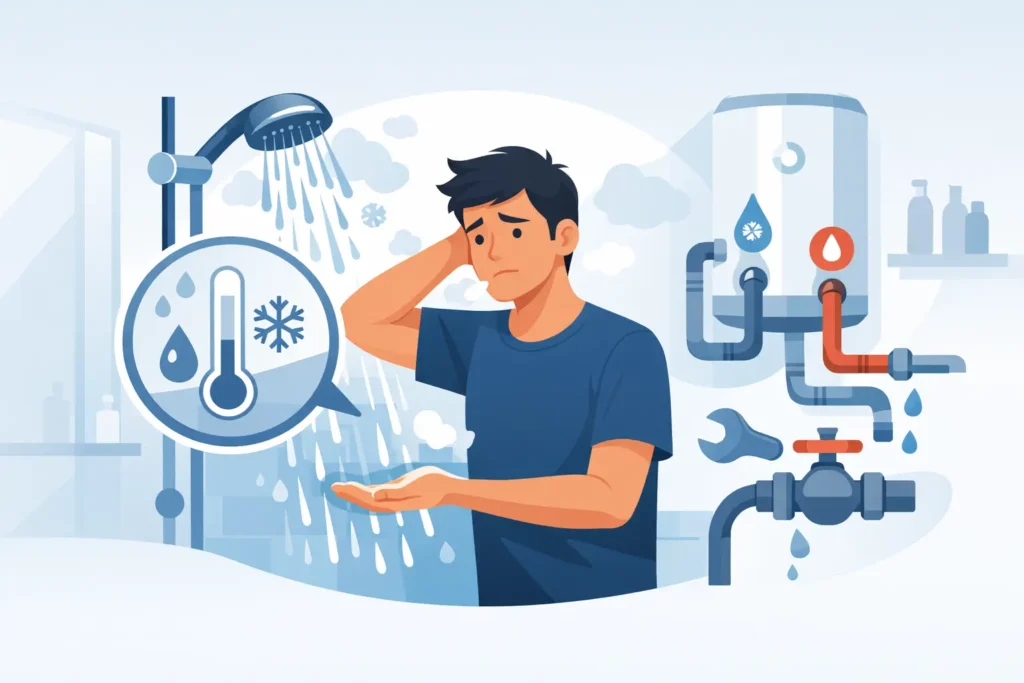
A shower that turns cold halfway through getting ready can throw off the whole morning. If you are asking, why is my shower cold, the answer may be as simple as a setting or as serious as a failing water heater. The key is noticing whether the problem affects one shower, every faucet, or only certain times of day.
Before assuming the water heater is done for, take a quick look at the pattern. That helps narrow down the cause and tells you whether a simple adjustment may help or whether it is time to call for a repair.
Why Is My Shower Cold When Other Faucets Are Hot?
When hot water works normally at the kitchen sink or another bathroom but the shower stays cold, the issue is usually inside the shower fixture rather than at the water heater.
A worn shower cartridge or mixing valve
Most modern shower valves use a cartridge or pressure-balancing valve to blend hot and cold water safely. Over time, mineral buildup, worn seals, or internal damage can prevent the valve from letting enough hot water through. The result is a shower that is lukewarm, suddenly cold, or difficult to adjust.
This is especially common when the handle has become stiff, loose, or inconsistent. You may turn it slightly and get a big temperature swing, or find that the hottest setting is no longer very hot. Replacing the cartridge can often solve the problem, but the correct part and installation matter. A mismatched cartridge or damaged valve body can create a bigger repair.
The anti-scald limit is set too low
Many single-handle showers have an adjustable temperature limit stop. It is designed to reduce the risk of scalding, particularly for children and older adults. If it is set too conservatively, the handle may never reach the true hot-water range.
This can happen after a previous repair, a fixture installation, or an adjustment made by a prior homeowner. The setting can be corrected, but it should be done carefully. Raising it too far can make the shower unsafe, particularly if the water heater temperature is already high.
A blocked showerhead is reducing flow
A clogged showerhead does not usually make water completely cold, but it can make the temperature feel unpredictable. Mineral deposits may restrict some spray openings and alter how hot and cold water mix at the fixture. If your water pressure has also dropped, a showerhead cleaning or replacement may be part of the solution.
Why Does My Shower Go Cold After a Few Minutes?
If the shower begins warm but runs cold quickly, the water heater is the more likely source. How quickly it happens, and whether anyone else used hot water first, offers useful clues.
The tank does not have enough hot water available
A traditional tank water heater stores a limited supply of heated water. A long shower, a dishwasher cycle, laundry, or another person bathing can use much of that supply before you step in. A small tank may simply not meet the household’s hot-water demand anymore.
That does not always mean the unit is broken. Household needs change. A family that has grown, frequent guests, or a new high-flow shower fixture can expose a system that was already undersized. A plumber can help determine whether adjustments, repairs, or a larger-capacity water heater make the most sense.
Sediment is taking up space in the tank
In many homes, minerals settle at the bottom of a water-heater tank over the years. That sediment reduces the amount of water the tank can heat efficiently and can make the burner or heating elements work harder. You may notice shorter showers, popping or rumbling sounds near the tank, or rising energy costs.
Water heater maintenance can help in some cases, but age and condition matter. Flushing an older neglected tank is not always the right move without an inspection, because existing corrosion or weakened components may be exposed in the process. A professional can assess the safest next step.
A heating element, thermostat, or burner may be failing
Electric water heaters commonly use two heating elements. If one stops working, you may still get some hot water, but not enough for a full shower. Gas units can have issues with the burner, pilot or ignition system, thermostat, gas control valve, or venting components.
These are not good do-it-yourself repairs. Electricity, gas, hot water, and pressure are all involved. If the water heater is not heating consistently, has a warning light, makes unusual noises, or shows any sign of leaking, arrange service promptly.
When the Whole House Has No Hot Water
Cold water at every fixture points away from the shower itself. Start by checking whether the water heater has power or fuel and whether it is showing an obvious warning indicator. For an electric unit, a tripped breaker can be a clue. For a gas unit, do not attempt to relight or disassemble components if you smell gas or are unsure of the procedure.
A water heater also may be set too low. The right temperature balances comfort, energy use, and scald prevention, so avoid turning the setting up dramatically. If the temperature was changed recently and the shower still runs cold, there may be a mechanical issue behind it.
Look around the water heater for moisture, rusty connections, corrosion, or a puddle near the base. A leak can signal a failing valve, fitting, or tank. A leaking tank generally cannot be repaired for the long term and may require replacement before water damage gets worse.
Cold Showers Can Be a Plumbing Cross-Connection Issue
Sometimes cold water is being pushed into the hot-water line through a faulty fixture, appliance valve, or plumbing connection. This is less common than a bad cartridge or water-heater problem, but it can cause confusing symptoms throughout the house.
For example, hot water may seem fine at first, then go lukewarm even when no one is using another fixture. Finding a cross-connection takes systematic testing. It is worth having a plumber investigate rather than replacing a water heater that may still be in good condition.
Safe Checks You Can Make Before Calling
You do not need to take apart plumbing or water-heater equipment to gather helpful information. Check whether hot water works at nearby faucets, then note whether the shower is cold immediately or only after several minutes. Think about whether a dishwasher, washing machine, or another shower was running.
Also pay attention to changes in the shower handle, pressure, water color, or sounds from the water heater. Those details can make diagnosis faster. If the issue began after plumbing work or a fixture replacement, mention that too.
Avoid removing water-heater panels, adjusting gas components, bypassing safety controls, or forcing a stuck shower handle. A small problem can become a leak, electrical hazard, or burned-out component when the wrong part is disturbed.
When to Call a Plumber for a Cold Shower
Call for professional help when the shower is consistently cold, hot water disappears across the home, the water heater leaks, or the unit makes unusual banging, popping, or hissing sounds. You should also get help right away if you smell gas, see discolored water, or cannot maintain a safe, steady shower temperature.
For homeowners in Port Orchard and nearby Kitsap County communities, Leakless Plumbing can identify whether the problem is in the shower valve, water heater, or plumbing system and recommend a repair that is built to last. Clear answers matter when the family is waiting for a hot shower.
A cold shower is frustrating, but it is also useful information. Pay attention to when it happens and where hot water is still available, then address the cause before a minor temperature problem turns into a water-heater failure or a damaging leak. Don’t stress the mess, call LeakLess.