A slow drain here and a clog there might not seem like a big deal, but homeowners usually start asking when to replace drain pipes after the same problem keeps coming back. If your sinks, tubs, or toilets are acting up more often, the issue may be deeper than a routine blockage. Older or damaged drain lines can turn a small annoyance into water damage, bad odors, and expensive repairs if they are left alone.
The tricky part is that drain pipes do not always fail all at once. They wear out gradually. A pipe can still move water while hiding cracks, corrosion, loose joints, or buildup that keeps stealing performance little by little. That is why it helps to know the signs before you end up dealing with an emergency.
When to replace drain pipes instead of repairing them
Repair is often the right first step when the problem is isolated. If one section of pipe has a small leak, one fitting has come loose, or one fixture drain is clogged from local buildup, a targeted repair can make good sense. It is faster, less disruptive, and more affordable when the rest of the system is still in solid shape.
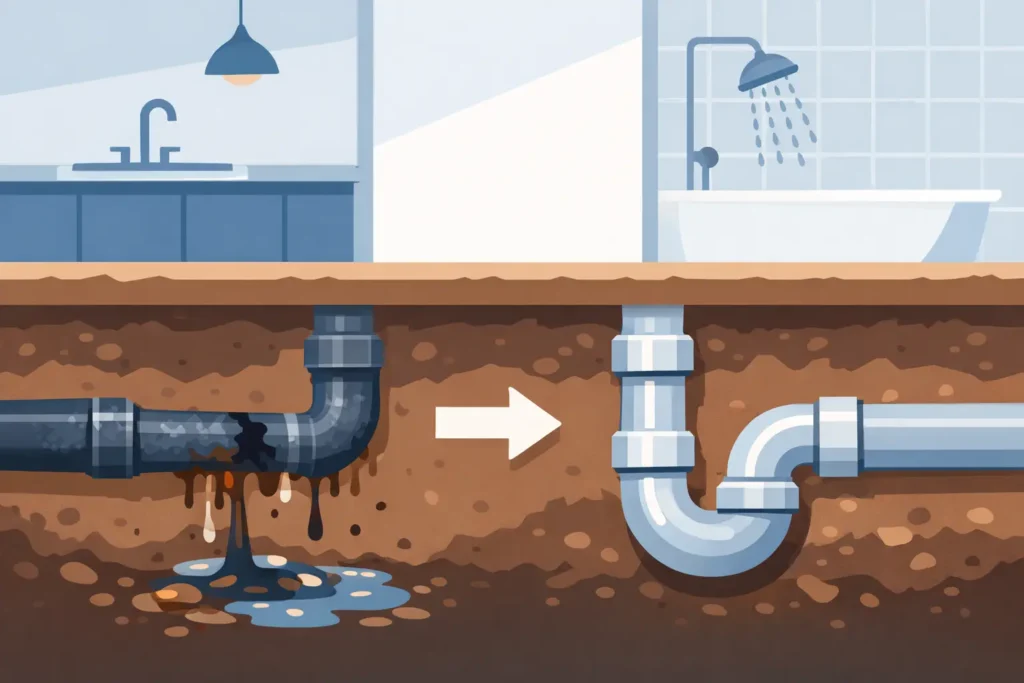
Replacement becomes the better call when the problem is not really one problem anymore. If you are paying for repeated drain cleaning, patching leaks in multiple areas, or dealing with recurring backups, the pipe itself may be at the end of its useful life. At that point, repair starts acting more like a temporary bandage than a real fix.
A good way to think about it is frequency plus condition. One repair on a newer pipe is normal. Several repairs on an aging drain system usually mean it is time to stop chasing symptoms and address the cause.
The most common signs your drain pipes may need replacement
Some warning signs are obvious, and others are easy to ignore until they become a bigger mess. If more than one of these is happening in your home, it is worth having the drain system checked by a professional.
Recurring clogs in multiple drains
A single clogged bathroom sink often points to hair, soap scum, or debris near that fixture. But when the kitchen sink, tub, and toilet all start draining slowly, or clogs keep returning after cleaning, the issue may be in the branch line or main drain piping.
Recurring clogs can mean the inside of the pipe has narrowed from corrosion, grease, scale, or years of buildup. It can also mean the pipe is cracked, sagging, or misaligned, which prevents waste and water from flowing the way they should.
Sewer odors inside or outside the house
Drain pipes are supposed to carry wastewater away while keeping sewer gas contained. If you notice persistent foul smells near sinks, tubs, crawl spaces, or in the yard, that can point to a damaged drain line, a broken seal, or a venting issue. Smells that come and go may still matter, especially if they keep returning after basic cleaning.
Odor alone does not always mean full replacement is needed, but it should not be brushed off. A bad smell is often one of the first signs that a drain system is not sealed the way it should be.
Water stains, mold, or soft spots
A leaking drain pipe behind a wall or under a floor may not announce itself with a dramatic burst. More often, it shows up as staining, bubbling paint, warped flooring, or a musty smell that never fully goes away. In bathrooms, kitchens, and laundry areas, those signs can point to a drain line that is cracked or corroded.
If the damage is limited to one accessible section, repair may be enough. If pipe material is failing in several places, replacement is the smarter long-term move.
Old pipe materials
Age matters, but material matters just as much. Some older drain piping simply does not hold up forever. Galvanized steel can corrode from the inside out. Cast iron is durable but can eventually rust, scale up, and crack. Older plastic systems may have brittle joints or outdated materials that are more prone to failure.
If your home is older and the drain system has never been updated, that changes the conversation. Even if the pipes are still functioning, a history of slow drains, leaks, and repairs may be telling you replacement is not far off.
Frequent leaks at joints or connections
One loose connection can happen. Multiple leaks at joints usually suggest movement, wear, or general system deterioration. Pipes expand and contract over time, supports can weaken, and older fittings can lose their seal. Once that pattern starts showing up in more than one place, it is reasonable to question whether the piping as a whole is still dependable.
How old is too old for drain pipes?
There is no single age when every drain pipe should be replaced. Some systems last much longer than expected, and others fail early because of poor installation, shifting soil, root intrusion, or years of heavy use. That said, older plumbing should be watched more closely, especially if the home has cast iron or galvanized components.
If your home is several decades old and the drain system is original, replacement may be worth discussing before a major failure happens. This is especially true if you are remodeling, dealing with repeated service calls, or planning to sell. Buyers and homeowners alike feel better when they know the plumbing has been brought up to a more reliable standard.
When a repair is still the right move
Not every drain problem calls for replacement, and a trustworthy plumber should tell you that. If the pipe is structurally sound and the issue is local, repair can absolutely be the right answer. A cracked trap under a sink, a worn fitting behind a toilet, or a clog caused by a specific obstruction can often be fixed without replacing large sections of pipe.
The goal is to match the solution to the real condition of the system. A solid repair on a healthy pipe can last for years. The problem is when people keep spending money on repairs for a drain line that has already shown it is failing in multiple ways.
What happens if you wait too long?
Waiting usually does not make drain pipe problems cheaper. A partially damaged pipe can keep working just well enough to lull you into putting it off, then fail at the worst time. That might mean wastewater backup, hidden water damage, mold growth, or flooring and drywall repairs on top of the plumbing work.
For busy households, the bigger cost is often disruption. Losing use of a kitchen sink, shower, or toilet is stressful enough. Dealing with emergency cleanup makes it worse. That is why it is usually better to act when the warning signs first start stacking up instead of waiting for a complete failure.
How plumbers decide whether drain pipe replacement is needed
A proper diagnosis matters. The decision should not be based on a guess or a quick glance under the sink. In many homes, the condition of the drain line needs to be evaluated based on where the issue is happening, how often it happens, how old the system is, and whether the problem is isolated or widespread.
That may involve checking accessible drain lines, looking for visible corrosion or leaks, testing how fixtures drain, and identifying whether backups are affecting one area or the house more broadly. The point is to separate a simple repair from a system problem.
For homeowners in older parts of Port Orchard and nearby communities, this is especially useful. Homes with aging plumbing can hide a lot behind walls, under floors, or in crawl spaces. Getting a clear answer early can prevent a lot of stress later.
A practical way to think about replacement timing
If your drain pipes are old but working well, you may not need immediate replacement. If they are old and starting to show a pattern of clogs, leaks, odors, or water damage, the timing becomes more urgent. If you are already paying for repeat service and the fixes are not holding, replacement is often the more cost-effective path.
That is really what homeowners want to know. Not whether replacement sounds dramatic, but whether it will stop the cycle. In many cases, replacing the failing section or the aging system is what finally restores normal use without constant worry.
A good plumbing decision should leave you with fewer surprises, not more. If your drains have been sending the same warning signs again and again, listen to them early. It is a lot easier to plan for pipe replacement than to scramble after a backup, a leak, or damage you never saw coming.