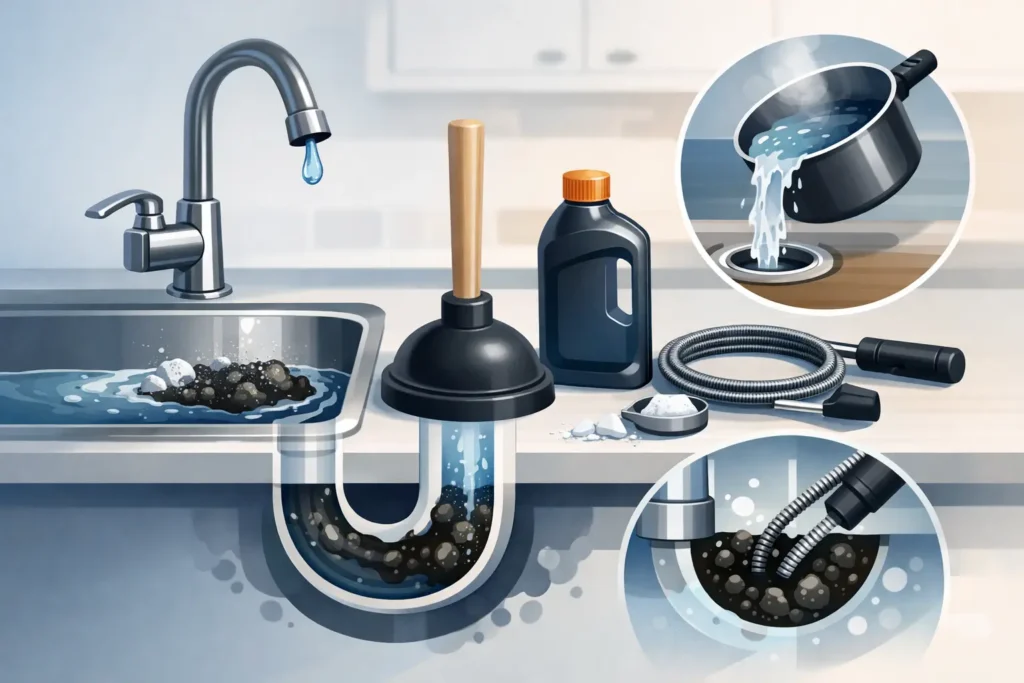
A sink full of greasy water right before dinner is enough to ruin the whole evening. If you’re wondering how to clear kitchen drain clogs without making a bigger mess, the key is to start with the safest fix first and know when the problem has moved past a simple DIY job.
Kitchen drains clog for predictable reasons. Grease cools and sticks to the pipe walls. Food scraps catch on that buildup. Soap residue, coffee grounds, rice, pasta, and even so-called flushable or disposable items can turn a slow drain into a full backup. The good news is that many kitchen sink clogs can be cleared at home. The bad news is that the wrong method can damage pipes, loosen fittings, or push the blockage deeper.
How to Clear Kitchen Drain Safely
Before you grab a bottle of chemical cleaner, pause. Those products can be rough on older pipes, hard on your skin and eyes, and unpleasant to work around if a plumber later needs to open the line. A better approach is to work from simple, low-risk steps to more hands-on methods.
Start by removing any standing water from the sink. You do not need to get every drop, but clearing most of it makes the next steps easier. Then check the sink strainer or stopper area for visible debris. In many kitchens, the clog starts right there with food scraps and grease packed just below the drain opening.
Next, run hot water for a minute if the sink is draining slowly rather than fully blocked. This can help soften greasy buildup. If the drain is completely backed up, skip the running water and move to a controlled flush. Carefully pour very hot water into the drain in stages, giving it a few seconds between pours. Boiling water can be too harsh for some PVC setups, so hot tap water or water just below a boil is the safer move for most homes.
If that does not improve flow, add dish soap before the hot water. Dish soap helps break up grease, which is one of the most common kitchen drain problems. This works best on fresh clogs, not old dense blockages.
Try a Plunger Before Anything Harsh
A sink plunger is often the fastest next step. Use a clean cup plunger, not the flange-style plunger made for toilets. If you have a double-basin sink, seal the other drain opening with a stopper or a wet rag so you can build pressure where the clog is.
Add enough water to cover the plunger cup, then plunge firmly for 20 to 30 seconds. Keep the seal tight. The goal is to move the blockage, not splash dirty water across the countertop. After a few rounds, remove the plunger and check drainage.
This is one of those it-depends situations. Plunging works well when the clog is in the branch line just past the sink. It is less effective if the blockage is heavy grease farther down the line or if there is a venting issue making the drain sluggish.
Check the P-Trap Under the Sink
If the plunger does not work, the clog may be sitting in the P-trap. That curved section of pipe under the sink is designed to hold water and block sewer gas, but it also catches debris.
Place a bucket underneath before you loosen anything. Slip-joint nuts can often be removed by hand, though a pair of pliers may help if they are snug. Once the trap is off, empty it into the bucket and look for buildup inside. Grease sludge, food waste, and small objects are common finds.
Clean the trap thoroughly and inspect the washers before reinstalling it. If a washer looks cracked or flattened, replace it. A cleared drain is not much of a win if the pipe starts leaking afterward.
Run water slowly when you test it. Watch closely around the fittings. A small drip usually means a connection is misaligned or needs to be tightened a bit more.
Use a Drain Snake for Deeper Clogs
When the trap is clean and the sink still will not drain, the clog is likely farther down the line. This is where a hand auger or drain snake can help.
Feed the snake into the drain or directly into the wall pipe after removing the trap. Turn the handle steadily as you push forward. If you hit resistance, do not force it. Work the cable back and forth to break up or hook the blockage, then pull it out carefully. It may take a couple of passes.
This step takes patience. Rushing can kink the cable or scratch pipe interiors. It can also leave part of the clog behind, which means the problem returns a week later.
After snaking, flush the line with hot water for several minutes. If the sink starts draining but still seems a little slow, there may be more buildup coating the pipe walls. That is common in kitchen lines where grease has been building for months or years.
What Not to Put Down a Kitchen Drain
A lot of recurring clogs come from habits that seem harmless in the moment. Grease is the biggest one. Even if it goes down warm, it hardens later. Coffee grounds clump. Eggshells do not sharpen disposal blades like people used to say. Starchy foods such as rice, pasta, and potato peels swell and stick.
Fibrous vegetable scraps are another troublemaker, especially if you have a garbage disposal. Celery strings, onion skins, and corn husks wrap around moving parts and slow drainage. Small scraps may make it through once or twice, but over time they add to the buildup.
If your kitchen sink has a disposal, remember that it does not replace the drain. It only chops waste into smaller pieces. Grease and food paste can still collect in the pipes beyond it.
Signs the Clog Is More Serious
Sometimes a kitchen drain problem is not just a kitchen drain problem. If water backs up into another fixture, if the sink gurgles loudly when other plumbing is used, or if bad odors keep coming back after cleaning, there may be a deeper issue in the branch line or main drain.
Frequent clogs are another red flag. Clearing the same sink every month usually means the blockage was never fully removed or the pipe has a problem that keeps catching debris. In older homes, scale buildup, pipe belly, or worn drain lines can all contribute.
Watch for leaks under the sink too. A clog can put pressure on fittings, especially if someone keeps plunging or using aggressive chemicals. What starts as a drain issue can turn into cabinet damage, warped flooring, or mold if water escapes unnoticed.
When to Call a Plumber
If you have tried hot water, plunging, trap cleaning, and a basic snake without success, it is time to stop before the repair gets more expensive. The same goes for repeated backups, multiple slow drains, sewage smells, or any sign of leaking from disturbed pipes.
A professional drain cleaning does more than poke a hole through the clog. It helps identify whether you are dealing with grease buildup, a damaged section of pipe, or a larger drainage issue affecting the home. That matters because temporary relief is not the same as a lasting fix.
For homeowners in Port Orchard and nearby communities, getting help quickly can prevent a backed-up sink from becoming a full kitchen disruption. Leakless Plumbing takes that practical approach seriously – clear communication, dependable repair work, and solutions meant to hold up.
How to Keep a Kitchen Drain Clear
Once the drain is moving again, a few small habits make a big difference. Scrape food into the trash before rinsing dishes. Pour cooking grease into a container and throw it away after it cools. Use a sink strainer to catch scraps. Flush the drain with hot water and a little dish soap after heavy cooking sessions.
If you use a garbage disposal, run cold water while it operates and for a few seconds after. Cold water helps fats stay more solid so the disposal can chop them more effectively instead of smearing them down the line.
A kitchen drain usually gives some warning before it fully clogs. It starts draining slower, smells a little off, or makes a gurgling sound after the dishwasher runs. Catching it early is easier, cleaner, and cheaper than dealing with a sink full of dirty water on a busy weeknight.
If you are ever unsure how far to push a DIY fix, trust that instinct. The best repair is the one that clears the problem without creating a second one.