A slab leak rarely announces itself with a dramatic burst pipe. More often, it starts with a higher water bill, a warm patch on the floor, or the feeling that something in the house is just a little off. If you are wondering how to spot slab leaks before they turn into flooring damage, mold, or foundation trouble, the key is knowing which small signs matter and when to act fast.
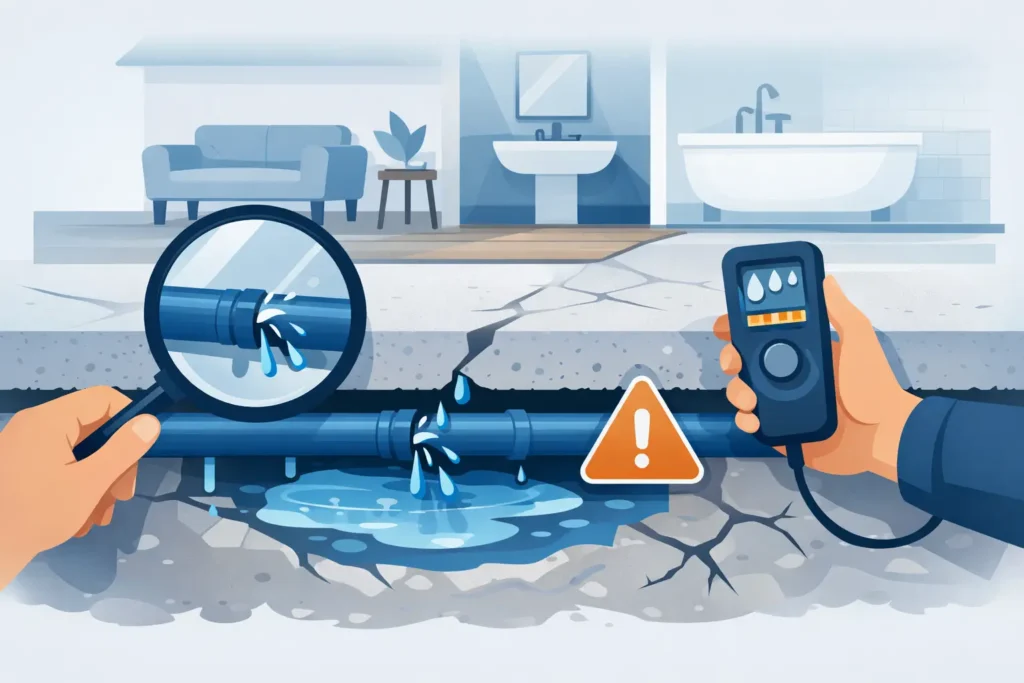
Slab leaks happen when a water line running beneath your home’s concrete foundation develops a leak. Because the pipe is hidden under the slab, the problem can go unnoticed longer than a leak under a sink or behind a toilet. That delay is what makes slab leaks expensive. The water does not just disappear. It can soak into flooring, weaken materials, create moisture problems indoors, and in some cases affect the soil beneath the home.
How to spot slab leaks inside your home
The first clue is often not visual. Many homeowners notice a change in sound, temperature, or water use before they ever see damage. If you hear running water when everything is turned off, that deserves attention. The same goes for a sudden jump in your water bill without any change in your household routine.
A warm or hot spot on the floor is another common sign, especially if the leak is on a hot water line. Tile and hard flooring tend to make this easier to notice, but even carpet can feel unusually warm in one area. Not every warm floor means a slab leak, but when it shows up with other symptoms, it is a strong clue.
You may also notice damp flooring, warped boards, loose tile, or carpet that feels slightly wet for no obvious reason. Sometimes the moisture is subtle at first. Homeowners often assume it is a spill, condensation, or routine humidity. The difference is that slab leak moisture keeps coming back.
Low water pressure can show up too. If a pipe under the slab is leaking, some of the water meant for your faucets and fixtures is escaping before it gets there. Pressure loss can have other causes, so this sign alone does not confirm a slab leak. Still, paired with other issues, it helps complete the picture.
The warning signs homeowners miss
One of the easiest signs to overlook is the sound of water movement. Late at night, when the house is quiet, listen near bathrooms, kitchens, and utility spaces. If you hear a faint hiss or water running when no fixtures are on, hidden leakage is possible.
Another commonly missed sign is a musty smell with no clear source. Water under the slab can raise indoor moisture enough to create odor problems, especially if flooring or nearby materials begin holding that moisture. If a room smells damp but you cannot find a visible leak, the problem may be lower than you think.
Hairline cracks in flooring or walls can also raise concern, though this is where it depends. Homes can develop small cracks for many reasons, including normal settling. But if cracks appear along with unexplained moisture, rising water bills, or hot spots on the floor, it is worth taking seriously. The concern is not just the leak itself. It is what long-term moisture can do over time.
What causes slab leaks in the first place
Most homeowners want to know why this happened, especially if the house has not had major plumbing problems before. Slab leaks usually come from pipe wear, shifting soil, corrosion, poor installation, or repeated friction where a pipe rubs against concrete or surrounding material.
Older homes are often more vulnerable, but newer homes are not immune. A pipe can fail because of pressure issues, poor water chemistry, or physical stress under the slab. In parts of Washington where moisture levels and ground movement can vary through the seasons, the ground beneath a home can contribute to plumbing strain over time.
Hot water lines are frequent trouble spots because heat causes expansion and contraction, which adds wear over the years. That said, cold water lines can leak too. The only way to know for sure is proper leak detection.
A simple way to check for a hidden leak
If you want a quick at-home check before calling for help, start with your water meter. Make sure no one in the home is using water. Turn off faucets, dishwashers, washing machines, ice makers, and irrigation if applicable. Then check the meter and note the reading. Wait a while without using any water and check it again.
If the reading changes, you likely have a leak somewhere in the system. That does not automatically mean it is under the slab, but it tells you the problem is real. If you already have warm floors, damp spots, or unexplained water costs, this meter check makes the case stronger.
Avoid guessing beyond that. Slab leak diagnosis usually requires professional equipment and experience. The goal is to locate the issue accurately without tearing up flooring just to search blindly.
When a slab leak becomes an emergency
Some slab leaks are slow and some are aggressive. The difficult part is that even a slower leak can cause major damage if it runs long enough. If you notice active water coming up through the floor, sudden major pressure loss, visible flooding, or signs that water is spreading fast, do not wait.
A hot water slab leak can also drive up energy bills because your water heater keeps working to replace lost heated water. If the heater seems to run more often than usual and your floor feels warm, that combination should move up your priority list.
For families with busy schedules, it is tempting to monitor the problem for a few days. That gamble often costs more in the end. Flooring, trim, drywall, and even indoor air quality can be affected by hidden moisture. Fast action usually means less disruption and a smaller repair footprint.
How plumbers confirm a slab leak
Professional leak detection is about precision. A plumber may use pressure testing, acoustic listening equipment, thermal tools, or other specialized methods to narrow down the leak location. The right approach depends on the symptoms, the piping system, and the layout of the home.
This matters because slab leak repair is not one-size-fits-all. In some cases, a direct spot repair makes sense. In others, rerouting a line may be the better long-term solution, especially if the pipe material or condition suggests more failures could follow. A quick patch is not always the cheapest option once repeat repairs are factored in.
That is why clear communication matters. Homeowners do not need a technical lecture. They need to know where the leak is, how serious it is, what repair options make sense, and how to prevent a repeat problem if possible.
How to spot slab leaks early enough to avoid bigger repairs
Catching a slab leak early comes down to paying attention to changes that do not fit your normal routine. A bill that climbs for no reason, a floor that feels strangely warm, a room that smells damp, or water sounds with everything off are not small things to brush aside.
It also helps to trust patterns, not just single symptoms. One soft spot in carpet could be a spill. One higher bill could be a rate change. But when two or three signs show up together, it is time to have the system checked.
If you live in Port Orchard or nearby and suspect a hidden leak, fast service matters more than guesswork. Leakless Plumbing approaches slab leaks the way homeowners need it handled – with clear answers, dependable repair options, and a focus on fixing the problem without dragging the stress out.
What to do next if you suspect one
Start by reducing water use and checking whether the issue appears active. If you can safely do a meter check, do it. Take note of any damp areas, flooring changes, warm spots, or unusual sounds. Then call a plumber who can properly test and locate the source.
The main thing is not to wait for obvious damage. By the time a slab leak is visible, it has often been causing trouble for a while. A fast response gives you more repair options and a better chance of avoiding bigger restoration work.
If something in your home feels off and the signs keep adding up, trust that instinct. Plumbing problems hidden under concrete do not fix themselves, but they are a lot easier to deal with when caught early. Don’t stress the mess, call LeakLess.