That white crust around the faucet is not just a cleaning problem. It is mineral scale, and it can build up inside fixtures, shower valves, water heaters, and appliances where you cannot see it. The best fixes for hard water depend on what is in your water, how much water your household uses, and whether you want to protect the whole plumbing system or improve one tap.
Hard water is common enough that many homeowners live with the signs for years: stiff laundry, cloudy glassware, dry-feeling skin after a shower, reduced water flow at fixture aerators, and a water heater that seems to work harder than it should. The right treatment can reduce those frustrations and help your plumbing equipment last longer. The wrong one can cost money without solving the issue you actually have.
Start by Confirming What Is in Your Water
Hard water contains dissolved minerals, mainly calcium and magnesium. Those minerals are harmless to drink for most people, but they leave deposits behind as water dries or heats up. A water test can measure hardness and may identify other concerns that need a different solution.
This first step matters because sediment, iron staining, low water pressure, and hard water can look similar from the outside. A basic shower filter will not correct a heavily scaled water heater. Likewise, a water softener is not designed to solve a plumbing leak, corrosion, or a clogged supply line.
If your home uses a private well, testing is especially useful because water conditions can change over time. For homes on a public supply, hardness can still vary by location and source. A plumber can assess the visible plumbing symptoms along with your test results, so you are not guessing based on a single spot on the shower door.
Best Fixes for Hard Water in a Whole Home
For households dealing with noticeable scale throughout the home, whole-house treatment is usually the most effective long-term route. There is no one-size-fits-all system, though. The best choice comes down to the severity of the hardness, household habits, available installation space, and maintenance you are comfortable handling.
Install an ion-exchange water softener
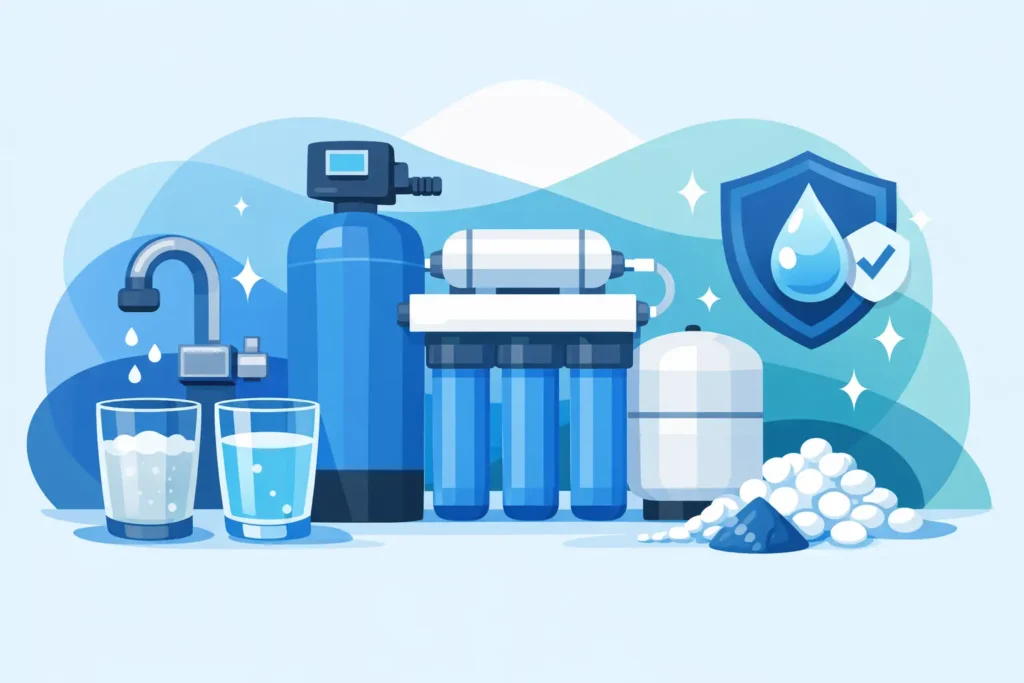
A traditional water softener is the most reliable option for truly hard water. It uses resin beads to exchange calcium and magnesium for sodium or potassium. The result is softened water at every treated fixture, which means less scale on faucets, easier cleaning, softer-feeling laundry, and better protection for water-using equipment.
For many families, this is the answer when mineral buildup keeps returning despite regular cleaning. It is particularly helpful when scale is affecting showerheads, dishwasher performance, washing machines, or a tank-style water heater.
There are trade-offs. These systems need periodic salt or potassium replenishment and should be sized correctly for the number of people in the home and the water hardness level. An oversized unit can be an unnecessary expense, while an undersized unit may regenerate too often and fail to keep up with demand. Proper installation also matters. The unit needs the right connections, drainage, and a location where future service is manageable.
Consider a salt-free conditioner for lighter scale concerns
Salt-free water conditioners are often marketed as softeners, but they do not remove hardness minerals in the same way an ion-exchange softener does. Instead, they alter how minerals behave so they are less likely to form hard scale on surfaces and inside pipes.
That distinction is worth knowing before you buy. A conditioner may be a practical fit for a household with moderate scale concerns that wants less maintenance and does not want to add salt. It can also be an option where space or installation conditions make a conventional softener less convenient.
However, it will not usually give you the same results for soap lather, laundry feel, or spot-free dishes. If your water leaves heavy deposits on everything, a conditioner may not be enough. Clear expectations prevent disappointment.
Use a point-of-use system for drinking water
If your main goal is better-tasting water at the kitchen sink, a point-of-use filter can make sense. Reverse osmosis systems, for example, can reduce a range of dissolved materials at one dedicated drinking-water tap. They are not a substitute for a whole-home softener when scale is harming fixtures and appliances, but they can complement one.
This approach is often a good middle ground for homeowners who want treated drinking and cooking water without installing treatment at every fixture. Keep in mind that filters and membranes need scheduled replacement. Skipping maintenance can reduce performance and create avoidable service issues.
Protect the Fixtures You Already Have
Water treatment helps prevent future deposits, but it does not automatically remove scale already sitting inside plumbing components. If mineral buildup has been going on for a while, the home may also need practical maintenance and repair work.
A clogged faucet aerator or showerhead can often be cleaned or replaced. When water flow remains weak after cleaning, the issue may be deeper in the fixture, supply line, or valve. Forcing old parts apart can turn a small problem into a leak, especially in aging plumbing.
Water heaters deserve special attention. Minerals settle inside tank-style heaters and can reduce efficiency over time. You may notice longer heat-up times, inconsistent hot water, popping or rumbling sounds, or higher energy use. Flushing a water heater can help in some situations, but the safe approach depends on the unit’s age, condition, and how much sediment has accumulated. A heavily scaled older unit needs a careful evaluation before maintenance begins.
Do Not Rely on Cleaning Alone
Vinegar, citric-acid cleaners, and routine wiping can remove visible scale from glass, chrome, and removable showerheads. They are useful housekeeping tools, not permanent hard-water fixes. If mineral deposits return every week, the water is still carrying the same minerals through the house.
Be careful with harsh cleaners on natural stone, delicate finishes, and older fixtures. Mixing cleaning products is also unsafe. Use a product that is appropriate for the surface, follow the label, and rinse thoroughly.
The bigger concern is hidden scale. You may keep a sink looking clean while deposits continue collecting in a water heater, dishwasher, washing machine, and narrow passages inside faucets. Treatment at the source is what changes that pattern.
How to Choose the Right Solution Without Overspending
Start with the problem you want to solve. If dishes look cloudy but the rest of the home works well, a targeted approach may be enough. If you are seeing scale at multiple fixtures, replacing showerheads more often, and dealing with water-heater performance issues, whole-home treatment deserves a closer look.
Next, consider the household itself. A two-person home has different water demand than a busy family with multiple showers, laundry loads, and frequent dishwasher cycles. The system needs to be sized for real use, not just the lowest-price unit on a shelf.
Finally, think beyond the purchase price. Salt, filters, servicing, drainage needs, and future repairs are part of the cost of ownership. A dependable installation should make maintenance straightforward and leave you with a clear understanding of what the system does, what it does not do, and when it needs attention.
For homeowners in Port Orchard and throughout Kitsap County, a local plumbing assessment can also identify whether hard water is contributing to existing fixture or water-heater trouble. Leakless Plumbing focuses on practical repairs and treatment recommendations that address the source of the problem rather than covering up the symptoms.
A little scale on a faucet may be easy to ignore, but it is also your home giving you useful information. Test the water, match the treatment to the actual problem, and take care of the fixtures that have already been working overtime. Don’t stress the mess, call LeakLess when you need a clear answer and work that holds up.