A sink should drain quietly. If you are asking, “why does my sink gurgle,” the sound is usually your plumbing system telling you that water and air are not moving the way they should. It may be a small buildup close to the drain, or it may point to a deeper blockage or venting issue that needs professional attention.
A single brief gurgle is not always an emergency. But repeated bubbling, slow drainage, unpleasant odors, or water backing up in another fixture are reasons to act sooner rather than later. Catching the problem early can help prevent a full drain backup, messy cleanup, and damage to cabinets or flooring.
Why Does My Sink Gurgle When It Drains?
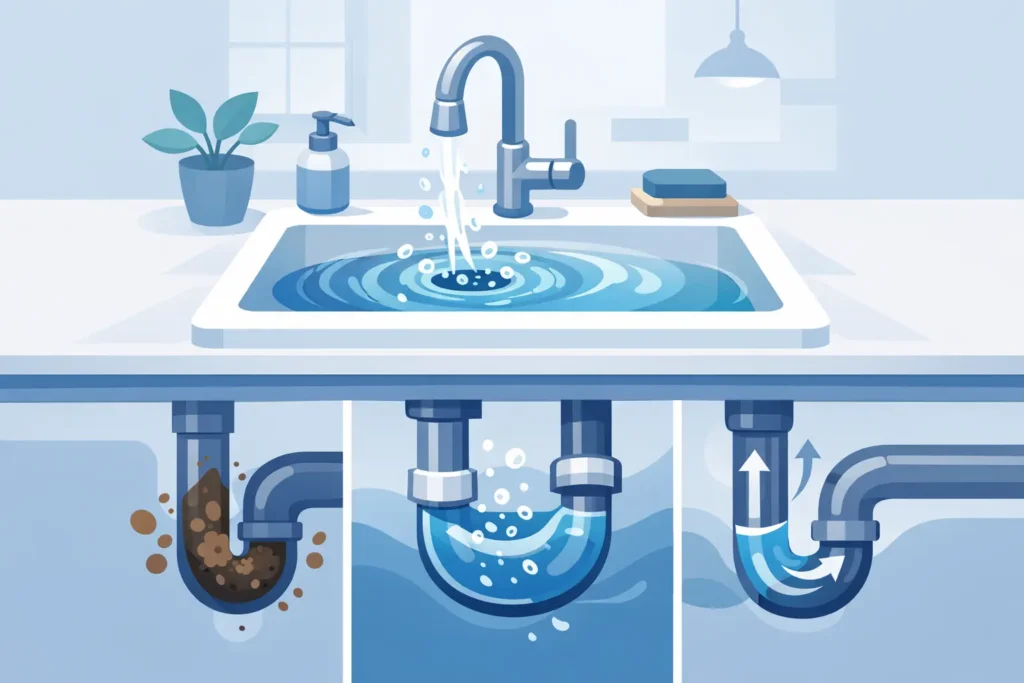
Your drain pipes need two things to work properly: a clear path for wastewater and enough air pressure to keep that water flowing smoothly. When water rushes past a partial clog, it can pull and trap air. That air then pushes back through the drain, making the familiar gurgling or bubbling sound.
Think of turning a water bottle upside down. The water does not pour out in one smooth stream because air has to move back into the bottle. Drain pipes behave similarly. When the system cannot get enough air through its venting or cannot move water past a blockage, it can make noise.
The location and timing of the sound matter. A kitchen sink that gurgles only after washing dishes may have grease and food buildup in the branch drain. A bathroom sink that gurgles when the toilet flushes can suggest a shared drain or vent problem. If several fixtures are noisy or draining slowly, the issue may be farther down the line.
The Most Common Causes of a Gurgling Sink
A Partial Drain Clog
This is the most common cause. Soap residue, toothpaste, hair, food particles, grease, coffee grounds, and mineral buildup can narrow the inside of a pipe over time. Water may still get through, but it has to force air around the obstruction. That creates gurgling.
Kitchen drains are especially prone to greasy buildup. Even if cooking oil looks liquid when poured down the sink, it can cool and cling to pipe walls. Bathroom sinks often collect a mix of hair, soap, and grooming products. These clogs usually get worse gradually, so a sink that has started draining slower is worth addressing before it stops draining altogether.
A Problem in the P-Trap
The curved pipe beneath your sink is called a P-trap. It holds a small amount of water that blocks drain odors from entering your home. Small debris can settle there, particularly in bathroom sinks.
If the gurgle seems limited to one sink and the drain is slow, the P-trap is a reasonable place to inspect. Place a bucket underneath, carefully remove the trap, and clean it out if you are comfortable doing so. Make sure the washers are seated properly when reinstalling it. A loose connection can turn a simple cleaning job into a leak under the cabinet.
A Blocked or Improperly Working Plumbing Vent
Plumbing vents allow air into the drainage system and route sewer gases safely outside. Most homes have vent pipes that extend through the roof. If a vent is blocked by leaves, a bird nest, debris, or in colder conditions, frost, the drains may struggle to equalize pressure.
A venting issue often affects more than one fixture. You might hear a sink gurgle when a washing machine drains, when the toilet flushes, or when the bathtub empties. Because roof work and vent diagnosis can be hazardous and the cause is not always visible, this is usually a job for a licensed plumber.
A Deeper Drain Line Blockage
When the clog is beyond the sink’s immediate drain pipe, basic cleaning may not solve it. Buildup, damaged piping, root intrusion into an exterior line, or an obstruction farther down can restrict flow for one section of the home or several rooms.
Signs of a deeper blockage include recurring gurgling after you clear the sink, water rising in a nearby tub or shower, toilets that bubble when another fixture drains, or multiple drains running slowly at once. These conditions can lead to a backup if the line becomes fully blocked, so avoid waiting for the situation to become urgent.
Drainage Problems Caused by Pipe Condition
Older pipes can corrode, sag, crack, or develop rough interiors that catch debris. A drain may be technically open but still fail to carry water efficiently. This is one reason a problem can keep coming back after repeated plunging or chemical treatments.
The right repair depends on the pipe material, the location of the issue, and the condition of the line. Sometimes professional cleaning is enough. Other times, a damaged section needs repair or replacement to provide a lasting solution rather than another temporary fix.
What You Can Safely Try Before Calling a Plumber
If only one sink is affected and there is no wastewater backup, start with simple, low-risk steps. Remove the stopper and pull out visible hair, soap buildup, or food debris. Then run hot water for a few minutes. For a kitchen sink, use hot tap water rather than boiling water, which can be too harsh on some piping and seals.
A sink plunger can also help with a minor clog. Cover the overflow opening on a bathroom sink with a damp cloth, add enough water to cover the plunger cup, and use several firm plunges. If you have a double-basin kitchen sink, seal the second drain opening while plunging the first side so you can create proper pressure.
You can also clean the P-trap if the clog appears close to the sink. Keep the bucket in place and check for worn washers before putting everything back together. If the trap is clear but the pipe entering the wall is blocked, stop there. Pushing tools aggressively into the drain can damage piping or push the obstruction farther down.
Avoid relying on harsh chemical drain cleaners. They can damage older pipes, create dangerous fumes, and leave caustic liquid sitting in the line when the clog does not clear. That creates a safety risk for anyone who later opens the drain or services the pipe. Repeated chemical use also does not address venting problems, pipe damage, or significant line blockages.
When a Gurgling Sink Needs Prompt Service
A noisy drain becomes more urgent when it comes with signs that wastewater may back up into your home. Call for professional help if you notice water coming up in another fixture, sewage odors, repeated toilet bubbling, standing water that will not drain, or a leak under the sink.
You should also call if you have cleared a visible clog but the gurgling returns quickly. A recurring problem is often a sign that the real restriction is farther down the pipe. Getting the line properly inspected and cleaned can spare you from repeated weekend fixes and a possible emergency later.
For homeowners in Port Orchard and throughout Kitsap County, fast service matters when a drain issue starts disrupting the household. Leakless Plumbing can identify whether the trouble is at the fixture, in the drain line, or related to the plumbing vent, then recommend a practical repair that is built to hold up.
How to Help Prevent Sink Gurgling
A few everyday habits can reduce the buildup that causes many drain noises. Keep grease, cooking oil, coffee grounds, and starchy food scraps out of the kitchen sink. Use a drain screen to catch food particles or hair, and empty it regularly instead of letting debris wash down in small amounts.
In bathroom sinks, remove hair from the stopper area before it accumulates. Flush the drain occasionally with hot tap water, especially in sinks that get heavy use from toothpaste, shaving products, or makeup. If your home has older plumbing or a history of recurring drain trouble, periodic professional drain cleaning may be a better investment than waiting for another blockage.
The key is to pay attention to changes. A new gurgle, slower drain, or occasional odor is easier to solve than a sink full of dirty water during a busy morning. Don’t stress the mess, call LeakLess when the noise keeps coming back or the drain is showing signs of a bigger problem.