A single forgotten garden hose can turn a cold night into a wet, expensive surprise. When water trapped in an outdoor faucet or supply line freezes, it expands. That pressure can crack the faucet, split a pipe inside the wall, or create a leak that does not show itself until temperatures rise again. Taking a few minutes to winterize outdoor faucets is one of the simplest ways to protect your home before freezing weather arrives.
For homeowners in Port Orchard and across Kitsap County, the risk is not always obvious. Our winters are often wet and moderate, but overnight freezes still happen. A faucet that has made it through several mild winters can fail during one sharp cold snap, especially if a hose is left connected or the shutoff valve is not working correctly.
Why Outdoor Faucets Freeze and Fail
Outdoor faucets connect to your home’s water lines, which are usually protected by insulation and indoor heat. The faucet itself, however, sits at the exterior wall where it is exposed to cold air. If water remains in the faucet body or a short section of pipe near the wall, it can freeze.
A connected hose makes the problem worse. Even after you turn off the faucet, water stays in the hose and can hold water inside the spout. That trapped water may freeze backward toward the plumbing line. The visible faucet might look fine, while the damaged pipe is hidden behind siding, drywall, or insulation.
The most frustrating part is that many freeze breaks do not leak right away. Once temperatures warm and the ice melts, water can begin dripping or spraying inside a wall. By then, the issue may involve damaged drywall, flooring, insulation, or belongings stored nearby.
How to Winterize Outdoor Faucets Step by Step
The right method depends on whether your home has standard outdoor faucets with indoor shutoff valves or frost-free faucets. If you are not sure which type you have, start with the basic preparation and take a closer look before the first hard freeze.
Disconnect every hose and attachment
Remove hoses, sprinklers, spray nozzles, splitters, and timers from each outdoor faucet. Drain the hose fully, roll it up, and store it somewhere protected from winter weather.
This step matters even if you have a frost-free faucet. Frost-free models are designed to drain water from the portion of the faucet inside the exterior wall after the handle is turned off. A hose or attachment can prevent that drainage and defeat the protection the faucet was designed to provide.
Shut off the water supply from inside
Many homes have an indoor shutoff valve serving each outdoor faucet. It may be located in a basement, crawl space, utility room, garage, or on the other side of the exterior wall. Look for a small valve on the water line that leads toward the faucet.
Turn the valve clockwise until it is fully closed. Do not force it if it is stuck. A stubborn valve can break or begin leaking when handled aggressively, and that is a repair best addressed before an emergency develops.
Open the outdoor faucet to drain it
After closing the indoor supply valve, go outside and open the faucet. Let any remaining water run out. Once the flow stops, leave the outdoor faucet open for the winter. An open faucet gives any small amount of water left in the line room to expand or escape instead of building pressure in a sealed section of pipe.
If the indoor shutoff includes a small drain cap or bleeder screw, place a bucket underneath it and open it carefully. A little water may drain from the line. Close the drain cap afterward, but keep the exterior faucet open.
Check both sides of the wall
Before you call the job finished, inspect the faucet outside and the supply area inside. Look for dripping at the faucet, corrosion around the connection, dampness, or signs that the shutoff valve is not fully closing. If water continues running outside after the indoor valve is shut off, the valve may be failing.
This is also a good time to make sure crawl-space vents, garage doors, and nearby access panels close securely. Outdoor plumbing is more vulnerable when cold air can move freely around uninsulated pipes.
Frost-Free Faucets Still Need Attention
Frost-free faucets are common because their operating valve sits farther inside the heated portion of the home. They provide useful protection, but they are not maintenance-free and they are not immune to damage.
The key rule is simple: never leave a hose attached during freezing weather. With the hose removed, a properly installed frost-free faucet should drain after you turn it off. If it drips for a few moments and then stops, that can be normal as the faucet empties. If it continues dripping steadily, the internal valve may need repair.
A frost-free faucet should also angle slightly downward toward the outside so water can drain properly. If it was installed level or angled upward, water may remain trapped in the pipe. That is a plumbing correction worth making before winter rather than hoping the faucet holds up through a freeze.
When Faucet Covers Help – and When They Do Not
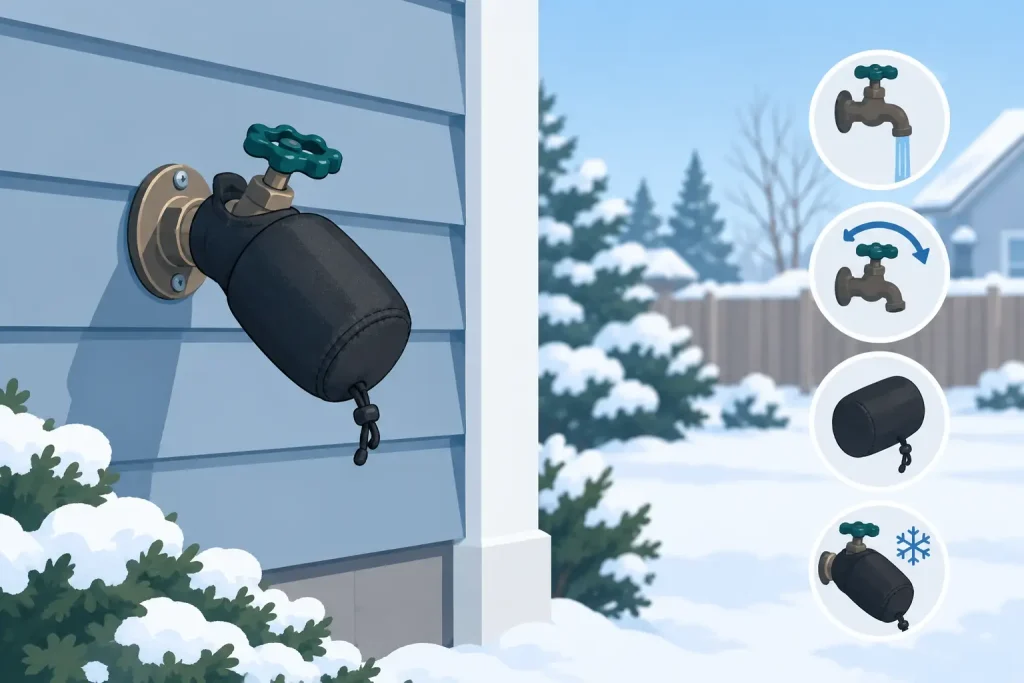
Insulated faucet covers can add a layer of protection, especially during short cold spells. They are inexpensive and easy to install. For a standard faucet, a cover can reduce exposure to cold wind and help protect the faucet body.
But a cover is not a substitute for disconnecting hoses and draining the line. Think of it as a backup, not the main defense. If your faucet has an indoor shutoff valve, turning off the supply and draining the exterior section is still the stronger approach.
Covers also need to fit snugly. A loose cover that lets cold air circulate around the faucet will not offer much benefit. Check it after heavy rain or wind, since wet insulation or a missing cover will not protect anything.
Signs Your Outdoor Faucet May Already Be Damaged
Do not wait until spring to investigate a faucet that seems questionable. A small repair now can prevent a larger water-damage problem later. Watch for a faucet that drips when turned off, produces weak flow, leaks around the handle, or continues to run after the indoor supply valve is closed.
Inside the home, pay attention to new damp spots, a musty odor near an exterior wall, unexplained water sounds, or a sudden increase in your water bill after a freeze. These can point to a cracked line behind the wall.
If you suspect a frozen pipe, do not use an open flame, torch, or high-heat device to thaw it. Too much heat can damage piping, create a fire risk, or cause a hidden split pipe to release water quickly. Turn off the water supply if you can safely do so and get professional help.
When It Makes Sense to Call a Plumber
Winterizing is usually manageable for a homeowner when valves work properly and the faucet is in good shape. It makes sense to call a plumber when you cannot find the shutoff valve, the valve will not close, the faucet is leaking, or you have had freeze damage before.
A plumbing professional can replace worn outdoor faucets, repair leaking supply valves, correct poor faucet slope, and address vulnerable pipes in a crawl space or exterior wall. For older homes, that inspection can be especially valuable because small problems tend to show up during the season when repairs are least convenient.
Leakless Plumbing helps homeowners handle preventive repairs before a cold snap turns them into an urgent call. The goal is not just to stop a drip for the moment, but to make sure the faucet and the line behind it can hold up through the winter.
Take a walk around the outside of your home before the next freeze warning. Disconnect the hoses, drain the faucets, and check for leaks while there is still time to fix them without stress. A dry faucet today can help keep your walls, floors, and weekend plans dry later.