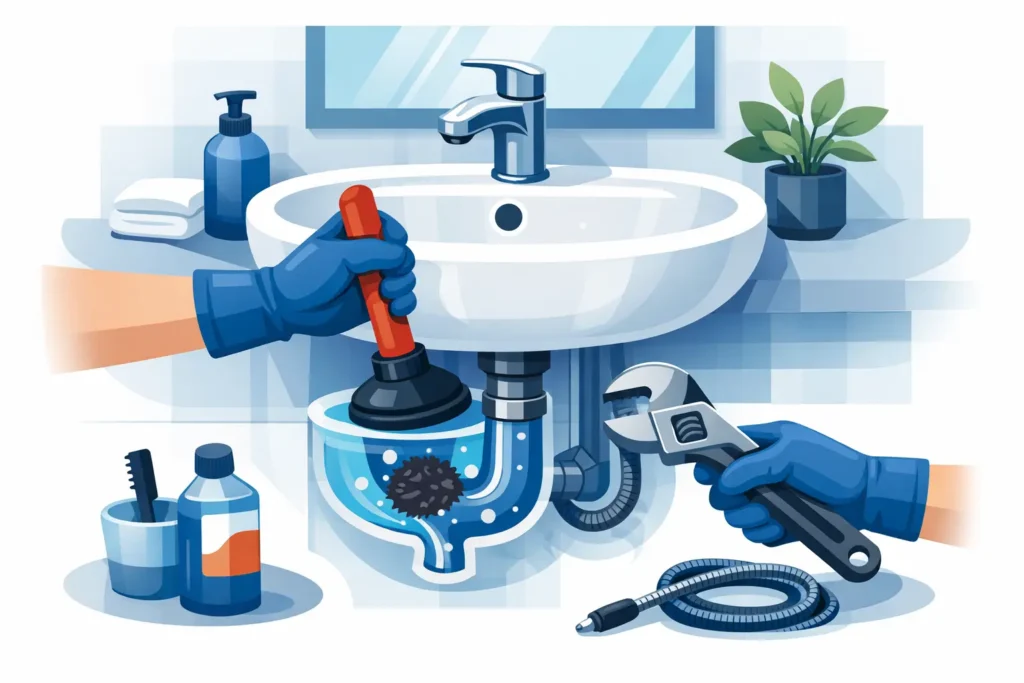
A bathroom sink that drains slowly can turn a rushed morning into a messy one. Knowing how to unclog bathroom sink drains safely can often restore normal flow in a few minutes, but the method matters. Hair, soap residue, toothpaste, and grooming products tend to collect close to the drain opening, while a clog farther down the line may need professional attention.
Start gently. A hard push with the wrong tool, repeated chemical treatments, or taking apart pipes without preparation can turn a simple clog into a leak under the vanity. The goal is not just to get water moving today. It is to remove the buildup causing the problem and avoid sending it farther into the plumbing.
Why Bathroom Sinks Clog So Often
Bathroom sink drains are smaller than many homeowners realize, and they handle a steady mix of sticky residue. Hair catches on the pop-up stopper. Soap, shaving cream, toothpaste, and skin oils cling to that hair. Over time, the opening narrows until water starts pooling in the basin.
A slow drain is usually the first warning. You may also notice a sour odor, gurgling, or water that backs up briefly before draining. If the sink has stopped draining altogether, the blockage may still be near the stopper or in the curved trap beneath the sink. That is good news because those areas are often accessible.
Hard water can make the situation worse. Mineral deposits give soap scum more surface to cling to, so a drain may clog more frequently even when no one has changed their routine. In older homes, buildup inside aging drain pipes can also reduce flow over time.
How to Unclog Bathroom Sink Drains Step by Step
Before starting, clear the cabinet beneath the sink and place an old towel or shallow bucket under the drain pipes. Avoid using a plunger or taking pipes apart if you have recently poured a chemical drain cleaner into the sink. Those products can splash back and cause painful burns.
Remove and Clean the Stopper
The pop-up stopper is often where the clog begins. Pull it upward if it lifts out freely. On many sinks, you will need to loosen the horizontal pivot rod behind the drain pipe under the sink before the stopper can be removed. This rod connects to the lift handle at the faucet.
Once the stopper is out, expect to find hair and dark, slimy residue wrapped around it. Wear gloves, pull the debris off, and rinse the stopper clean. A small old brush can help clean the underside and the drain opening. Reinstall the stopper and run hot tap water to see whether flow improves.
Do not force the pivot rod or overtighten its retaining nut when putting it back. The small plastic parts can crack, and a loose connection can leave the stopper unable to open or close properly.
Use a Small Sink Plunger
If cleaning the stopper does not solve the issue, try a clean cup-style plunger made for sinks. Put enough water in the basin to cover the rubber cup. If your sink has an overflow opening near the top of the basin, cover it with a wet rag while plunging. That creates the seal needed for pressure to work on the clog.
Use several short, firm plunges instead of one aggressive push. Then lift the plunger and test the drain. You may need to repeat this a few times. If water starts moving but remains sluggish, there is probably more buildup farther down.
A plunger works best on a soft clog near the drain. It is less useful when the issue is packed hair in the trap or a solid obstruction deeper in the pipe.
Try a Plastic Drain Tool or Hand Snake
A flexible plastic drain tool with small barbs can reach past the drain opening and pull out hair without dismantling the pipes. Feed it in slowly, rotate it gently, and pull it back out. It may look unpleasant, but removing that material is usually more effective than trying to dissolve it.
A small hand snake can also help, especially if the clog is just beyond the trap. Use light pressure and stop if you meet solid resistance. Forcing a cable can damage older piping, scratch a fixture, or push the blockage into a harder-to-reach area.
After clearing debris, flush the drain with hot tap water for a minute or two. Very hot water is usually enough for routine cleanup. Avoid pouring boiling water into a porcelain sink or through older plastic drain components, since sudden high heat can create unnecessary stress on materials.
Clean the P-Trap When Needed
The P-trap is the curved section of pipe directly below the sink. It holds water to block sewer gases from entering the room, but it also catches heavy debris. If the drain is still blocked after cleaning the stopper and using a drain tool, the trap may need to be cleaned.
With a bucket in place, loosen the slip nuts at both ends of the trap by hand. Lower the trap carefully and empty the water and debris into the bucket. Check for hair, toothpaste caps, jewelry, or other small items that may have fallen into the drain. Rinse the trap, inspect the washers, and reinstall it hand-tight.
Run water slowly at first and check underneath for drips. If a slip joint leaks, do not keep tightening it with a wrench. A washer may be crooked, worn, or missing, and overtightening can damage the fitting.
What Not to Put Down a Clogged Sink
When the sink is not draining, it is tempting to reach for the strongest product in the cabinet. Chemical drain cleaners can sometimes open a minor soap clog, but they also come with real drawbacks. They can damage finishes, weaken certain pipes or seals, and leave harsh chemicals sitting in the line if they fail to clear the blockage.
Never mix drain cleaners with another cleaner, vinegar, bleach, or ammonia. Never follow one chemical product with a different product. The reaction can release dangerous fumes or create heat inside the drain.
Baking soda and vinegar are less hazardous, but they are not a reliable answer for a dense hair clog. They may freshen a drain after it has been cleaned, yet they cannot pull out the material wrapped around a stopper or packed into a trap. Mechanical removal is usually the better first move.
When a Bathroom Sink Clog Means a Bigger Problem
One slow sink is often a local clog. Multiple slow drains, recurring backups, gurgling from nearby fixtures, or water appearing where it should not can point to a deeper drain-line issue. A blockage farther down the branch line will not stay fixed just because water eventually trickles through.
Pay attention to repeat clogs. If you clean the stopper every few weeks and the sink keeps backing up, the pipe may have heavy buildup beyond what a simple drain tool can reach. In some homes, poor drainage can also be tied to a damaged, misaligned, or aging drain line. A professional inspection helps identify the actual cause rather than treating the same symptom again and again.
Call for help promptly if water is leaking under the cabinet, the drain pipes are corroded, the sink backs up after you have cleaned the trap, or chemical cleaner has been used and the clog remains. Those situations call for the right equipment and a careful approach, not more force.
For homeowners in Port Orchard and across Kitsap County, Leakless Plumbing can clear stubborn sink clogs, check for hidden drain issues, and make repairs that are built to hold up. A clear explanation and a proper fix can save you from another backed-up sink next month.
Keep the Drain Clear After the Repair
The simplest prevention habit is to remove visible hair from the stopper regularly, especially in bathrooms used for shaving, styling hair, or washing pets. A small drain screen can help, but it needs to be emptied often or it simply becomes another place for water to collect.
Flush the sink with hot tap water after cleaning the basin, and keep thick creams, waxy products, and large amounts of hair out of the drain. If your household uses the sink heavily, cleaning the stopper once a month is a quick task that can prevent an inconvenient clog.
A bathroom sink should drain quietly and without hesitation. If yours does not, start with the simple checks, protect the pipes while you work, and get experienced help before a minor backup becomes water damage under the cabinet. Don’t stress the mess, call LeakLess.