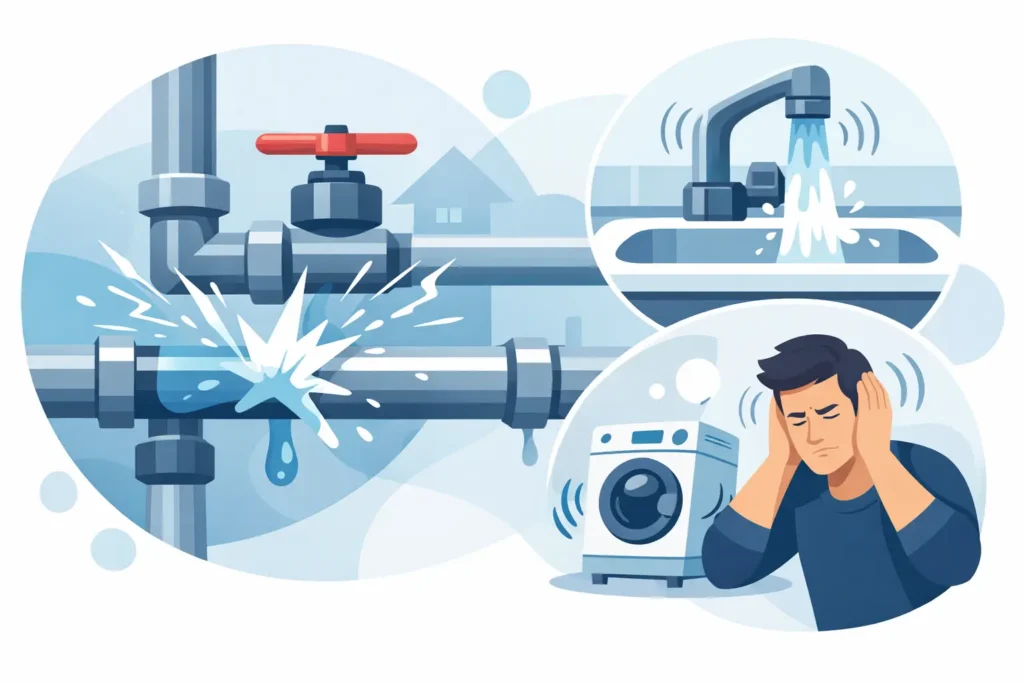
A sharp bang inside the wall right after the washer fills or a toilet valve shuts off can make any homeowner stop in their tracks. If you are asking, “what causes pipe hammer,” the short answer is moving water that is forced to stop too quickly. The longer answer matters because repeated banging can loosen pipe supports, strain fittings, and turn a small noise into a leak that damages walls, floors, or cabinets.
Pipe hammer, more accurately called water hammer, is common in homes with fast-closing valves, aging plumbing, or pipes that were not secured well during installation. It is usually repairable, but it should not be ignored – especially when the noise is new, getting louder, or appears with other signs of a plumbing problem.
What Causes Pipe Hammer?
Water has weight and momentum, even inside a relatively small household pipe. When water is flowing and a valve suddenly shuts, that moving water has nowhere to go. It hits the closed valve or a change in the piping path, creating a pressure surge that travels through the plumbing system. The result is the familiar bang, thud, or vibration called pipe hammer.
Think of it like stopping a rolling shopping cart all at once. The cart and everything inside it shifts forward. In plumbing, that force is transferred to the pipe, its connections, and the framing around it.
The noise often happens when a dishwasher, washing machine, ice maker, toilet fill valve, or single-handle faucet turns water off quickly. These fixtures may use automatic or quarter-turn valves that close much faster than older-style valves. That speed is convenient, but it can make pressure changes more noticeable in a home that already has a pipe support or pressure issue.
A single faint knock may not mean immediate damage. A loud, recurring bang deserves attention. It can indicate that the plumbing system needs a simple adjustment, a new component, or a closer inspection for hidden wear.
The Most Common Reasons Pipes Bang
Fast-closing fixture valves
Washing machines are frequent culprits because their solenoid valves close almost instantly. When a cycle changes or stops filling, the sudden shutoff can send a shock through nearby supply lines. Toilets with worn or high-speed fill valves can create a similar noise after flushing.
The fixture is not always defective. Sometimes it is simply exposing a weakness elsewhere in the plumbing. A plumber can determine whether replacing the valve, adding a water hammer arrestor, or addressing the pipe installation is the better long-term fix.
Loose or poorly supported pipes
Pipes should be fastened securely enough that they cannot swing, rattle, or strike framing when pressure changes. If a pipe moves inside a wall, ceiling, crawl space, or cabinet, the sound can be much louder than the pressure surge itself.
This problem is especially likely in older homes, after a remodel, or where prior work left a pipe inadequately secured. The repair may involve accessing the line and adding proper support or protective padding. The exact approach depends on the pipe material, location, and how much access is available without unnecessary disruption.
Worn water hammer arrestors or air chambers
Some plumbing systems use water hammer arrestors, which are devices designed to absorb sudden pressure changes. Older homes may have air chambers – vertical sections of pipe intended to hold a cushion of air. Over time, those chambers can fill with water and stop doing their job.
Modern arrestors can also wear out. When they no longer absorb the pressure spike, pipe hammer may return near the fixture they were meant to protect. Replacing an arrestor is often straightforward, but choosing the proper size and location is important. Adding one in the wrong place may reduce a noise without fully addressing the source.
High water pressure
High incoming water pressure makes every sudden shutoff more forceful. It can also shorten the life of supply lines, faucet cartridges, appliance hoses, and pipe joints. In many homes, pressure that consistently runs above a safe residential range calls for professional evaluation and, when needed, adjustment of the pressure-reducing valve.
Pressure can change over time, so a home that never made noise before can begin banging after a water system change, a failing regulator, or other shifts in the plumbing. A pressure check helps separate a true water hammer issue from a broader system concern.
Partially closed valves or restricted lines
A valve that is not fully open can create turbulence and unusual noises as water passes through it. Mineral buildup, corrosion, or debris in an aging line can also restrict flow. These conditions do not always cause classic water hammer, but they can produce knocking, humming, whistling, or vibration that is easy to mistake for it.
That is why diagnosing the sound matters. The right repair depends on what the pipe is doing, when it happens, and which fixture triggers it.
Pipe Hammer Is Not the Only Noise to Watch For
Not every bang behind a wall is water hammer. Pipes expand and contract as hot water moves through them, which can cause light ticking or occasional popping. A loose drain line may knock when a tub empties. A failing water heater can create rumbling or popping from sediment buildup. In colder weather, a pipe exposed to freezing temperatures may make unusual sounds before a much more serious problem develops.
The timing gives useful clues. Water hammer usually occurs exactly when water flow starts or stops. A noise that continues while water runs may point to pressure, a valve issue, or a restriction. If you hear banging when no fixture is being used, or see moisture, staining, reduced water pressure, or a higher water bill, schedule service promptly.
What You Can Check Before Calling a Plumber
Homeowners do not need to open walls or dismantle plumbing to gather helpful information. First, notice which fixture starts the noise. Run the washing machine, flush the toilet, or turn the faucet on and off while listening from nearby rooms. If the sound happens every time one fixture shuts off, that detail narrows the diagnosis.
Next, look under accessible sinks and around the washer connections for obvious movement, dripping, damaged hoses, or loose mounting hardware. Do not tighten hidden piping or alter water pressure equipment without knowing what you are working with. A well-meaning adjustment can create a leak or make the pressure problem worse.
If the banging is severe, turn off the appliance or fixture that triggers it until it can be checked. Shut off the home’s main water supply if you discover an active leak, a burst pipe, or water spreading into the home. That is the moment for emergency plumbing help, not trial and error.
How a Professional Fixes Water Hammer
A lasting repair starts with identifying the cause rather than installing a one-size-fits-all part. A plumber may test water pressure, inspect accessible pipes and valves, check fixture operation, and look for signs of movement or stress at connections. If an arrestor has failed, it can be replaced. If a line is loose, it can be secured. If excess pressure is the issue, the pressure control equipment may need adjustment or replacement.
Sometimes multiple conditions contribute to the noise. For example, a fast-closing washer valve might be normal, but it becomes disruptive because the home has elevated water pressure and an unsupported supply line. Correcting only one part may make the sound quieter without preventing future trouble.
Access also affects the repair plan. A pipe in an open utility area is easier to support than one buried behind finished tile or cabinetry. A dependable plumber will explain what can be confirmed from accessible areas, what repair options make sense, and where opening a wall is truly necessary.
When Pipe Hammer Needs Prompt Attention
Call for service soon if the noise is loud enough to shake walls or cabinets, begins suddenly after years of quiet operation, or comes with leaking, low water pressure, or visible pipe movement. These signs can mean the pressure surge is stressing plumbing that is already worn.
For homeowners in Port Orchard and nearby Kitsap County communities, Leakless Plumbing can inspect the source of persistent pipe noise and recommend a repair built to last. You should not have to live with banging pipes or wonder what is happening behind the walls.
A quiet plumbing system is more than a comfort. It is a sign that water is moving where it should, valves are doing their job, and your pipes are not taking a repeated beating every time a fixture turns off. Address the noise early, and you can protect your home before a small bang becomes a stressful mess.