A drain that slows to a trickle can turn a normal morning into a messy one fast. When comparing a drain auger versus snake, homeowners often expect two completely different tools. In practice, the names overlap. The real question is which cable, head, and level of force are safe for the type of clog and the drain you are trying to clear.
A small hair clog near a bathroom sink calls for a different approach than a recurring kitchen backup or a toilet that will not flush. Choosing the wrong tool can scratch porcelain, damage a trap, push a clog farther down the line, or leave the actual cause untouched.
Drain Auger Versus Snake: What Is the Difference?
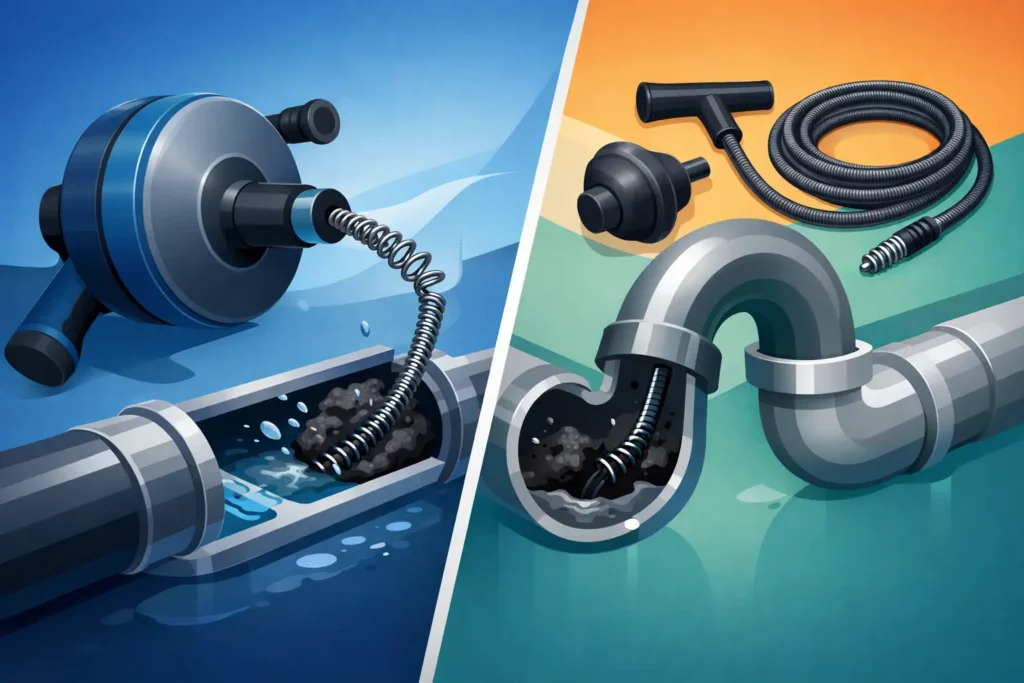
“Drain snake” is the broad, everyday term for a flexible cable that travels through a drain to break up or pull out a blockage. A basic hand snake may be a thin cable stored in a drum, operated with a hand crank. It is commonly used for small sink, tub, and shower drain clogs.
A drain auger is also a cable tool, but the term usually suggests a sturdier tool with a corkscrew-like or cutting head at the end. The rotating head is designed to grab, bore into, or break apart blockage material. Hand-crank augers work well for some household clogs, while powered augers are built for tougher or deeper obstructions.
The terms are often used interchangeably at hardware stores and in everyday conversation. What matters more than the label is the tool’s cable diameter, length, tip style, and intended drain type. A lightweight hand snake is not a substitute for a professional-grade machine cable, and a large machine is not automatically the right answer for every drain.
A toilet auger is its own category
A toilet auger, sometimes called a closet auger, is made specifically for toilets. It has a short, enclosed cable and a protective bend that follows the toilet’s internal passage without scraping the bowl. A standard drain snake can chip porcelain or get caught in the toilet trap, so it is not the right choice for a toilet clog.
If a toilet repeatedly backs up, clears briefly, then clogs again, the problem may be farther down the branch line or main drain. Forcing a short toilet auger harder will not solve a deeper obstruction.
Which Tool Fits Your Clog?
For a slow bathroom sink, the best first step is usually not a cable at all. Remove hair and soap buildup from the stopper, then clean the visible portion of the drain. Many bathroom sink clogs sit right around the stopper or trap, where a simple cleanup is safer and faster than sending a cable down the pipe.
For a tub or shower that drains slowly, a small hand snake or hair-removal tool can be useful. Hair, conditioner residue, and soap buildup often collect close to the drain opening. Work gently. If you meet solid resistance immediately, do not spin aggressively. You may be hitting a tight bend rather than the clog.
Kitchen drains are less forgiving. Grease, food residue, and detergent buildup can form thick deposits along the pipe walls. A hand auger may punch a small opening through the buildup, but the drain can clog again if the pipe is still coated. Hot water alone will not reliably clear grease, and harsh chemical cleaners can damage pipes, irritate skin, and create a safety risk for anyone who later opens the drain.
For a toilet, use a plunger first when appropriate, then a toilet auger if the clog remains. If more than one fixture is backing up, water appears in a tub when a toilet flushes, or a drain gurgles while another fixture runs, stop treating it as a single-fixture clog. Those signs can point to a blockage farther down the plumbing system.
When a Hand Snake Can Be a Good DIY Option
A basic hand snake can be helpful when the drain is only mildly slow, the clog is likely near the fixture, and there are no signs of a larger backup. It works best when you can feed the cable slowly, feel what it is doing, and pull the blockage back out rather than simply driving it deeper.
Before using one, place towels under the work area and wear gloves and eye protection. If you have already poured chemical drain cleaner into the line, do not open the trap or run a cable without taking extra care. The chemical can splash back and cause serious injury.
Feed the cable gradually. When you feel resistance, use light rotation and avoid forcing it. Pull the cable back periodically to check whether it has collected hair or debris. Once water begins draining, flush the line with plenty of water and watch how it performs. A drain that slows again the next day was probably not fully cleared.
A DIY tool is a reasonable choice for a simple, isolated clog. It is not a great choice when you are guessing at the cause, dealing with standing wastewater, or trying to muscle through a blockage that will not move.
Why Bigger Is Not Always Better
Powered drain augers have the strength to reach deeper and handle more difficult obstructions, but they also require experience. A cable can bind, kink, whip, or damage older piping when used incorrectly. That risk is especially relevant in homes with aging metal drain lines, delicate fixtures, or unknown past repairs.
A larger cable can also travel past a soft blockage without fully cleaning it from the pipe wall. The drain may appear fixed, only to back up again after a few loads of laundry or a busy evening in the kitchen. Professional drain cleaning is about more than getting water moving for the moment. The goal is to identify where the blockage is, remove it safely, and make sure there is not a repeat problem waiting downstream.
Recurring clogs may come from grease buildup, excess hair, scale, pipe deterioration, improper slope, or an obstruction deeper in the line. A cable may be part of the solution, but it is not always the whole solution.
Signs It Is Time to Call a Plumber
Call for help when the clog affects multiple fixtures, water is backing up into a tub or shower, or you smell sewer gas near a drain. You should also stop and call if a cable will not advance, comes back damaged, or repeatedly finds the same resistance.
Other warning signs include a drain that keeps clogging after you have cleaned it, gurgling sounds from nearby fixtures, water pooling around a floor drain, or a toilet that changes the water level on its own after flushing. These symptoms can indicate a larger drainage issue that a small household tool cannot safely diagnose.
For Port Orchard and Kitsap County homeowners, a fast response matters when a backup threatens floors, cabinets, or daily routines. Leakless Plumbing can assess the source of the clog, explain what is happening in plain language, and recommend a repair that is meant to hold up instead of offering a temporary workaround.
Protect Your Drains After the Clog Is Gone
The easiest clogs to deal with are the ones that never build up. Use drain screens in showers and tubs, remove hair from sink stoppers regularly, and keep grease, coffee grounds, and food scraps out of the kitchen sink. Run water during and after using a garbage disposal so waste moves through the line rather than settling in the trap.
Avoid making chemical cleaner your regular maintenance plan. Repeated use may harm some pipes and does little to address physical problems such as heavy buildup or a damaged drain line. If a fixture keeps slowing down, getting the line inspected early is usually less stressful than waiting for a full backup.
When your drain is stubborn, do not let a simple tool choice become a bigger repair. A careful diagnosis and the right equipment can get your home back to normal without gambling on your pipes. Don’t stress the mess, call LeakLess.