A kitchen sink that keeps backing up is more than an inconvenience. It can mean greasy buildup in the line, a misplaced object, root intrusion, or even a damaged pipe beneath the yard. When homeowners ask about drain camera versus hydro jetting, the right answer is usually not choosing one over the other. It is knowing what the drain needs first.
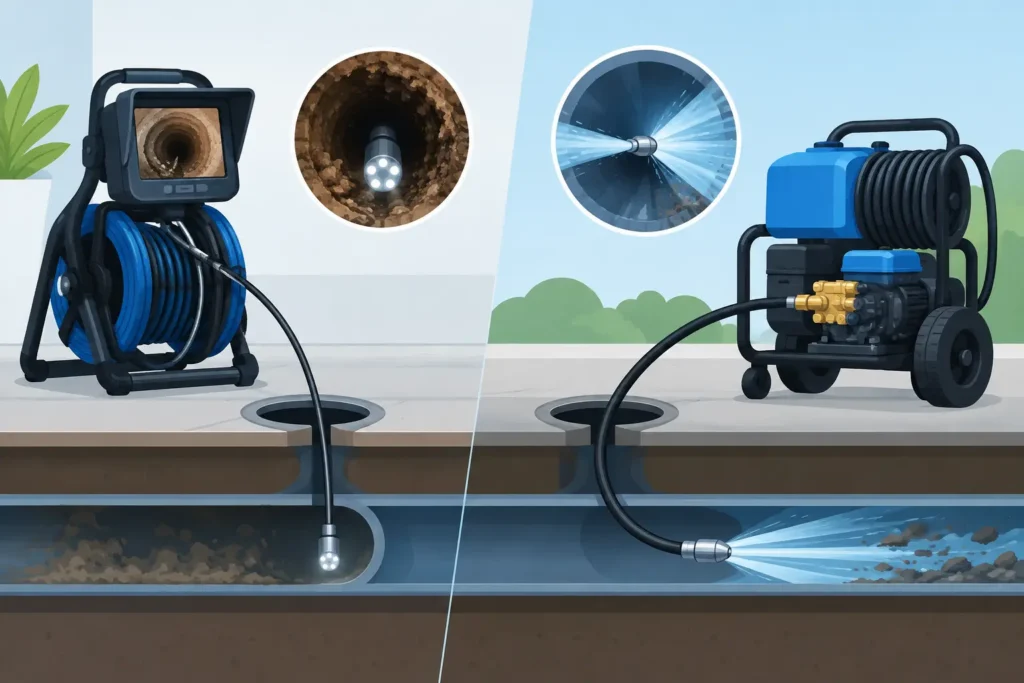
A drain camera shows a plumber what is happening inside the pipe. Hydro jetting uses high-pressure water to remove buildup from the pipe walls. One diagnoses the condition of the line; the other cleans it. Used at the right time, they can stop a recurring drain problem instead of providing a short-lived fix.
What a Drain Camera Inspection Does
A drain camera inspection involves feeding a small, waterproof camera through an accessible drain opening or cleanout. The camera sends live video to the plumber, making it possible to see inside a line that would otherwise be hidden under floors, behind walls, or underground.
This is especially helpful when a clog keeps returning after plunging or basic drain cleaning. The camera can reveal whether the issue is a thick layer of buildup, roots entering through a pipe joint, a foreign object, a sagging section of pipe, or a crack that needs repair.
For a homeowner, the biggest benefit is clarity. Rather than guessing why the bathroom drain slows down every few months, you can see the reason and discuss the repair based on the actual condition of the pipe. That helps avoid spending money on cleaning when the line is broken, or replacing a line that only needs a thorough cleaning.
When a Camera Is the Better First Step
A camera inspection is often the smart starting point when there are repeated backups, multiple drains are slow at once, or water backs up in an unexpected fixture. For example, if flushing a toilet causes water to rise in the shower, the problem may be farther down the main drain line rather than at the toilet itself.
It is also useful before purchasing a home, after major root problems, or when a line has a history of repairs. In older homes around Kitsap County, pipe material and age can affect which cleaning methods are appropriate. A clear view of the pipe lets the plumber recommend work that fits the line’s condition.
A camera does have a limit: it does not remove the obstruction. If the video shows grease, soap residue, sludge, or compacted debris, the next step may be hydro jetting or another form of drain cleaning.
How Hydro Jetting Cleans a Drain Line
Hydro jetting uses a specialized hose and nozzle to send pressurized water through the drain. The nozzle directs water forward to break through the blockage and backward to scour buildup off the inside walls of the pipe. The debris is then carried downstream and out of the line.
This is different from simply poking a hole through a clog. A cable machine can be very effective for certain obstructions, but it may leave residue attached to the pipe walls. Hydro jetting is designed to clean more of the pipe’s interior, which can help reduce the chance of the same materials catching and building up again soon after service.
Hydro jetting can be a strong option for recurring kitchen grease, soap scum, hair, scale, and general debris accumulation. It is often used for main drain lines where routine use has gradually narrowed the path water needs to travel through.
Hydro Jetting Is Not for Every Pipe
High-pressure water is effective, but it needs to be used responsibly. A severely cracked, collapsed, improperly connected, or fragile older line may not be a good candidate for hydro jetting until the condition is understood and any necessary repair is completed.
That is why a professional may recommend a camera inspection before jetting, particularly when the drain has a long history of trouble or the pipe is older. The goal is not to use the most powerful tool available. The goal is to use the right tool without putting a compromised pipe under unnecessary stress.
Drain Camera Versus Hydro Jetting: The Key Difference
The simplest way to think about drain camera versus hydro jetting is this: a camera answers, “What is wrong with the line?” Hydro jetting answers, “How can we remove this buildup?”
A camera inspection is diagnostic work. It identifies the location and likely cause of the trouble. Hydro jetting is cleaning work. It restores flow by flushing away material inside a pipe that is otherwise structurally sound.
Often, the best service call uses both. A plumber may inspect the line, find heavy grease and debris but no damage, then hydro jet the pipe. A follow-up camera pass can confirm that the buildup is gone and the water has a clear path. That process is more thorough than treating a recurring backup as a mystery every time it happens.
Signs You May Need a Camera Inspection
A one-time slow sink may only need basic drain cleaning. But certain patterns suggest it is time to look farther into the system. Recurring clogs in the same fixture, gurgling sounds, foul drain odors, or water appearing in a tub or shower when another fixture drains can point to a larger line issue.
Watch for changes that affect more than one room. If the kitchen, laundry, and bathroom drains all seem sluggish, the problem may be in a shared branch line or the main drain. If clogs return shortly after they are cleared, there may be buildup deeper in the pipe, roots, or damage preventing normal flow.
A camera can save time in these situations because it replaces trial-and-error with a direct view. It can also identify the exact location of a concern, which matters if a repair is needed beneath a slab, in a crawlspace, or outside the home.
Signs Hydro Jetting May Be Worth It
Hydro jetting is often considered when drain problems are caused by accumulated material rather than a single object. Kitchen lines are a common example. Cooking grease may look harmless when rinsed with hot water, but it cools as it travels through the pipes. Over time, it catches food particles and other debris until water has very little room to move.
Bathroom drains can develop a similar problem from soap, hair, personal care products, and mineral deposits. In these cases, repeatedly using store-bought chemical cleaners is not a dependable answer. Those products may fail to reach the full blockage, can be hard on some plumbing materials, and may create a safety concern for anyone later working on the drain.
A professional hydro jetting service clears the line with controlled equipment and a plan based on the pipe’s size, location, and condition. It is a more complete cleaning approach when the issue is widespread buildup rather than a damaged line.
What to Expect During Service
A good drain service visit should not leave you guessing about what is happening in your home. The plumber should ask about the symptoms, identify which fixtures are affected, and explain whether a camera inspection, drain cleaning, hydro jetting, or repair makes sense.
If a camera is used, you should receive a plain-language explanation of what the footage shows. If jetting is recommended, the reason should be clear: perhaps grease is coating the pipe walls, or repeated backups show that a basic cable cleaning has not been enough. If the line is damaged, a dependable plumber should explain that cleaning alone will not make the underlying problem disappear.
For urgent backups, the priority is restoring safe drainage and preventing water damage. After that immediate concern is controlled, inspection and targeted cleaning can help keep the problem from returning at the worst possible time.
Protecting Your Drains After Cleaning
Once a line is flowing properly, everyday habits can make a meaningful difference. Keep cooking grease out of kitchen drains, use sink strainers to catch food and hair, and avoid treating toilets as a disposal for wipes or other non-flushable items. These small steps reduce the material that collects inside pipes.
If your home has recurring drain issues, do not wait until water is on the floor to get answers. Leakless Plumbing can inspect the line, explain the cause without confusing jargon, and recommend a practical repair or cleaning plan that is built to last. A clear drain today is helpful; knowing why it clogged and how to prevent the next backup is real peace of mind.