A frozen pipe can go from a frustrating no-water problem to a major water-damage emergency in minutes. This guide to safe pipe thawing explains what you can do carefully, what you should never try, and when it is safer to stop and call a plumber. The goal is not simply to get water moving again. It is to protect your home from a split pipe that may only reveal itself once the ice melts.
Start by Checking for a Burst Pipe
Before applying any heat, look for warning signs that the pipe may already be damaged. A pipe can crack as water freezes and expands, then remain hidden behind ice. Once thawed, that crack can release a steady stream of water into a wall, crawlspace, cabinet, or ceiling.
Check exposed pipes under sinks, in the garage, basement, utility room, and crawlspace access areas. Look for frost on a section of pipe, a visible bulge, dripping water, damp drywall, puddles, or a ceiling stain below an upstairs bathroom or kitchen. Pay attention to unusual sounds, too. Hissing, dripping, or water running where it should not be can signal a leak.
If you see active leaking, do not begin thawing. Shut off your home’s main water supply if you can do so safely, then call for plumbing help. If the pipe is near electrical wiring, outlets, appliances, or a panel, stay clear of the area and avoid standing in water.
Even when there is no visible leak, take a minute to locate your main shutoff valve before you start. If a hidden break opens during thawing, knowing where to turn off the water can limit the damage.
Find the Frozen Section Without Taking Risks
A frozen pipe is often located near the faucet that has little or no water flow. Start by opening the affected faucet. If you get a trickle, leave it open. The small amount of moving water and pressure relief can help as the ice begins to melt.
The frozen section may be close to an exterior wall, an unheated garage, a crawlspace, or a pipe that runs through a poorly insulated cabinet. In Kitsap County homes, cold snaps can also expose weak points around outdoor hose connections, laundry rooms, and plumbing near drafty foundation vents.
Do not assume the freeze is directly behind the faucet. Feel exposed sections of pipe carefully for an unusually cold spot or visible frost. If the suspected section is inside a wall, above a ceiling, beneath a floor, or in a tight crawlspace you cannot safely access, do not start cutting into finishes or using heat through an opening. The location may be unclear, and hidden pipes, wiring, insulation, or existing water damage can change the safest repair plan.
How to Thaw a Pipe Safely
The safest approach is slow, controlled heat applied to an exposed pipe while you monitor it. Start at the end closest to the faucet and work back toward the frozen area. This gives melting water a route out of the pipe instead of trapping pressure behind the ice.
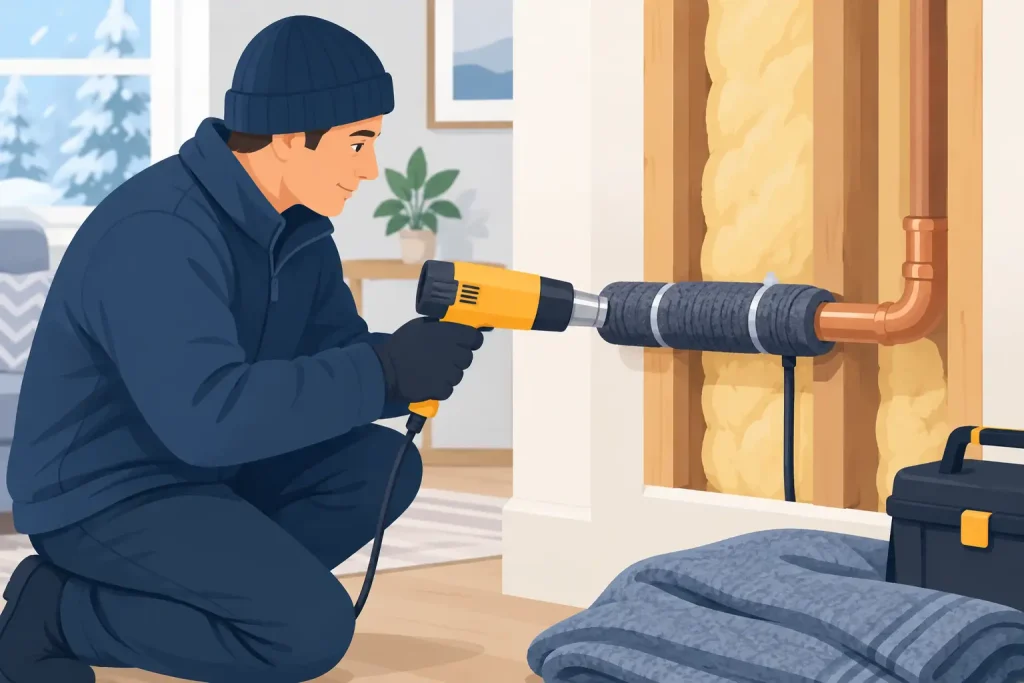
A hair dryer is usually the best first choice for a small exposed section. Keep it moving so one spot does not overheat, and keep the dryer and its cord away from standing water. Use a dry extension cord only if it is rated for the job and you can keep all connections dry. A portable space heater can also warm the surrounding area, but it needs constant supervision, proper clearance from anything flammable, and a stable, dry surface.
Warm, wet towels wrapped around the pipe can help for accessible areas. Replace them as they cool. You can also raise the room temperature by opening cabinet doors below sinks, especially where plumbing sits along an exterior wall. Keep children and pets away while you work, and never leave a heater running unattended.
As the ice begins to melt, water should start flowing from the open faucet. Continue warming the pipe until normal pressure returns. Then inspect the entire accessible section for drips, damp fittings, or signs that a joint has started to fail.
Never Use These Methods
Some thawing methods create far more danger than they solve. Avoid any device with an open flame, including a propane torch, blowtorch, kerosene heater, grill, or candle. Open flames can ignite insulation, framing, dust, or nearby materials. They can also overheat copper, plastic, or older pipe connections and create a fire risk inside a wall or cabinet.
Do not use boiling water on a frozen pipe. The sudden temperature change can damage certain pipe materials, and spilled water creates a burn and electrical hazard. Avoid striking the pipe with tools or attempting to chip the ice out. A pipe that is already stressed by freezing can crack under impact.
Know When DIY Thawing Should Stop
A hair dryer and warm towels can be reasonable for a clearly exposed pipe with no signs of damage. Beyond that, it depends on the situation. Call a plumbing professional when the pipe is hidden, the freeze affects more than one fixture, the line is in a difficult crawlspace, or water does not return after careful warming.
You should also stop and get help if you notice water staining, a swollen wall or ceiling, a visible split, discolored water after flow returns, or a sudden drop in water pressure elsewhere in the home. These signs can point to a pipe failure or a larger freezing problem that will not be fixed by warming one small section.
A plumber can identify the affected line, thaw it with appropriate equipment, repair a damaged section, and check for the conditions that caused the freeze. That matters because a pipe that freezes once may freeze again during the next cold spell if insulation, air leaks, pipe routing, or heat loss are not addressed.
Protect Your Home After the Pipe Thaws
Once water is flowing normally, do not assume the job is over. Leave the affected cabinet open for a while and check the pipe again over the next few hours. Small leaks at fittings can appear only after water pressure fully returns. Check nearby floors, walls, and ceilings for moisture as well.
If the frozen pipe was under a sink, keep warm indoor air circulating around it during cold weather. Insulate accessible pipes in unheated areas, seal obvious drafts around pipe penetrations, and disconnect outdoor hoses before freezing temperatures arrive. For a home that will be vacant during winter, maintain indoor heat and consider having the plumbing system reviewed before you leave.
It also helps to know where the main shutoff valve is, test that it turns freely, and make sure everyone in the household knows how to use it. During a true plumbing emergency, those few minutes can make a big difference.
Get Help Before a Small Freeze Becomes a Big Repair
Frozen pipes are stressful because the real damage is not always visible right away. If you are unsure whether a line has burst, cannot reach the frozen section safely, or need water restored quickly, it is worth bringing in a professional. Leakless Plumbing provides responsive residential plumbing help for Port Orchard-area homeowners who need a clear answer and a repair built to last.
When temperatures drop, a careful response protects more than your pipes. It protects the walls, floors, belongings, and peace of mind that water damage can disrupt in a hurry.