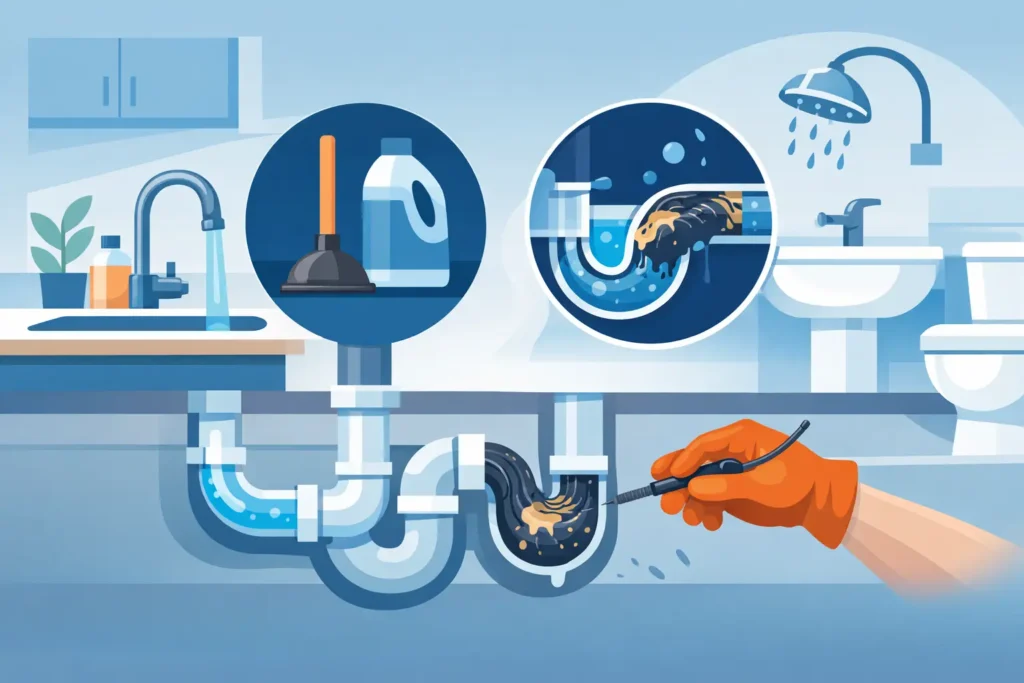
A drain rarely clogs all at once. It usually starts with slower water, a faint gurgle after the sink empties, or a shower that leaves water around your feet. Knowing how to prevent drain clogs before those warning signs turn into a full backup can save your household from a messy, disruptive plumbing problem.
Most clogs come down to what enters the drain and how often buildup is allowed to sit there. A few practical habits make a real difference, especially in busy homes where kitchen sinks, showers, toilets, and laundry drains all get daily use.
How to Prevent Drain Clogs at the Source
The simplest way to protect a drain is to treat it like a pipe, not a trash can. Water and the small amount of soap or shampoo that goes with normal use are expected. Grease, food scraps, hair, wipes, and heavy paper products are not.
In the kitchen, keep cooking grease, oil, butter, pan drippings, and thick sauces out of the sink. Hot grease may look liquid when it goes down, but it cools inside the plumbing and sticks to pipe walls. Over time, it catches food particles and creates a stubborn blockage. Let grease cool in a container, then throw it away with the household trash.
Coffee grounds are another common culprit. They do not dissolve in water and can settle in pipe bends, especially when mixed with grease. Eggshells, rice, pasta, flour, and fibrous vegetable scraps can cause similar trouble. Even with a garbage disposal, it is smarter to scrape plates into the trash first and use the disposal only for small leftovers.
Bathroom drains need a different kind of attention. Hair combines with soap residue and personal-care products to form dense clumps in shower, tub, and sink drains. A simple hair catcher is one of the least expensive ways to prevent a major clog. Empty it regularly, rather than waiting until water starts draining slowly.
Toilets should only handle human waste and toilet paper. Products labeled “flushable” can still snag in older pipes or join other debris farther down the line. Facial tissues, cotton swabs, dental floss, wipes, paper towels, hygiene products, and cat litter belong in the trash. A toilet that flushes poorly after these items have been used is not likely to fix itself.
Use Strainers Where They Matter Most
A small strainer provides a first line of defense in places where debris is unavoidable. Kitchen sink baskets catch food scraps, while fine-mesh covers work well in shower and tub drains. Bathroom sink stoppers with a built-in screen can collect hair and toothpaste residue before they travel into the pipe.
The key is consistency. A strainer that is packed with debris will slow drainage at the surface and tempt people to push material through it. Empty it into the trash after cooking, showering, or shaving. That small routine is far easier than dealing with a backed-up sink on a rushed weekday morning.
Keep Grease From Building Up in Kitchen Pipes
Grease deserves extra attention because it is one of the leading causes of kitchen drain trouble. Pouring hot water after grease does not solve the problem. It may move grease farther into the line before it cools and solidifies, which can make the clog harder to reach.
After washing greasy cookware, wipe excess oil and food residue into the trash with a paper towel before putting the pan in the sink. Use enough dish soap and warm water during normal cleanup to rinse away light residue, but do not rely on soap as a cure for heavy grease disposal.
If your sink has a garbage disposal, run cold water while it operates and continue the water flow briefly after turning it off. Cold water helps keep fats firmer so they can move through more effectively instead of coating the disposal and nearby pipe. It does not make grease safe to pour down the drain, but it does help the disposal handle appropriate food remnants.
Build a Simple Monthly Drain Routine
Preventive maintenance does not need to involve harsh chemicals. In fact, frequent use of chemical drain cleaners can damage certain pipes, seals, and fixtures, particularly in older homes. These products can also leave caustic liquid sitting in a pipe when they fail to clear the blockage, creating a safety concern for anyone working on the drain afterward.
Once a month, remove and clean sink stoppers, pop-up assemblies, and hair catchers. Rinse them with warm water and use an old toothbrush to remove soap film. For kitchen sinks, clean the drain basket and the splash guard around the garbage disposal if you have one. Those areas can hold food residue that causes odors even before a clog develops.
Run warm water through seldom-used sinks, tubs, or showers for a minute or two. This helps rinse away minor buildup and keeps water in the drain trap, the curved section of pipe that blocks sewer odors from entering the home. Laundry drains also benefit from a quick check. Make sure the washer hose is secure and that lint is not collecting around the drain connection.
Pay Attention to Slow Drains Early
A slow drain is a warning, not a minor inconvenience to ignore. If only one fixture is draining slowly, the obstruction may be close to that sink, tub, or shower. Cleaning the stopper, removing visible hair, or using a plunger correctly may take care of a light blockage.
If several drains are slow, toilets bubble when another fixture empties, or water comes up in a tub or shower after flushing, the problem may be farther along in the plumbing system. That is the point to stop experimenting with chemical products and get professional help. A deeper blockage can lead to overflow, water damage, and a much larger cleanup if it is allowed to worsen.
A plunger can be useful for a simple toilet or sink clog, but use the right type and avoid excessive force. A flange plunger is designed for toilets, while a flat cup plunger is better suited to sinks and tubs. If plunging does not improve the problem after a few controlled attempts, forcing it repeatedly can make a mess without addressing what is stuck in the line.
Be Careful With DIY Drain Treatments
Home remedies are often presented as harmless fixes, but they have limits. Baking soda and vinegar may freshen a drain or loosen very light surface residue, yet they are not a dependable answer for hair, grease, wipes, or a compacted blockage. They should not replace physical cleaning or professional drain service when water is already backing up.
Drain snakes sold for homeowner use can be helpful for removing visible hair near a bathroom drain. Use them gently. Pushing a tool too aggressively can damage a fixture, scratch a tub finish, or pack debris tighter into the pipe. Avoid inserting makeshift wire hangers or sharp objects, which can snag inside the line and create a bigger repair issue.
It also helps to know the age and behavior of your plumbing. Older homes may have pipes with internal corrosion, offsets, or roots affecting underground lines. In those situations, careful daily habits still help, but recurring clogs may point to a condition that needs more than routine drain cleaning.
Give Your Household Clear Drain Rules
Drain prevention works best when everyone in the home follows the same basics. Keep a small trash can near each bathroom, use strainers consistently, and make grease disposal easy by keeping an empty can or heat-safe container nearby. If guests or children are unsure what can be flushed, a simple reminder in the bathroom can prevent an avoidable call for help.
For homes in Port Orchard and throughout Kitsap County, seasonal routines can also be a good time to check drains. Before hosting visitors, leaving for a trip, or starting a major kitchen cleanup, make sure water is draining normally and address small issues while they are still manageable.
A clean, free-flowing drain is one of those household comforts people barely notice until it disappears. When a drain keeps slowing down, smells unpleasant, or backs up despite good habits, do not wait for the problem to become an emergency. Leakless Plumbing can identify what is causing the blockage and help you get back to a plumbing system that works the way it should. Don’t stress the mess, call LeakLess.