A water heater usually fails quietly before it fails dramatically. The hot water may still seem fine, but corrosion can be working inside the tank for years. This water heater anode guide explains the small metal part that helps protect your water heater, what warning signs to watch for, and when it is smarter to call a plumber than wait for a leak.
What a Water Heater Anode Rod Does
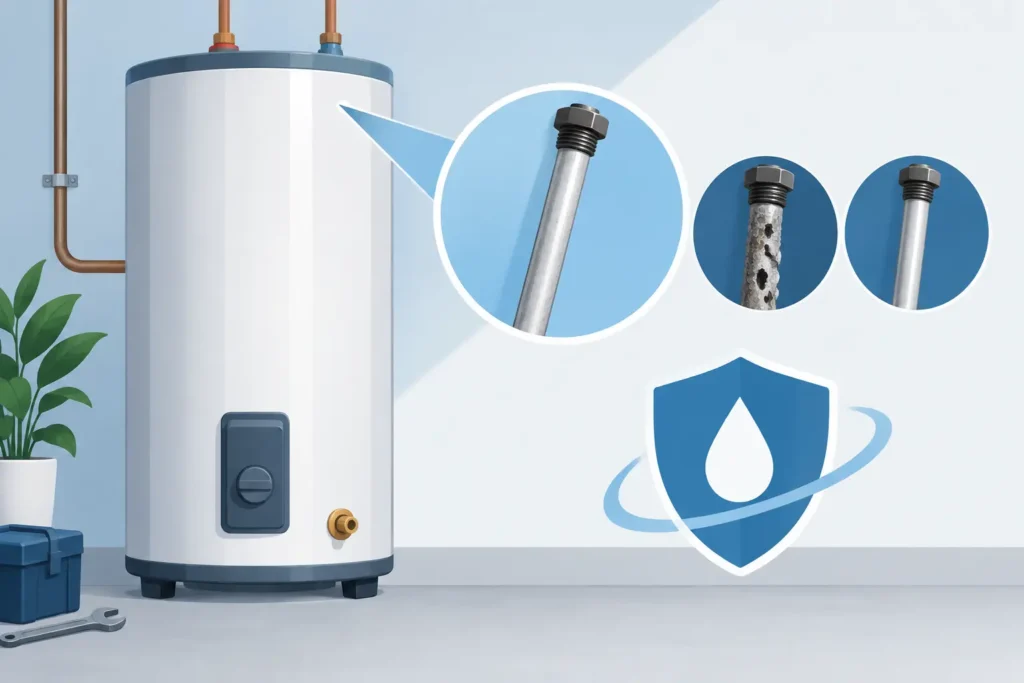
Most traditional tank-style water heaters have a sacrificial anode rod installed through the top of the tank. It is commonly made from magnesium, aluminum, or a combination of metals. Its job is simple: it corrodes first so the steel lining of the water heater tank has a better chance of lasting longer.
Think of the anode rod as the tank’s first line of defense. Water naturally contains minerals and dissolved elements that can create corrosion inside a water heater. The anode attracts that corrosive activity, gradually breaking down over time. Once the rod is mostly used up, the tank itself becomes more vulnerable.
That matters because a corroded tank is not usually a repairable tank. A leaking valve, pipe connection, or fitting can often be repaired. A tank that has rusted through from the inside typically needs replacement, and the leak can quickly damage flooring, drywall, or belongings nearby.
Why Anode Rod Maintenance Can Save a Water Heater
Water heaters work hard without asking for much attention. That is why anode rod maintenance is easy to miss. Homeowners often do not think about the water heater until there is no hot water, a puddle around the base, or rust-colored water coming from a faucet.
Checking the anode rod early gives you a chance to address corrosion before it reaches the tank. In many cases, replacing a worn rod is far less disruptive and less expensive than responding to a failed water heater after it starts leaking.
How long an anode rod lasts depends on several factors. Water chemistry, water-softening equipment, household hot-water use, and the type of anode rod all make a difference. In some homes, a rod may last five years or longer. In others, especially where water is more aggressive, it can wear down much sooner.
A good rule of thumb is to have the anode rod inspected after about three to five years of use, then check it on a schedule that fits its condition. If the water heater is older and has never been inspected, it is worth taking a closer look now rather than assuming it has years left.
The Main Types of Anode Rods
Magnesium anode rods generally provide strong tank protection, but they can break down faster in certain water conditions. Aluminum or aluminum-zinc rods often last longer and may help when a home has a rotten-egg smell in the hot water. That odor can occur when naturally occurring bacteria interact with the rod and water chemistry.
There is no single best choice for every household. Switching rod types without understanding the water conditions can solve one issue while creating another. A plumbing professional can assess the tank, the existing rod, and the symptoms before recommending the right replacement.
Powered anode rods are another option for some homeowners. Rather than sacrificing metal over time, they use a low electrical current to help prevent corrosion. They can be useful for certain water-quality concerns and may last longer than standard rods, but they cost more up front and must be compatible with the water heater.
Signs Your Anode Rod May Be Worn Out
You cannot usually see an anode rod without removing it, but a few household signs can point to trouble inside the tank. Pay attention if you notice a sulfur-like odor from hot water, rust-colored hot water, popping or rumbling from the tank, or small leaks and corrosion around the top connections.
A change in hot-water odor does not automatically mean the tank is failing. It could be related to bacteria, water chemistry, or the anode rod itself. Rust-colored water can also come from aging pipes or a different plumbing issue. Still, these changes are worth checking instead of ignoring, particularly if they affect only the hot water.
Water around the bottom of the heater needs prompt attention. Condensation, a leaking drain valve, and a loose connection can all cause moisture near the tank. But if water is coming from the tank body or underneath its outer jacket, internal corrosion may already be advanced. Do not wait to see if it stops on its own.
Can You Replace an Anode Rod Yourself?
Anode rod replacement looks straightforward in a video, but the real job can be difficult. The rod may be tightly seized in place, especially in an older water heater. There may also be limited clearance above the tank, making it hard to remove a full-length rod without moving the heater or using a flexible replacement rod.
The work involves shutting off power or gas, turning off the water supply, relieving pressure safely, partially draining the tank, and loosening the rod without damaging the tank fitting. Electric water heaters bring an additional safety concern because the power must be off before any draining or service begins.
For a newer tank with easy access, an experienced homeowner may be comfortable handling the project. For an older heater, visible corrosion, a stuck fitting, or any uncertainty about gas or electrical connections, professional service is the safer call. Forcing a seized anode rod can damage the tank or create a leak where there was not one before.
Anode Rod Care Works Best With Basic Water Heater Maintenance
The anode rod is only one part of a longer-lasting water heater. Sediment can collect at the bottom of a tank over time, reducing efficiency and contributing to popping sounds. The temperature-and-pressure relief valve also needs to operate correctly to help protect the system from unsafe pressure buildup.
Periodic water heater service can include checking for leaks, inspecting connections, evaluating the relief valve, looking over the anode rod, and flushing sediment when appropriate. The exact maintenance plan depends on the age and condition of the water heater, the local water supply, and whether the unit has had regular care before.
In Port Orchard and across Kitsap County, homeowners often deal with changing water conditions from one property to the next. That is why a practical inspection is more useful than a one-size-fits-all maintenance recommendation. The goal is not to replace parts unnecessarily. It is to identify what will help your specific water heater keep doing its job safely.
When Replacement Makes More Sense Than Another Repair
A fresh anode rod can extend the life of a sound tank, but it cannot reverse serious internal rust. If the tank is already leaking from its body, if corrosion is extensive, or if the unit is near the end of its expected service life and having repeated problems, replacement may be the more dependable option.
This is where clear advice matters. A plumber should explain whether a repair is likely to buy meaningful time or whether it is only a short-term patch. Families deserve to know the condition of the equipment, the likely next steps, and the practical cost of waiting.
If you are seeing rust, hearing new noises, noticing hot-water odor, or finding moisture around your tank, address it before a minor concern becomes an emergency. A quick inspection can provide peace of mind, and timely maintenance may be what keeps a dependable water heater from turning into a stressful leak. Don’t stress the mess, call LeakLess.