A cold shower at 6:30 a.m. is usually how a water heater problem announces itself. In this water heater replacement case study, we follow a representative residential service call that shows why a failing unit needs more than a quick swap. The goal is to restore hot water safely, prevent a messy leak, and help the homeowner make a clear decision without added stress.
This example reflects the kinds of calls homeowners in Port Orchard and across Kitsap County commonly face. Details are representative, but the warning signs, inspection process, and replacement decisions are real-world considerations for any aging water heater.
The call: Hot water ran out, then water appeared
The homeowner first noticed the shower turning cold much faster than usual. They assumed a teenager had used all the hot water, but the same thing happened the next morning with minimal use. Later that day, they found a small puddle near the water heater in the garage.
That combination matters. Running out of hot water can point to a heating element, thermostat, burner, or sediment issue. Water around the base of the tank raises the stakes because it may come from a loose connection, the temperature and pressure relief valve, or a tank that has started to fail.
The homeowner shut off water to the unit as a precaution and called for service. That was the right move. A small leak can become flooring damage, wall damage, or a larger cleanup problem if it is ignored.
Water heater replacement case study: Finding the real cause
At the visit, the first step was not to recommend replacement. It was to inspect the water heater and identify where the water was coming from. A dependable repair starts with the cause, not a guess.
The technician checked the supply connections, drain valve, relief valve discharge pipe, and surrounding area for signs of active dripping. The connections were dry. The leak was coming from beneath the tank jacket, where corrosion had weakened the internal tank.
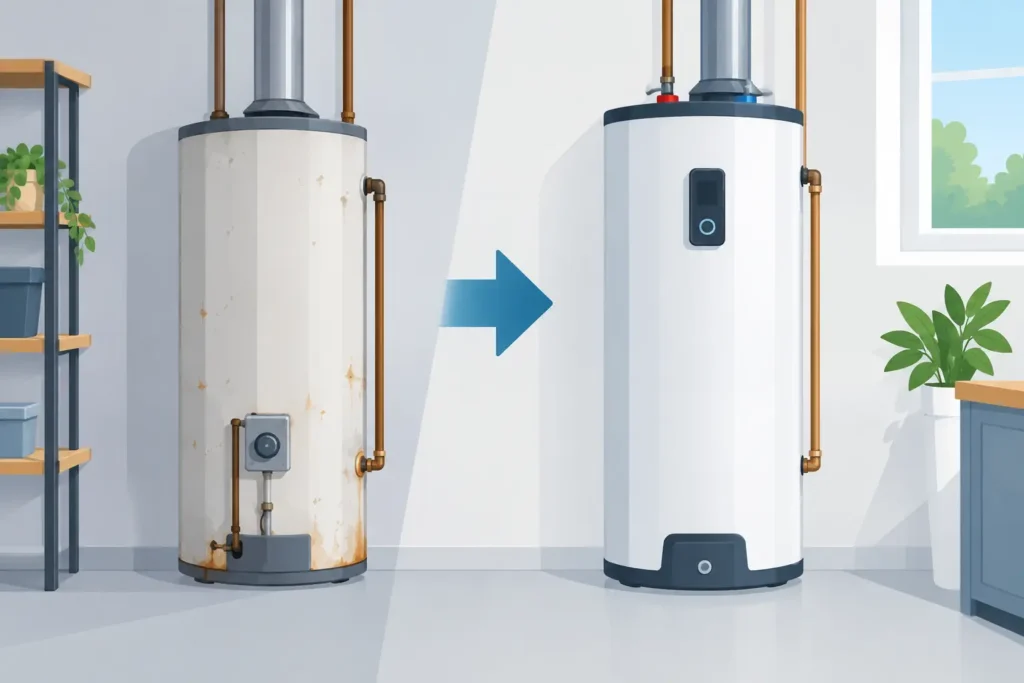
The unit was also near the end of its expected service life. Rust-colored staining around the base and inconsistent hot water supported the diagnosis. In this situation, replacing a valve or tightening a fitting would not solve the problem. Once the tank itself leaks, it cannot be repaired in a way that homeowners can count on.
The homeowner was shown the affected area and given a plain-language explanation: the tank was failing from the inside out. That is a frustrating answer, but it is better than spending money on a temporary repair while the leak continues.
Why age alone is not the deciding factor
Many water heaters last roughly eight to 12 years, but age is only one part of the picture. Water quality, maintenance history, household demand, installation conditions, and the type of unit all affect lifespan. A 10-year-old heater with a minor external fitting leak may still be repairable. A younger unit leaking from the bottom of the tank may need replacement right away.
The key is locating the leak and assessing whether the repair will actually last. Homeowners deserve that distinction before committing to the cost of a new system.
Choosing the replacement without overselling
Once replacement was the clear path, the conversation shifted to the household’s actual needs. The home had two bathrooms, a family of four, and frequent back-to-back morning showers. The previous tank had technically been the correct size when it was installed, but the family’s hot water use had increased over time.
Rather than automatically install the same model, the technician discussed capacity, fuel type, physical space, venting requirements, efficiency, and budget. A larger conventional tank offered familiar operation and a practical price point. A tankless option could provide hot water on demand, but it would require a closer look at gas supply, venting, electrical needs, and upfront cost.
For this home, a properly sized high-efficiency tank water heater was the best fit. It met the family’s demand without requiring major changes to the existing setup. That is an important part of a good recommendation: the best water heater is not always the most expensive one. It is the one that works safely and reliably for the home in front of you.
The replacement process: Protect the home, then do the work right
Water heater replacement creates a brief period of disruption, but careful preparation keeps it manageable. The work area was protected, water and power to the old unit were shut off, and the remaining water in the tank was drained safely before removal.
The installation did more than place a new tank where the old one sat. The technician inspected the connections and shutoff valve, confirmed proper drain routing, checked the relief valve setup, and made sure the new unit was secured and installed according to applicable requirements. These details are easy to overlook, especially when everyone is eager to have hot water back. They are also the details that protect the home and support dependable performance.
After installation, the new heater was filled, tested, and checked for leaks. The homeowner received a walkthrough of the controls, basic care recommendations, and the warning signs that should prompt a call. Clear communication is part of the job. A homeowner should not be left staring at a new water heater without knowing what was installed or what to watch for.
What this homeowner avoided by acting quickly
Calling when the first puddle appeared helped limit the damage. The leak had not yet spread into nearby materials, and the replacement could be completed as a planned service instead of a larger emergency cleanup.
The homeowner also avoided the common cycle of repeated short-term fixes. When a tank is leaking internally, attempts to patch around the symptoms do not stop the underlying problem. A direct diagnosis and appropriate replacement cost more upfront than a small repair, but it can prevent repeat visits, wasted money, and the risk of a larger failure.
There was another benefit: the household got more consistent hot water. The old unit had been losing performance gradually, so the family had adapted without realizing it. After replacement, normal shower timing returned, and there was no need to schedule everyone around the first person who used hot water in the morning.
Signs your water heater may be nearing replacement
Not every issue means you need a new water heater. A faulty element, pilot issue, thermostat problem, or external leak may be repairable. Still, a professional inspection is wise when you notice rusty water, rumbling or popping noises, reduced hot water capacity, moisture around the tank, or a unit approaching the later years of its service life.
A leak from the bottom of the tank deserves especially prompt attention. Do not assume it will stay small. If you see active leaking, turn off the water supply to the heater if you can do so safely, keep the area clear, and arrange service. If there is a gas smell, leave the area and contact the appropriate emergency resource before scheduling plumbing work.
A replacement should leave you with confidence
A water heater is easy to forget until it stops working. When it does, homeowners need straight answers, practical options, and workmanship that does not create another problem down the road. Leakless Plumbing approaches replacement calls with that in mind: inspect carefully, explain clearly, and focus on the repair or replacement that makes sense for the home.
If your hot water is fading, your tank is making new noises, or you have spotted moisture near the unit, it is worth checking now. A timely inspection can turn a stressful surprise into a straightforward plan – and help keep your next morning routine warm, dry, and on schedule.