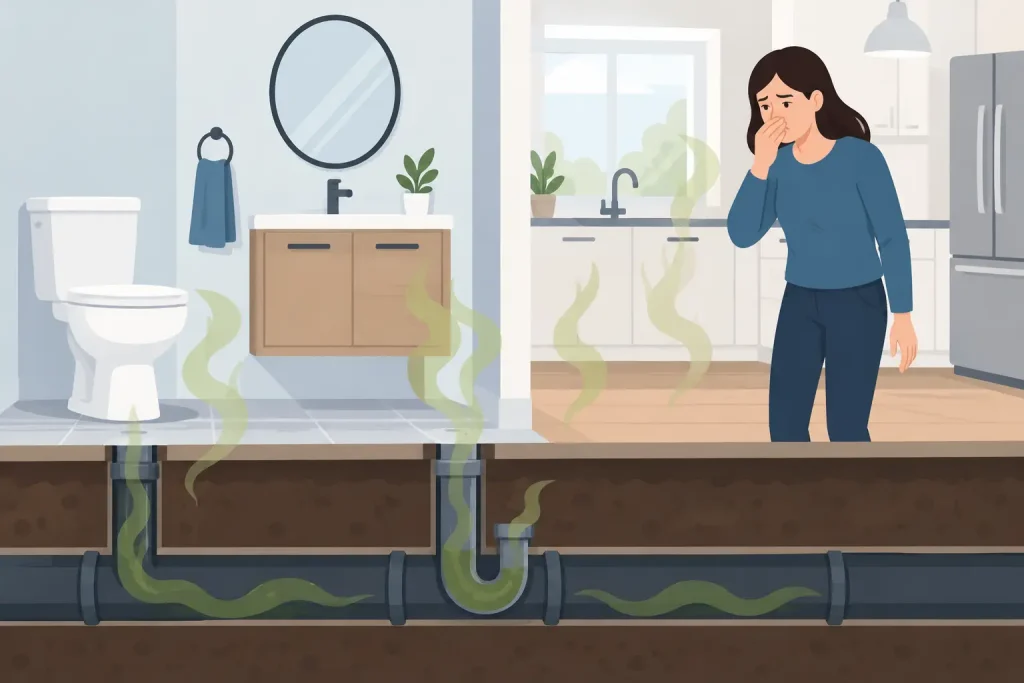
A sewer smell is hard to ignore – and you should not have to live with it. If you are wondering what causes sewer gas smells, the answer is usually a plumbing fixture, drain, or vent that is no longer keeping odors where they belong: inside the drain system and outside the home.
That rotten-egg, sulfur-like, or musty sewage odor can show up suddenly after a shower, linger near a bathroom sink, or seem strongest in a laundry room or basement. Some causes are simple to correct. Others point to a drain blockage, damaged pipe, or venting issue that needs a professional repair before it becomes a bigger problem.
What Causes Sewer Gas Smells in a House?
Your home’s drain system is designed to move wastewater out while blocking gases from coming back in. Water-filled traps, sealed connections, and plumbing vents all work together to make that happen. When one of those parts dries out, cracks, clogs, or is installed incorrectly, sewer gases can find a path into your living space.
The smell is not always coming from the nearest drain. Odors can travel through wall cavities, under cabinets, or along pipe openings, which is why the source can be surprisingly difficult to pinpoint. A dependable diagnosis looks beyond masking the odor and finds the failed seal, damaged component, or drainage problem behind it.
A dry P-trap
A P-trap is the curved section of pipe beneath a sink, tub, shower, floor drain, or other fixture. It holds a small amount of water that creates a barrier between your home and the sewer line. If a fixture goes unused for weeks, that water can evaporate and allow odors to rise through the drain.
This is common with guest bathrooms, utility sinks, floor drains, or showers that do not get regular use. Pouring water slowly down the drain may restore the water seal and stop the smell. If the odor returns quickly, though, the trap may be leaking, siphoning itself empty, or connected to a larger venting problem.
A loose, cracked, or failed drain seal
Not every sewer odor comes directly through a drain opening. The wax ring beneath a toilet can fail over time, allowing odor to escape around the toilet base. A loose drain connection under a sink, a cracked pipe, or an unsealed opening around a plumbing pipe can do the same.
A toilet that rocks, leaks at the base, or smells worse after flushing deserves attention. Even if you do not see water on the floor, a failed toilet seal can let sewer gas into the room and may eventually damage the flooring or subfloor beneath it.
A clogged or damaged plumbing vent
Plumbing vents run upward through the roof and allow air to move through the drainage system. They help wastewater drain properly and prevent the water in P-traps from being pulled out by suction. When a vent is blocked by debris, nesting material, or a damaged pipe, drains may gurgle, toilets may flush poorly, and sewer odors may appear indoors.
Vent problems can be easy to confuse with a standard drain clog. The difference is that multiple fixtures may act up at once. If a sink bubbles when the washing machine drains, or a toilet gurgles when someone showers, the system may not be venting correctly.
A partial drain blockage or buildup inside a pipe
Soap residue, hair, grease, food debris, and other buildup can collect inside drain lines. As wastewater moves past the buildup, it can leave behind organic material that produces unpleasant odors. A partial blockage may also slow drainage enough to disturb the water seals in nearby traps.
Store-bought chemical drain cleaners are not a reliable answer for this problem. They may not remove the actual blockage, can be harsh on older pipes, and can create a hazard if a plumber later needs to work on the line. Professional drain cleaning clears the buildup more thoroughly and helps identify whether the pipe itself is damaged or improperly sloped.
A problem with the main sewer line
When the odor is widespread, comes with repeated backups, or appears near lower-level drains, the issue may involve the main sewer line. Tree roots, pipe cracks, bellies in an aging line, and serious blockages can interfere with proper drainage and allow smells to escape where they should not.
This is not a wait-and-see situation if wastewater is backing up, several drains are slow, or you notice sewage around a drain or toilet. Fast service can help limit mess, protect your home, and prevent a minor warning sign from turning into a disruptive repair.
Is a Sewer Gas Smell Dangerous?
A brief odor from a dry, unused drain is often more unpleasant than dangerous. Still, persistent sewer gas should be taken seriously. Sewer gas can include methane, hydrogen sulfide, ammonia, and other gases that can irritate your eyes, nose, and throat or cause headaches and nausea, particularly in poorly ventilated spaces.
The concentration matters. Most residential odor issues do not mean the air is immediately hazardous, but a strong or ongoing smell is a reason to act rather than simply cover it with candles, air fresheners, or bleach. Those products can hide the warning sign without repairing the plumbing issue.
If the smell is overwhelming, you feel dizzy or ill, or the odor is accompanied by a hissing sound near a gas appliance, leave the area and seek appropriate emergency help. Do not use open flames or try to diagnose a potentially serious gas issue on your own. Natural gas and sewer gas can smell similar to some homeowners, and it is better to be cautious when you are unsure.
How to Narrow Down the Source Safely
Start by noticing where and when the smell is strongest. Is it limited to one bathroom? Does it appear after running the dishwasher, flushing a toilet, or doing laundry? Does it get worse in a room that has not been used recently? Those details help separate a dry trap from a broader drain or vent issue.
You can safely run water for a minute in infrequently used sinks, showers, tubs, and floor drains. Check under sink cabinets for dampness, loose connections, or signs of staining. Look around toilet bases for movement, moisture, or discoloration. Avoid removing toilet connections, opening drain piping, or climbing onto a roof to inspect a vent. Those jobs can create leaks, exposure, or injury when handled without the right tools.
A sewer odor that remains after refilling traps, returns repeatedly, or affects more than one fixture calls for a plumbing inspection. A plumber can test drain and vent connections, locate hidden leaks, inspect the line condition, and recommend a repair that addresses the actual cause rather than the smell alone.
When to Call a Plumber Right Away
Call for help promptly if sewer smells come with slow or backed-up drains, gurgling fixtures, visible wastewater, a leaking toilet base, or an odor that spreads through several rooms. Homeowners should also act quickly if the smell is strongest in a crawl space, basement, or near areas where plumbing is concealed. Hidden leaks and failed seals can cause damage long before they become visible.
For Port Orchard homeowners, Leakless Plumbing can help track down the source, explain the repair in plain language, and focus on a fix that holds up. The goal is not just to make the odor disappear for the day. It is to restore the seals, drainage, and venting that keep your home comfortable.
A home should smell like the people who live there, not like the plumbing below it. If an odor keeps returning, trust that signal and have it checked before a small drain issue gets the chance to disrupt your routine.