If your house has low water pressure in one bathroom, rusty water in the morning, and a leak that seems to pop up in a new spot every few months, patching one pipe at a time starts to feel like throwing money at the same problem. That is usually the point when a guide to repiping old house plumbing becomes more than helpful – it becomes necessary.
Repiping sounds like a major project because it is one. But it is also one of the clearest ways to stop recurring leaks, improve water flow, and protect your home from hidden water damage. For many homeowners, the real question is not whether old pipes are causing trouble. It is whether continued repairs still make sense.
What repiping an old house really means
Repiping means replacing the home’s water supply lines, and sometimes other plumbing components that are part of the same failing system. In most older homes, that work focuses on the hot and cold water lines running to kitchens, bathrooms, laundry areas, and outdoor hose bibs.
It does not always mean tearing every wall wide open or replacing every drain line at the same time. A good plumber evaluates what is failing, what still has life left, and what will give you the best long-term result. In some homes, only the supply piping is the problem. In others, old shutoff valves, corroded fittings, and undersized branches also need attention.
That is why a practical guide to repiping old house plumbing has to start with one honest point: every house is different. Age matters, but so do water quality, past repairs, pipe material, layout, and whether previous work was done well.
Signs your old house may need repiping
One leak does not automatically mean full replacement. A pattern does. If you are seeing repeated pinhole leaks, discolored water, fluctuating pressure, noisy pipes, or visible corrosion, those are stronger signals that the system is wearing out.
Rust-colored water often points to corrosion inside galvanized steel pipes. Blue-green staining can suggest issues with copper. If hot water pressure is much weaker than cold, mineral buildup or internal corrosion may be restricting flow in aging lines.
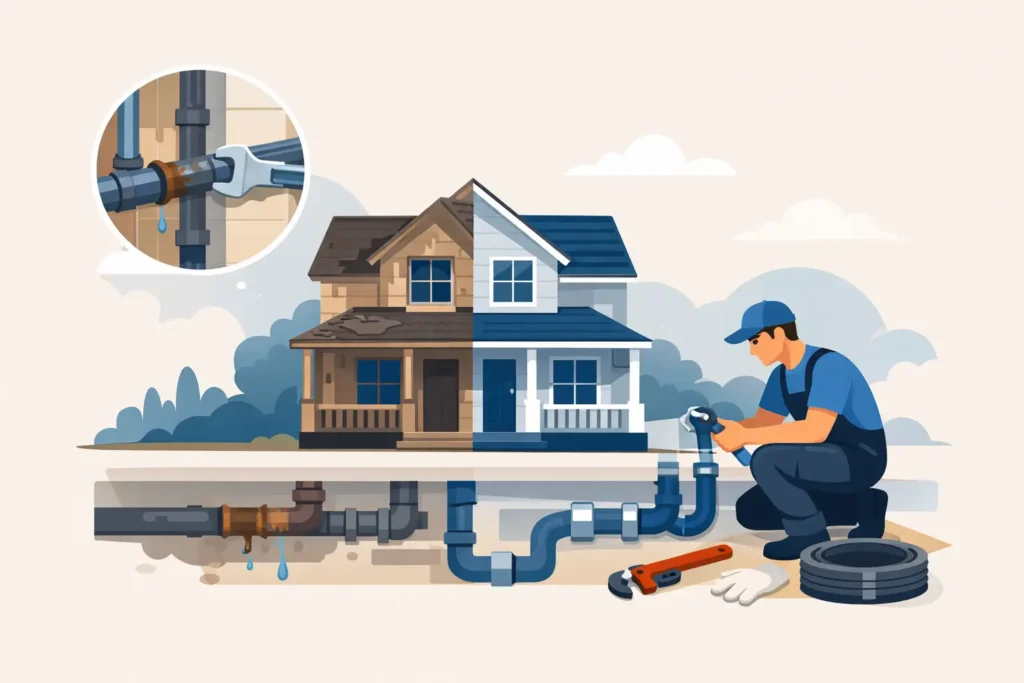
Another common sign is a repair history that keeps growing. If you have already fixed one section under the crawl space, another behind a bathroom wall, and then another near the water heater, the plumbing may be telling you the same thing in stages. Spot repairs can help for a while, but they do not reverse age across the rest of the system.
Homes built decades ago may also have materials that are simply near the end of their useful life. Galvanized piping is a frequent example. It may still be standing, but inside it can be narrowed by corrosion enough to affect pressure and water quality.
When repair is enough and when repiping makes more sense
This is where homeowners often want a straight answer, and the honest answer is: it depends.
If the problem is isolated, accessible, and the rest of the plumbing is in good shape, repair can be the smart choice. A single damaged branch line, a bad valve, or one freeze-related break does not always justify a whole-house project.
Repiping makes more sense when repairs are stacking up, the pipe material is outdated throughout the home, or the risk of future leaks is high enough that waiting could cost more in wall, flooring, and ceiling damage. There is also the day-to-day frustration factor. If your shower pressure drops every time someone uses the kitchen sink, that affects how the house functions, not just how it leaks.
For homeowners planning to stay long-term, repiping often pays off in peace of mind and fewer surprise expenses. For those preparing to sell, updated plumbing can remove a major red flag during inspection.
Best pipe options for repiping an old house
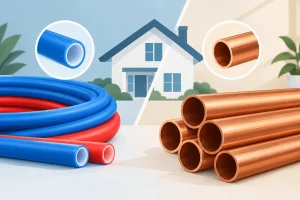
Most repipes today use either copper or PEX. Both can be excellent choices. The better option depends on the home’s layout, budget, local code requirements, and the condition of surrounding plumbing.
Copper
Copper has a long track record and is still a strong option for durability. Many homeowners like it because it is proven and familiar. It handles heat well and can be a great fit when installed properly.
The trade-off is cost. Copper is usually more expensive in both material and labor, and installation can be more invasive depending on access. In some cases, water chemistry also matters, because certain conditions can contribute to wear over time.
PEX
PEX is flexible, efficient to install, and often less disruptive in finished homes. Because it can snake through spaces with fewer connections, it may reduce the amount of wall opening required. It is also usually more budget-friendly than copper.
That said, not every home is the same, and not every plumber designs a PEX system equally well. Manifold layout, support, protection at penetrations, and connection quality all matter. Good material still needs good workmanship.
What about galvanized pipes?
If your old house still has galvanized supply lines, replacement is often worth serious consideration. These pipes tend to corrode from the inside out, which can choke off water flow and increase leak risk. Even if one section still looks passable from the outside, the inside may tell a different story.
How the repiping process usually works
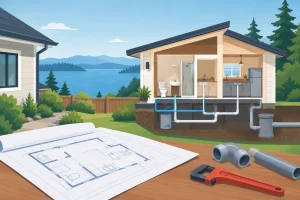
Repiping is not pleasant to think about, but it should not feel chaotic when handled well. The job starts with an inspection of the existing plumbing, the home’s layout, and access points such as crawl spaces, attics, utility rooms, and wall cavities.
From there, the plumber maps out the new routes, identifies fixtures that will be tied in, and explains where small openings may be needed. In many homes, the goal is to minimize disruption while still installing a clean, reliable system.
Water is typically shut off during key phases, but not always for the entire project. Depending on the house and the scope, work may be staged so you are not completely without plumbing the whole time. That is one reason planning matters. A rushed repipe can create more inconvenience than necessary.
After the new lines are installed, the system is pressure-tested, fixtures are reconnected, and old lines are abandoned or removed as appropriate. Wall patching may be handled by the plumbing company or coordinated separately, depending on the contractor and the extent of access cuts.
How long does repiping take?
A straightforward single-family home may take a few days. Larger homes, complex layouts, limited access, or additional repairs can stretch the timeline longer. If valves, fixture connections, or water heater hookups also need updating, that affects schedule too.
The key is not just speed. It is organization. Homeowners usually tolerate a short disruption well when they know what is happening, when water will be off, and what to expect each day.
What repiping costs and what affects the price
Repiping costs vary widely, and any article giving one flat number is oversimplifying the job. Price depends on house size, number of fixtures, pipe material, ease of access, local code needs, and whether drywall repair is included.
A house with open basement access is a different job from a house with tight crawl spaces and finished walls everywhere. A compact rambler is different from a multi-story home with several bathrooms. Even the location of the water heater and main shutoff can influence labor.
The cheapest quote is not always the least expensive choice in the long run. If a contractor cuts corners on routing, protection, or fixture tie-ins, you may end up paying again through callbacks or repairs. Repiping is one of those jobs where clear communication and solid workmanship matter just as much as the material itself.
How to prepare your home for a repipe
Before work starts, clear access to sinks, tubs, water heater areas, and crawl space or attic entries. Move fragile items away from walls where plumbing runs. Ask where openings are expected and whether dust protection will be used.
It also helps to plan for limited water access during portions of the job. If you work from home, have kids, or need to coordinate around school schedules, discuss timing in advance. Good planning reduces stress, and that matters during any major plumbing project.
Choosing the right plumber for the job
Repiping an old house is not the place for vague answers. You want a plumber who can explain why repiping is needed, what material they recommend, how they will protect your home, and what is included in the price.
Ask how they handle pressure testing, fixture reconnections, permits if needed, and wall access. Ask whether they are solving the root issue or just replacing the most obvious sections. A dependable contractor will be straightforward about trade-offs, not pushy.
For homeowners in Port Orchard and nearby communities, fast response matters too. When aging pipes are already leaking, waiting too long can turn a planned repipe into an emergency ceiling repair. That is why companies like Leakless Plumbing focus on practical, lasting solutions rather than short-term patches that leave you right back in the same situation.
Repiping is a big step, but living with failing pipes is its own kind of disruption. If your house keeps giving you the same warning signs, it may be time to stop chasing leaks and start fixing the system that caused them.